Care
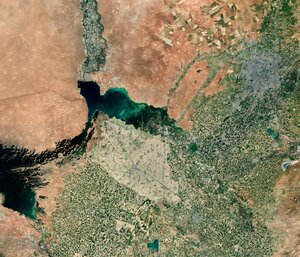
Floodplains east of the White Nile river in southern Sudan are seen in this image from Copernicus Sentinel-2, created by combining near-infrared channels across three separate acquisitions
The colours vary according to crop type and growth stage; the yellow fields are part of the Kenana Sugar Company, which is Africa’s largest sugarcane industrial complex.
Caring is at best ineffective, at worst impossible, without knowledge. On this basis, Copernicus has grown into the world’s largest Earth observation endeavour, providing accurate, timely and easily accessible information to improve the management of the environment, understand and mitigate the effects of climate change and ensure civil security. In 2022 alone, the Copernicus Emergency Management System received 86 requests for Rapid Mapping activations across the world.
Copernicus is headed by the European Commission on behalf of the EU, in partnership with ESA. ESA coordinates data delivery to Copernicus from upwards of 30 satellites, including the fleet of Sentinel satellites specifically developed to fulfil the needs of the programmmes. The Sentinels undertake a wide range of observations from radar and optimal imaging to atmospheric sounding and altimetry. Copernicus as a whole generates more than 12 terabytes of data daily, all freely available to users around the globe. In particular, the programme is fast becoming a crucial tool for sustainable development for Africa and the rest of the developing world.