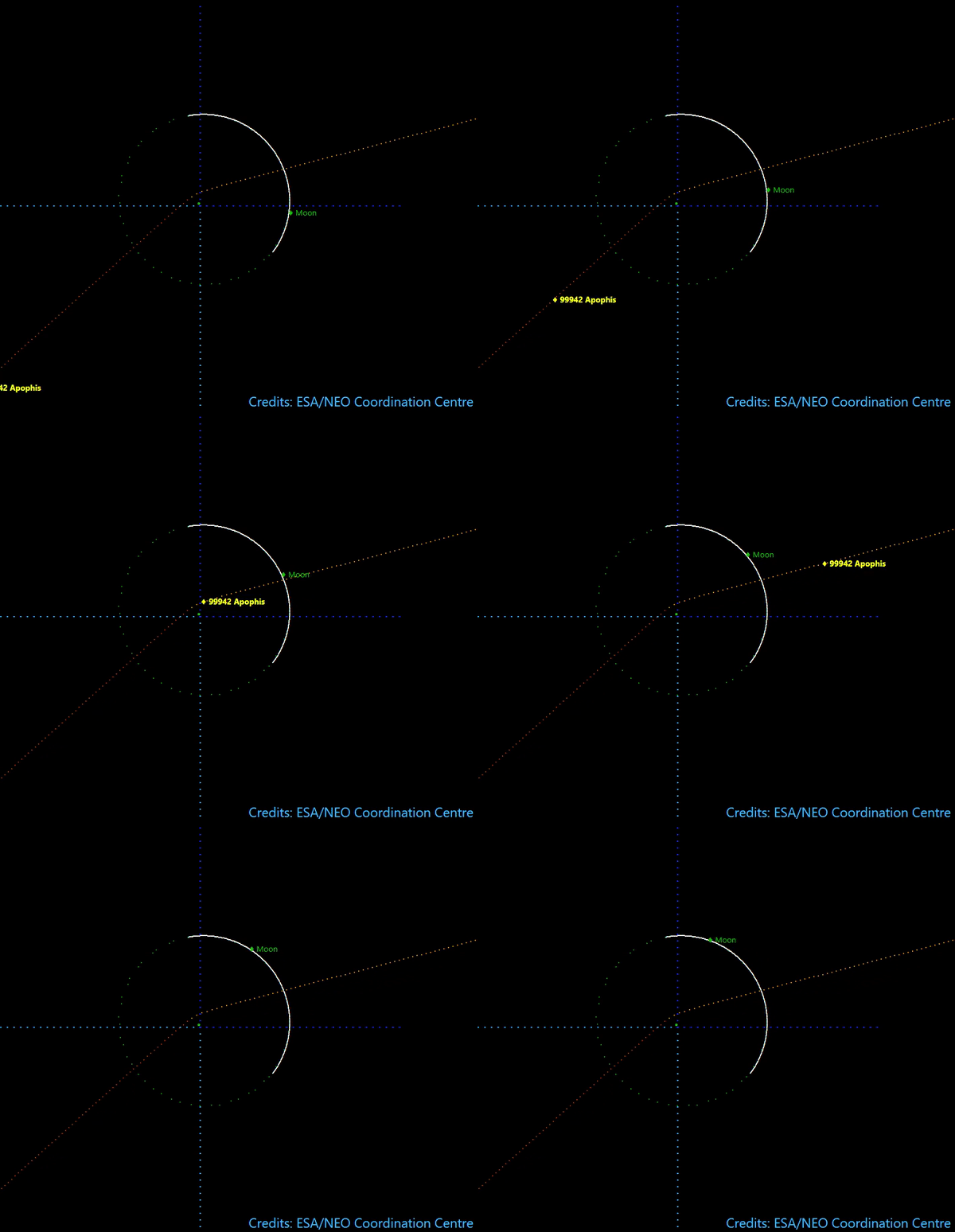
Apophis orbit diverted by Earth's gravity
On Friday, 13 April 2029, the infamous asteroid Apophis will make a close approach of Earth. Passing at a distance less than 32 000 km, it will be visible to the naked eye for many in Europe and Africa.
At this distance, Earth’s gravity will have a notable impact on the passing space rock, altering its path and amplifying the uncertainty in its orbit. Until recently, there was a small chance that this close approach could nudge Apophis into a dangerous new orbit, in which the 350 m asteroid could strike Earth in a future journey round the Sun.
Fortunately, radar observations reduced the uncertainty in Apophis’ trajectory to such an extent that even with the orbit-altering effects of the upcoming 2029 flyby, any chance of impact in 2068 or long after are ruled out.
ESA aims to launch its Rapid Apophis Mission for Space Safety (Ramses) in 2028. Ramses would intercept Apophis in February 2029 and accompany it through its rare flyby of Earth. By studying the asteroid before, during and after it is affected by Earth's gravity, Ramses will help scientists seize this unique opportunity learn more about asteroids and how to keep Earth safe from any on a potential collision course.