Launch
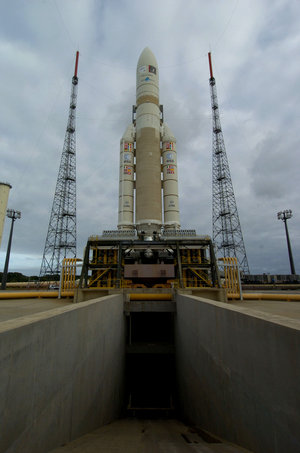
Europe’s independent and autonomous access to space is ensured through the Ariane 6 and Vega-C rockets launched from Europe’s Spaceport in French Guiana, offering versatile launch services for institutional and commercial missions.
In the 1960s, a group of European governments decided that Europe’s space programmes required guaranteed access to space, and the result was the Ariane family of launchers.
The latest generation is Ariane 6first launched in July 2024, while Europe is also supporting the Vega launcher range for smaller payloads. ESA’s Boost! Programme is supporting new entrants into the space launch market. And in parallel, 14 European companies and institutes have joined forces for an EU Horizon 2020 project called SMall Innovative Launcher for Europe, SMILE, aiming at a cost-effective micro-launcher.
Space is nearer than you might think. Official definitions vary, but the International Space Station is in orbit at about the same altitude from the ground as the distance from London to Paris. If you could drive your car straight upwards then you would reach the first satellites within a couple of hours. The key requirement for a space launch is not absolute altitude however, but speed. To overcome the pull of gravity, a launcher has to reach almost eight kilometres per second. Which is why, when you watch a space launch, the rocket veers sideways rather than continuing straight up, methodically dumping exhausted boosters and stages as it goes to reduce its flight mass and optimise its velocity.