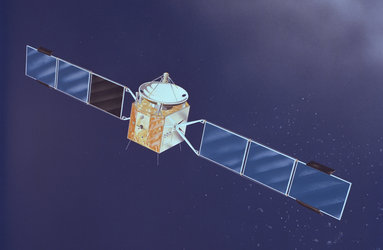
Impression of global maritime infrastructure
The European Space Agency (ESA) and AAC Clyde Space, a New Space company specialising in small satellite technologies, have jointly signed a contract for the first phase of satellite constellation project INFLECION. The initiative will transform Maritime Domain Awareness – the understanding of activities at sea – by enhancing safety, efficiency, compliance, and environmental sustainability in maritime operations.
With approximately 90% of international trade travelling by sea, maritime routes are becoming increasingly congested due to supply chain disruptions, changing trade patterns, and geopolitical tensions. INFLECION will be specifically designed to monitor and support maritime operations, while also contributing to the International Maritime Organisation's e-Navigation strategy to make navigation safer and more efficient.
The proposed €30 million project will be co-funded by the UK Space Agency through ESA's Advanced Research in Telecommunication Systems (ARTES) Partnership Project programme within the agency’s Connectivity and Secure Communications directorate. The project will deliver three crucial services:
- Improve operational efficiency by helping vessels optimise routes and achieve just-in-time arrivals
- Enhance maritime security through AI-powered satellite surveillance to combat smuggling and illegal fishing
- Support environmental sustainability by protecting marine ecosystems and ensuring compliance with regulations
The system combines three key technologies: VHF Data Exchange System (VDES), enabling reliable two-way data exchange between ships, satellites, and shore stations; Signal Intelligence (SIGINT), which detects and analyses electronic signals to identify vessels engaged in illegal activities; and Synthetic Aperture Radar (SAR), providing continuous surveillance of shipping lanes and coastal areas in all weather conditions.
Following this first phase, which will define the project's requirements by the end of 2025, the project will see two more phases: a 15-month development phase to build prototypes and systems, followed by a demonstration phase to test and prepare the system for commercial use. Full operational capability is expected by 2028.