Saharan dust plume from Copernicus Sentinel-3
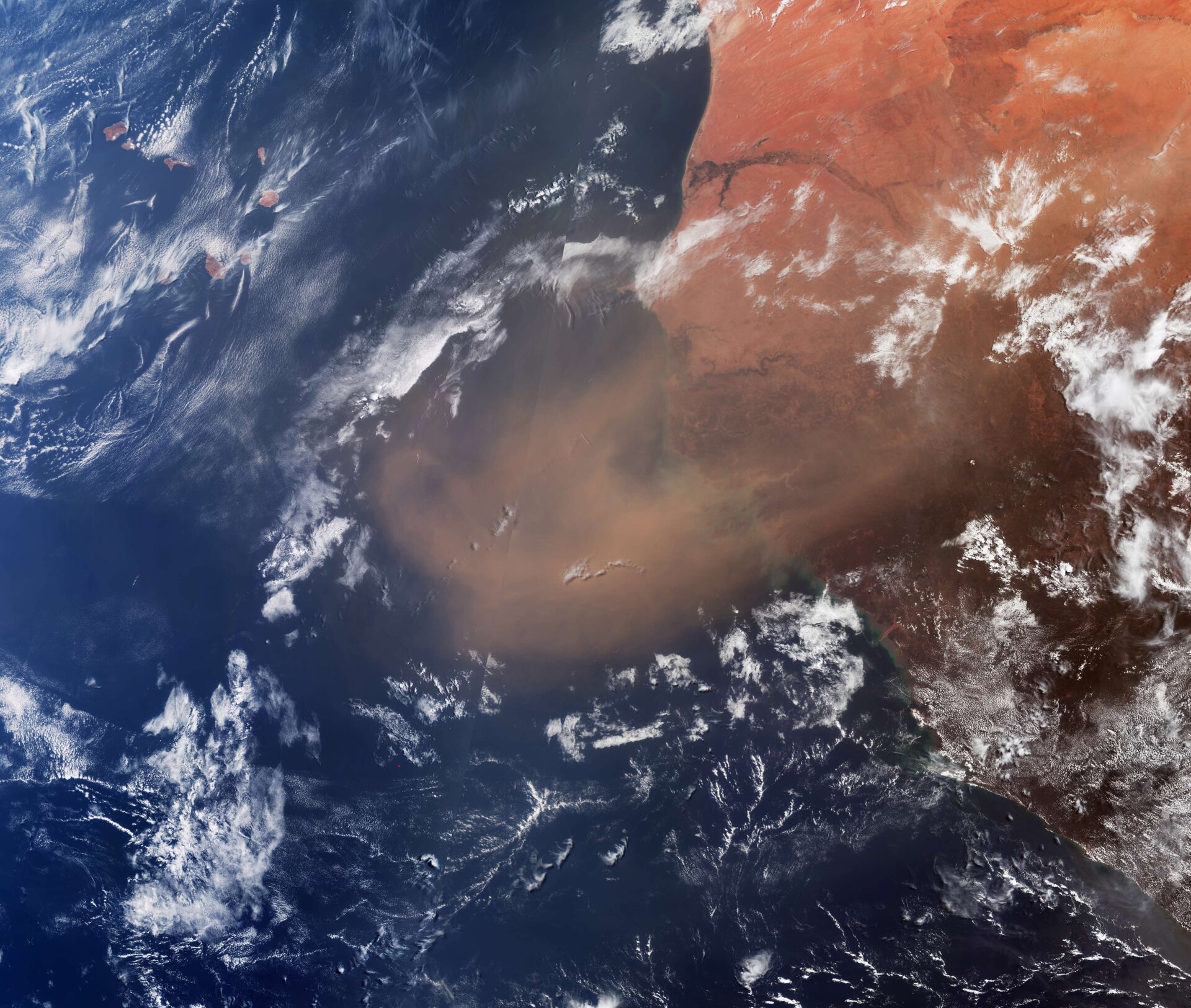
On 7 May 2025, the Copernicus Sentinel-3 mission captured sand and dust from the Sahara Desert blowing from the west coast of Africa across the Atlantic Ocean.
The dense, orange plume of Saharan sand blankets approximately 150 000 sq km of the eastern Atlantic Ocean. The small islands of Cabo Verde peek out from beneath the clouds in the top left corner.
Sandstorms, which are common over the Sahara, occur when large amounts of dust particles from the desert are swept up by strong winds. They can float for days or even weeks, depending on how dry, fast and turbulent the air masses become. Winds in the higher troposphere can then transport the dust across oceans and continents.
This kind of Saharan dust storm is also known as the Saharan Air Layer, which typically forms between late spring and early autumn.
Sandstorms can be a major contributor to reduced air quality and can cause hazards to human health. The suspended particles, in fact, cause hazy skies, trigger air quality alerts and, when breathed, can lead to cardiovascular conditions and lung problems.
On the other hand, the travelling Saharan dust plays an important role in our ecosystem. It is a major source of minerals and nutrients for phytoplankton and for ecosystems on the other side of the world, including the Amazon rainforest.