Atmospheric hot flush during a solar storm
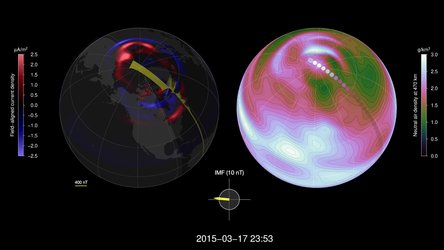
Scientists are harnessing data from ESA’s Swarm mission and ground-based instruments to precisely measure the strength and duration of intense upper-atmosphere heating – dramatic ‘hot flushes’ triggered by solar storms that also cause Earth’s tenuous outer atmospheric layers to expand rapidly. This research offers crucial insights into how geomagnetic activity affects satellite orbits and space weather conditions.
During a typical solar storm, the northern hemisphere alone can experience up to 200 gigawatts of atmospheric heating – roughly the output of 150 nuclear power plants – sustained for several hours. But during superstorms, heating levels can soar to over 1100 gigawatts.
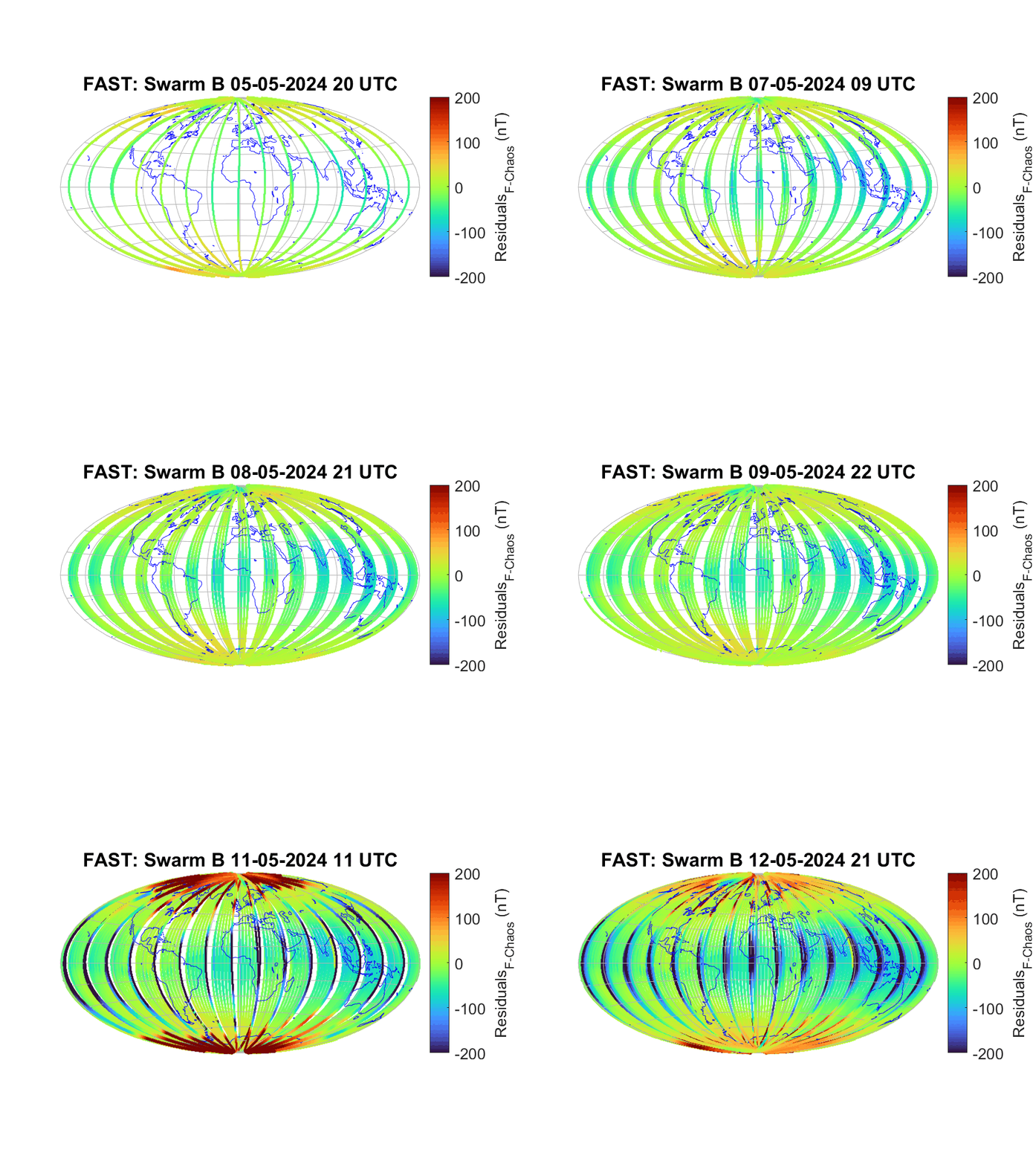
The image shows the difference in Joule heating before, during and after a solar storm.
Read full story: Swarm in tune with atmospheric hot flushes