Ocean pH stripes for the Mediterranean
The ocean has helped slow down human driven climate change, having absorbed approximately 90% of the excess heat and around 25% of the carbon dioxide that has been released into the atmosphere through human activities such as the burning of fossil fuels.
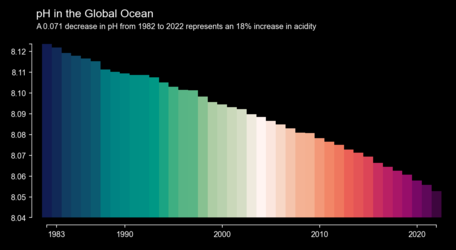
Although the ocean carbon sink reduces atmospheric warming, there are significant biogeochemical consequences. Increased carbon dioxide uptake leads to a reduction in seawater pH and alters the carbonate chemistry of the ocean. These changes in ocean chemistry, often collectively referred to as ocean acidification, impacts marine organisms and alters marine ecosystems. This image of pH stripes for the Mediterranean gives a visual impression of the change (pink and purples on the right corresponding to conditions where seawater is acidified) of this variable between 1982 and 2022.