Collecting phytoplankton samples in the Southern Ocean
The Southern Ocean around the Antarctic ice sheet is home to two main types of phytoplankton: diatoms and haptophytes. Researchers analysed marker pigments in more than 14 000 in-situ samples to investigate changes in phytoplankton species composition over a 25-year period, between 1997–2023.
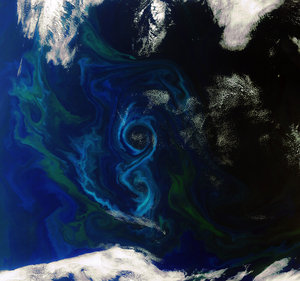
Phytoplankton use the process of photosynthesis to convert sunlight, carbon dioxide and water into chlorophyll. It is the green colour of chlorophyll and other light harvesting and protective pigments within their cells that can be detected from space.
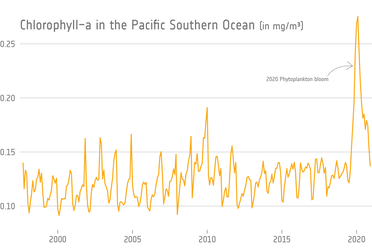
In-situ measurements are then used to analyse the pigment in the ocean, identifying different phytoplankton groups and their locations according to their particular shade of chlorophyll. This combined data can be modelled to get information on diatoms and haptophyte populations across the region, providing insight into large-scale changes in chlorophyll in the Southern Ocean.
Read full story: Tracking the climate-driven shift in Antarctic plankton from space