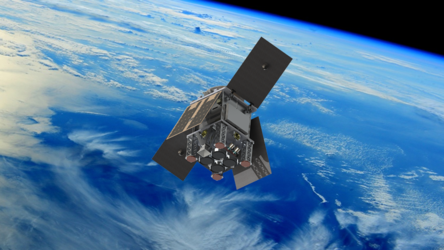
HydroGNSS at SSTL cleanroom
ESA’s HydroGNSS mission, which will investigate Earth’s water cycle, is pictured in the cleanroom at Surrey Satellite Technology Ltd (SSTL) facilities in the UK. It was transported from the UK to California, ready for integration and launch.
The mission delivers observations on Earth’s water cycle using a technique called Global Navigation Satellite System (GNSS) reflectometry. By receiving signals from satellite systems such as Galileo and GPS, HydroGNSS can detect data about four key aspects of Earth’s hydrology: soil moisture, inundation or wetlands, freeze/thaw state, and above-ground biomass.
HydroGNSS has been developed by SSTL for ESA’s Scout framework, part of the agency’s FutureEO programme. This new family of small ‘Scout’ satellites are developed within short timeframes and deliver science data, either by miniaturising existing space technologies or by demonstrating new observing techniques.
HydroGNSS is the first of three Scout missions, which pave the way to innovative science in a quick and adaptable way, complementing ESA’s Earth Explorer research missions.