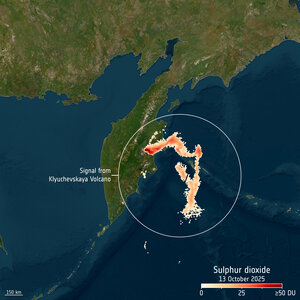
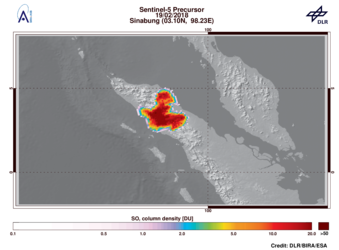
First image of sulphur dioxide from Sentinel-4
The new Copernicus Sentinel-4 mission mission has delivered its first images, highlighting concentrations of atmospheric nitrogen dioxide, sulphur dioxide and ozone. Despite being preliminary, these images mark a major milestone in Europe’s ability to monitor air quality all the way from geostationary orbit, 36 000 kilometres above Earth.
This image presents a vertical column density of sulphur dioxide. A distinct plume can be seen emerging from Mount Etna in Italy and drifting south-eastwards over the sea. Although Etna is currently relatively calm, much larger plumes are typically observed during periods of heightened volcanic activity.
In addition to natural emissions from volcanoes, sulphur dioxide is also released through human activities, particularly from ships burning high-sulphur fuels and power plants using brown coal.
Sulphur dioxide is toxic in its own right and contributes to the formation of secondary pollutants, such as particulate matter, which pose significant health and environmental risks.
Read full story: Sentinel-4 offers first glimpses of air pollutants