Argonaut
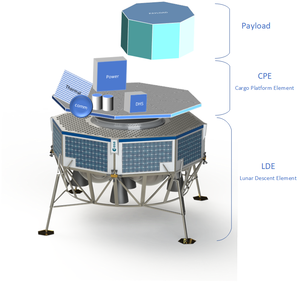
The European Space Agency (ESA) lunar lander programme, Argonaut, represents Europe’s autonomous, versatile and reliable access to the Moon. From the 2030s, Argonaut landers will be launched on four-booster Ariane 6 rockets to deliver cargo to the Moon’s surface, supporting robotic and crewed missions.
International space agencies are striving to reach the Moon and explore in a more sustainable way than during the Apollo era, with plans to live and work during the lunar night which lasts 14 days and can see temperatures plummet to a chilling -150°C.
Argonaut will be central to this effort, supporting NASA’s Artemis programme while providing Europe with independent access to the Moon. Each lander will deliver up to 1500 kg of cargo to the lunar surface, landing autonomously within an accuracy of 250 metres for the first flight and improved to an accuracy of 50 m for the third flight. The cargo can be varied, from vital resources for astronauts such as food, water and air, to rovers and science instruments, or technology demonstrations and infrastructures for working and living on the Moon, such as communication, power generation, and in-situ resource utilisation plants.
The first Argonaut mission to the Moon will be in 2030, with subsequent missions taking place every two to three years afterwards. With a designed five-year lifetime on the surface, Argonaut will support the international effort to establish a long-term human presence on the Moon, helping to develop the capabilities needed to live and work on the lunar surface.