Global ozone measured by Sentinel-5A
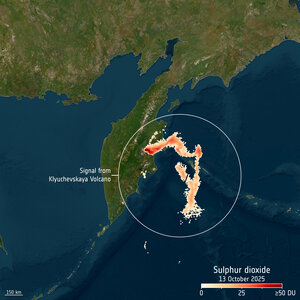
Launched a little over three months ago, Copernicus Sentinel-5A has returned its first images – including a global map of ozone, maps of nitrogen dioxide over the Middle East and South Africa, formaldehyde over parts of Africa, and emissions of sulphur dioxide from an active volcano in Russia – showcasing the mission’s powerful capability to monitor atmospheric gases worldwide.
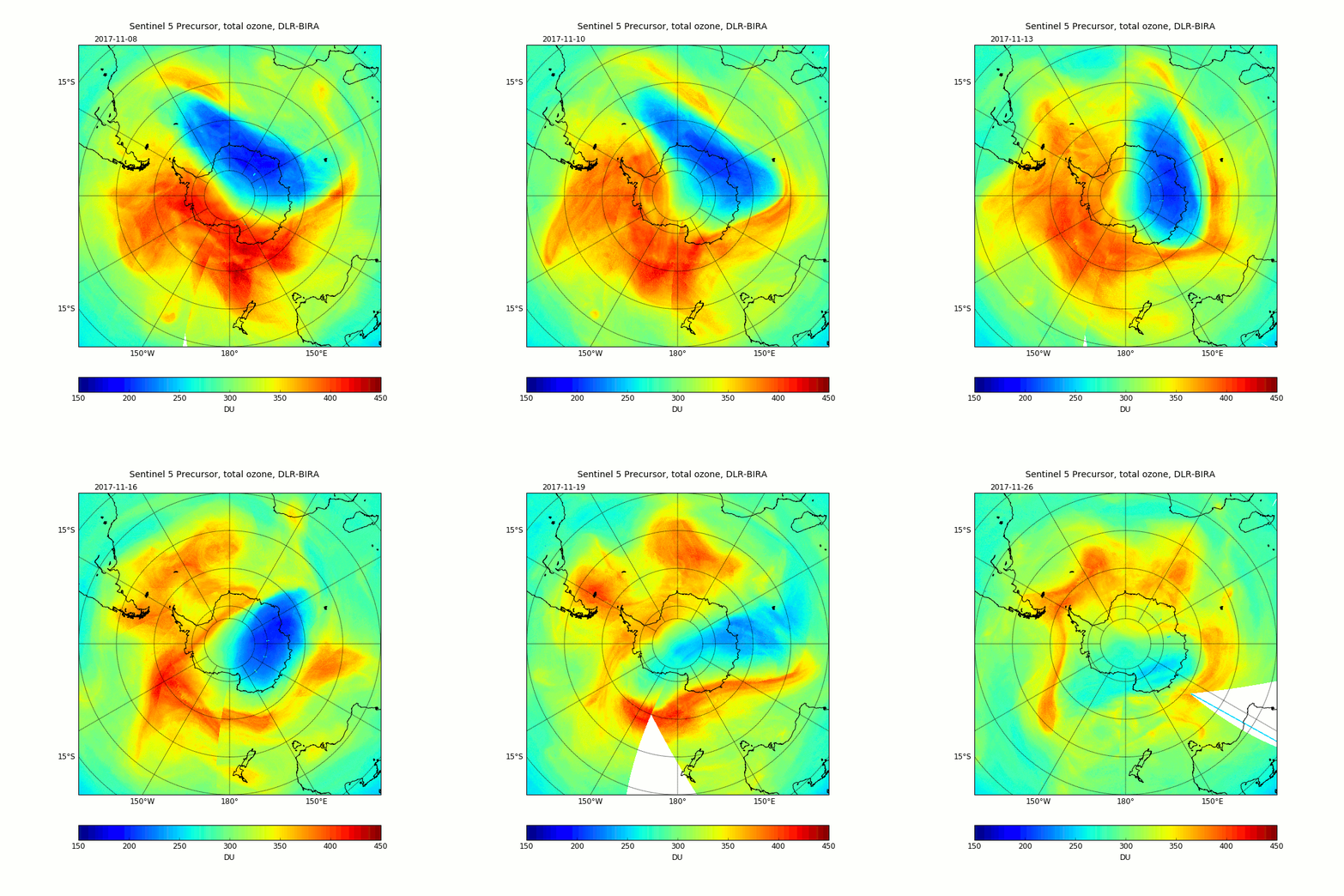
This image is a global map of ozone, captured on 13 October 2025. Ozone plays a dual role in Earth’s atmosphere: while stratospheric ozone shields life from harmful UV radiation, ground-level ozone is a harmful air pollutant that affects human health and ecosystems.
The hole in stratospheric ozone above Antarctica is clearly visible, with column density values falling below 220 Dobson Units. Although the use of ozone-depleting substances such as halogenated hydrocarbons were banned under the Montreal Protocol in 1989, their long life in the atmosphere means that the full recovery of the ozone layer has been gradual. Evidence of this recovery has only begun to appear in recent years. Sentinel-5’s observations will extend and strengthen the long-term record of ozone monitoring, helping scientists track the ongoing recovery of this vital protective layer.
Read full story: Sentinel-5 debuts images of atmospheric gases