Solar Nanocatalysts for Renewable Energy
A recent ESA Discovery project has investigated whether microgravity conditions could help create better catalysts for solar energy conversion. The project focused on nanocatalysts – materials that speed up chemical reactions at the nanoscale without being consumed in the process.
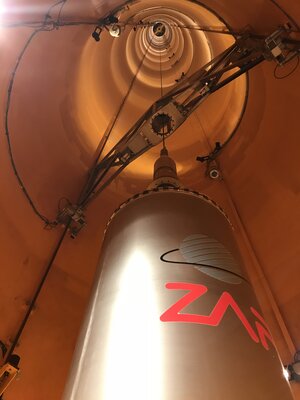
When nanoparticles form in microgravity, they can achieve higher surface-to-bulk ratios and superior crystallinity compared to those made on Earth. The Bremen team used a process called photodeposition – using sunlight to grow nanoparticles from chemical precursors directly onto semiconductor surfaces – to create these catalysts in microgravity conditions at facilities like the Bremen Drop Tower and GraviTower.
The project was proposed through ESA's Open Space Innovation Platform, which seeks out promising new ideas for space research, and was funded by the Discovery element of ESA's Basic Activities.