Grounding lines and ice loss around Antarctica, 1992-2025
Scientists studying Antarctica have gained new insights into how the world’s biggest ice sheet is reacting to warming sea temperatures. The study uses three decades of radar satellite observations to map changes in grounding lines across the Antarctic continent from 1992 to 2025. It found that grounding lines were stable along more than 77% of Antarctica’s coastline, including major ice shelves such as Ross, Filchner-Ronne and Amery.
However, the research also detected significant retreat in vulnerable regions. This map shows the areas with most extensive grounded ice retreat are on the West Antarctica side of the continent, with substantial retreat also around the Antarctic Peninsula and on the East Antarctica coast.
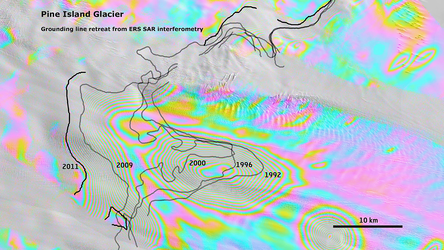
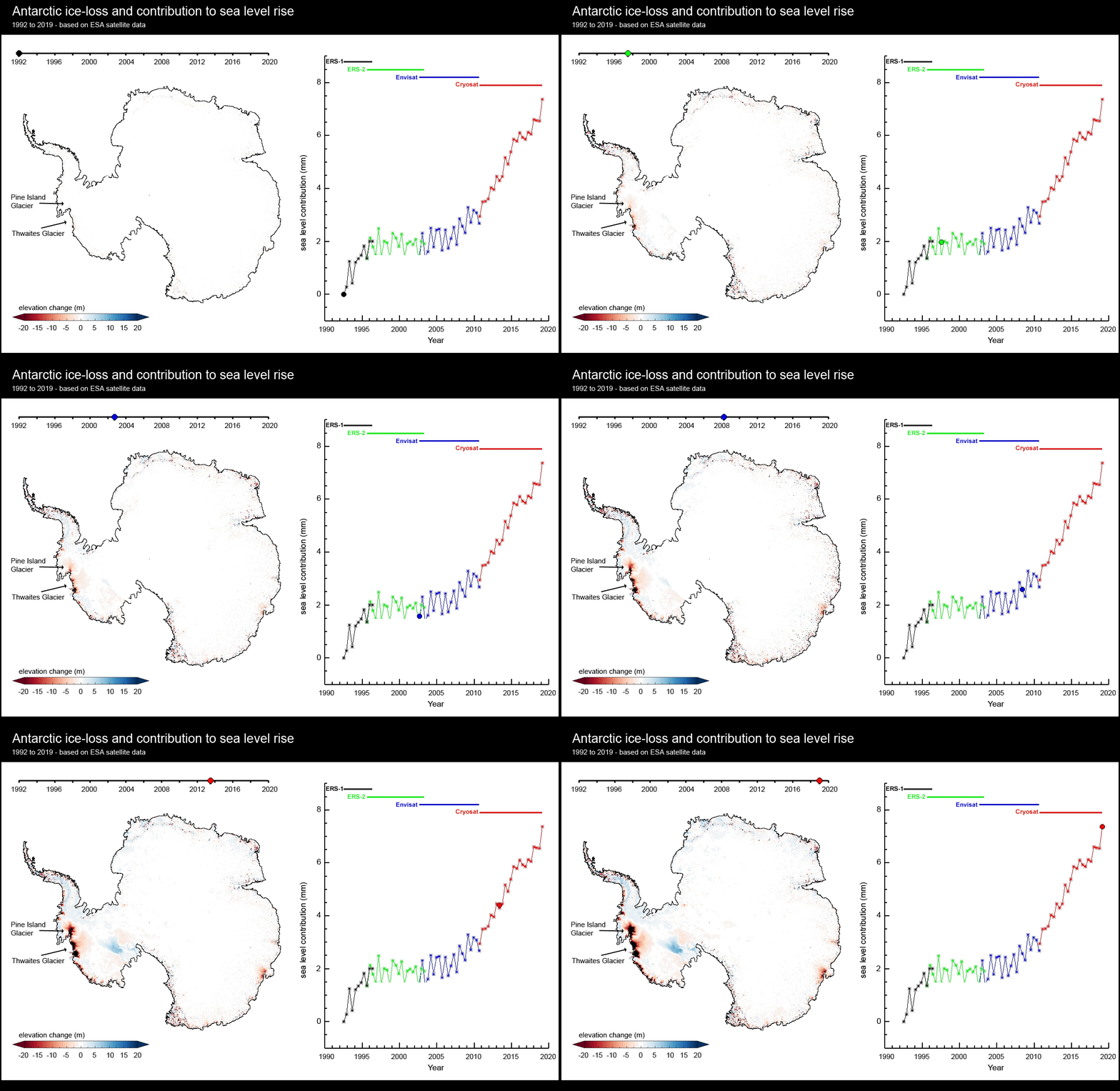
The largest detected grounding line retreat was observed along the coast of the Amundsen Sea, in West Antarctica, where the ice withdrew in some places by up to 43 km over the study’s period. The most affected regions were near the East Getz, Smith, Thwaites and Pine Island ice sheets.
The study is based on data from several satellite missions including Copernicus Sentinel-1 and ERS.
Read full story: Antarctica retreat study signals future ice loss