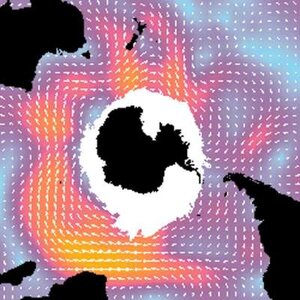
Density of salps around Antarctica spanning 1976–2020
A European Space Agency-funded study used information from satellites to show that Antarctica is experiencing dramatic changes in sea-ice coverage, with profound consequences for key plankton species that underpin the region’s marine food web.
About 10 years ago, the amount of sea ice around Antarctica suddenly declined, which resulted in of the Southern Ocean shifting from extremely low phytoplankton levels to more moderate productivity. At first glance, the increase in phytoplankton since the drop in sea ice might seem beneficial. However, sea ice provides shelter and nursery habitats, and supports dense blooms of diatoms – large algae that efficiently transfer energy up Antarctic food webs. Interestingly, this apparent boost in food appears to be benefiting salps much more than krill.
The image shows density of salps around Antarctica spanning 1976–2020.
Read full story: Antarctica’s vanishing sea ice transforms marine life