Agency
Streaks on Mars
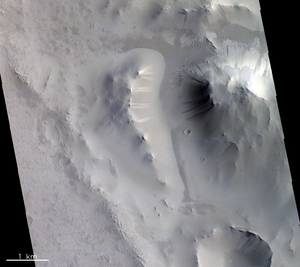
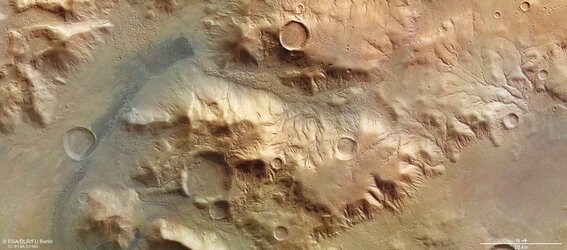
Bright and dark streaks cover the slopes of the Olympus Mons aureole, as seen by ESA’s ExoMars Trace Gas Orbiter. The origin of these odd, streaked slopes on the highest volcano in our Solar System has intrigued scientists for decades. Some researchers have interpreted them as flows of salty water, that could remain liquid long enough to form them, hinting at rare, potentially habitable environments.
Understanding the history of water on Mars and whether it once allowed life to flourish is at the heart of ESA’s ExoMars mission. Launched in 2016, the spacecraft continues to return spectacular images and map the planet’s surface for water-rich locations.