Mars vast clay region
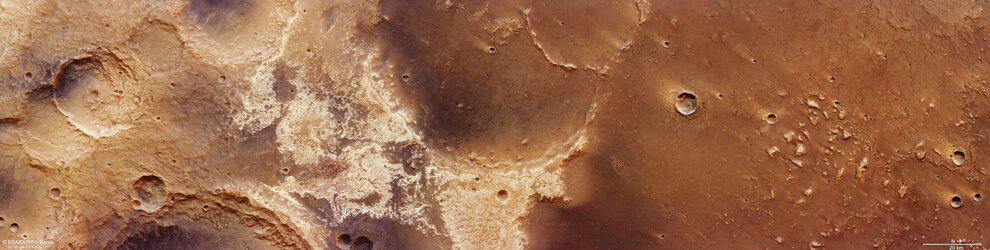
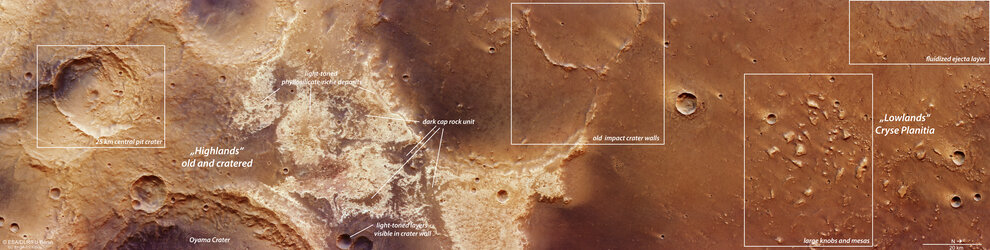
View showing the transition between clay units in the Oxia Planum and Mawrth Vallis regions on Mars, taken by the HiRISE camera on NASA’s Mars Reconnaissance Orbiter.
At the boundary between the two main clay-bearing units, scientists have identified a paleosurface: a remnant of an ancient, exposed surface that was heavily cratered and later covered by younger deposits. This paleosurface marks a pause in sedimentation, followed by a shift in water chemistry and mineralogy across both sites.
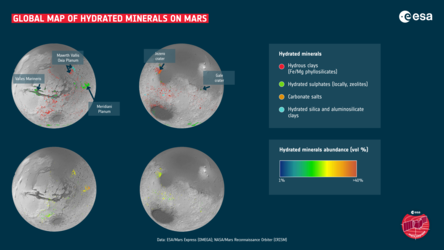
A new study found that the clay deposits at Oxia Planum, the landing site of the ExoMars Rosalind Franklin rover, reached as far as Mawrth Vallis. Stretching roughly 600 km across and rising over a kilometre in altitude, the deposits are vast in scale. If an ocean did form them, its shorelines would rank among the highest ever theorised for Mars.