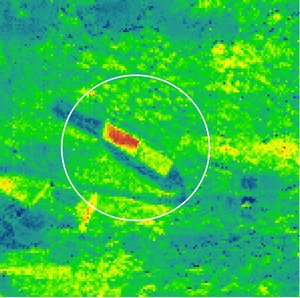
Detecting plant stress from space
Photosynthesis itself cannot be measured directly by satellites. However, when plants absorb sunlight for photosynthesis, a small fraction of this energy is re-emitted as a very faint fluorescence signal known as solar-induced chlorophyll fluorescence.
This fluorescence, which is invisible to the naked eye, occurs when chlorophyll molecules release absorbed light at longer red and far-red wavelengths. Because its intensity varies with environmental conditions and the physiological state of vegetation, fluorescence provides a unique window into plant activity and health — and, remarkably, can be detected from orbit. Using cutting-edge technology, ESA’s FLEX mission is designed to measure this faint signal of fluorescence to assess photosynthetic activity and plant health.