Commanding a rover from control centre
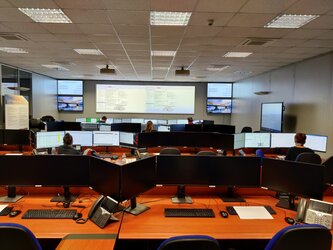
Action from the Rover Operations Control Centre (ROCC) in Turin, Italy. Teams relied on images, subsurface radar and spectral analysis from the rover to identify the most promising locations to search for evidence of life – Rosalind Franklin’s main mission objective.
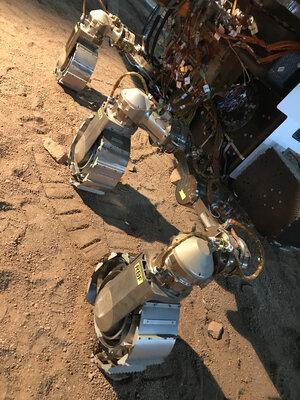
While the rover sent self-location parameters, measurements and images from the field, planners and scientists at ROCC worked around the clock to prepare for the next day, just as they will during the real mission.
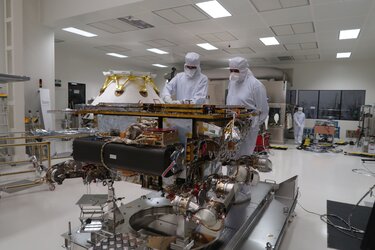
The data came from prototypes of Rosalind Franklin’s suite of scientific instruments: cameras for far and wide angles (PanCam) as well as close-ups (CLUPI), a spectrometer (Enfys) and a ground-penetrating radar (WISDOM). These instruments are designed to detect clues to ancient microbial activity.Once a plan was agreed, the team sent the commands to the rover and followed up, keeping track of targets, routes, results and scientific discussions.