EchoFinder setup and wrap-up

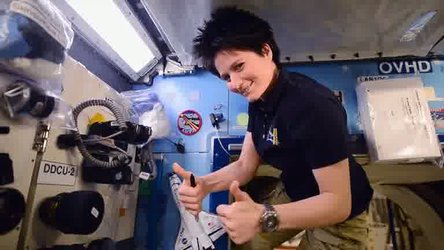
Since their arrival aboard the International Space Station on 14 February 2026, ESA astronaut Sophie Adenot and NASA astronaut Jack Hathaway have already carried out two sessions of EchoFinder, an experiment developed by the French space agency CNES for the εpsilon mission. Each session takes about 3 to 4 hours, including the 30 minutes of installation/setup and 30 minutes of wrap-up shown in this timelapse.
EchoFinder tackles a simple yet crucial challenge for the future of human space exploration: how can astronauts perform a reliable ultrasound scan without medical training and without real-time support from a doctor?
EchoFinder is a software assistant that combines augmented reality and artificial intelligence. The augmented reality interface guides the astronaut by showing exactly where to position the ultrasound probe on the body. Once the probe is correctly placed, an artificial intelligence system takes over to identify the organs and record the images. In the future, these images would be sent to medical teams on Earth for diagnosis.
This technology was developed with upcoming space missions in mind, where communication delays would make remote assistance from a specialist impossible. It also has promising applications on Earth, for example on ships at sea, in submarines, or in remote areas without immediate access to medical expertise.