• → European Space Agency

      • Space for Europe
      • Space News
      • Space in Images
      • Space in Videos
    • About Us

      • Welcome to ESA
      • DG's News and Views
      • For Member State Delegations
      • Business with ESA
      • ESA Exhibitions
      • ESA Publications
      • Careers at ESA
    • Our Activities

      • Space News
      • Observing the Earth
      • Human Spaceflight
      • Launchers
      • Navigation
      • Space Science
      • Space Engineering
      • Operations
      • Technology
      • Telecommunications & Integrated Applications
    • For Public

    • For Media

      • Media
      • ESA TV
      • Videos for professionals
      • Photos
    • For Educators

    • For Kids

    • ESA

    • United Kingdom

    • All about ESA
    • ESA facts and figures
    • ESA's Director General
    • Frequently asked questions
    • Business with ESA
    • ESA in the UK
    • Harwell
    • ESERO UK
    • Publications
    • United Kingdom Space Activity 1957-1987
    • Multimedia
    • Multimedia gallery
    • Online videos
    • Earth images gallery
    • Press
    • Press releases
    • Resources
    • UK Space Directory
    • Follow us
    • ESA on Twitter
    • ESA on Flickr
    •  ESA on YouTube
    • ESA on Livestream
    • Services
    • RSS feeds

    ESA > ESA in your country > United Kingdom

    YouTube SpaceLab winners to watch their experiments being performed live from space

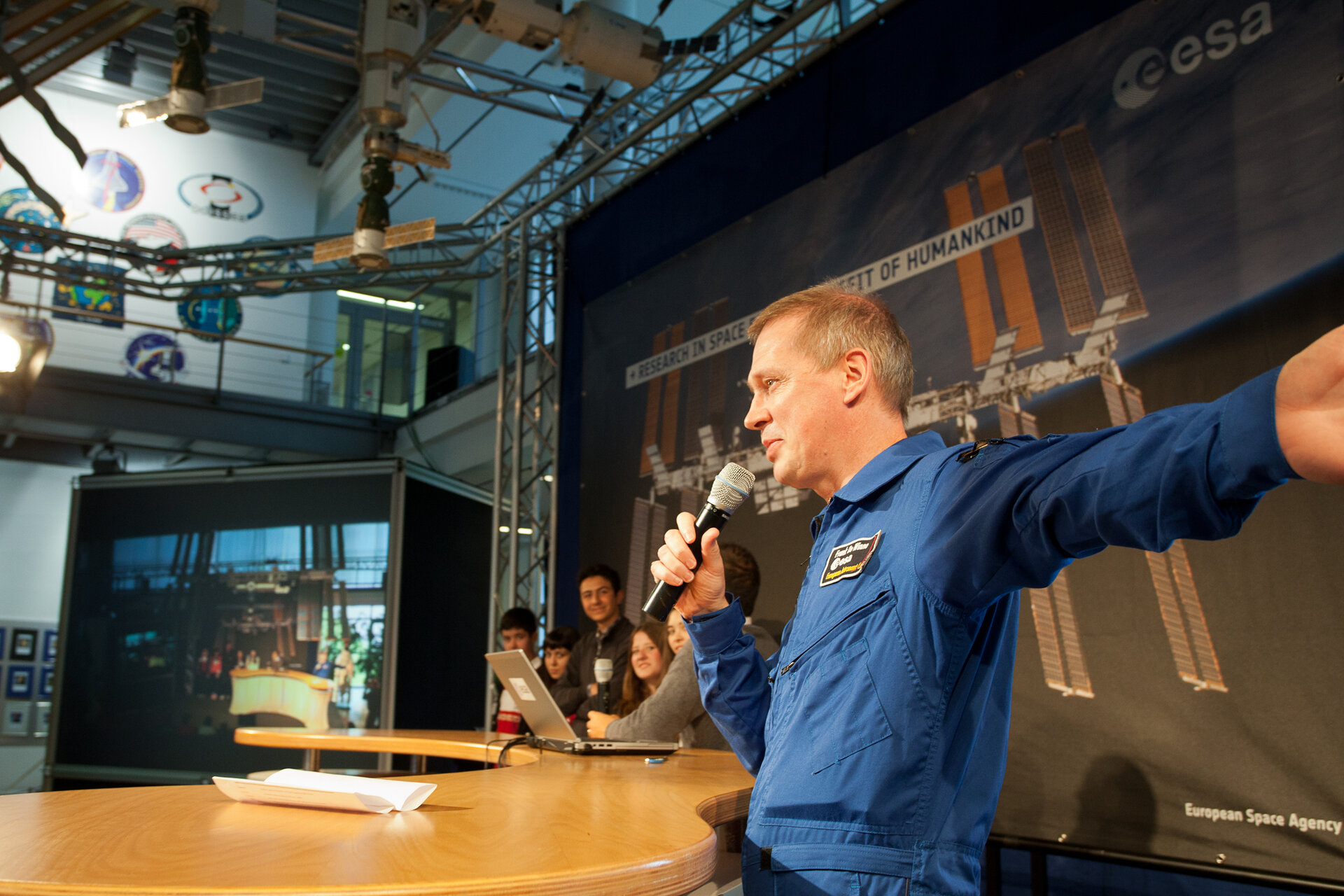
    Frank De Winne with students
    29 August 2012

    Winners of the YouTube Spacelab competition will get to see their experiments being performed in space on 13 September. The livestream will connect the International Space Station to London's YouTube studio and will be presented by celebrity TV show host Bill Nye, 'The Science Guy.'

    ESA astronaut Frank De Winne who acted as one of Europe’s jurors of the international student competition will participate in the live event.

    NASA, YouTube, ESA and Lenovo today announced the culmination of the YouTube SpaceLab competition in which astronauts will reveal the results of the two winning experiments live from the International Space Station and share them online on YouTube.

    Livestreaming of the event will begin on Thursday, 13 September at 13:30 GMT (15:30 CEST). The event includes the two global winners, Amr Mohamed from Alexandria, Egypt, and Dorothy Chen and Sara Ma, from Michigan in the USA.

    The spider experiment of 18-year-old Amr was the final EMEA (Europe Middle East Africa) winner. In May, Amr presented his experiment to ESA astronauts, European students and media at ESA’s astronaut centre in Cologne, Germany.


    YouTube SpaceLab science competition
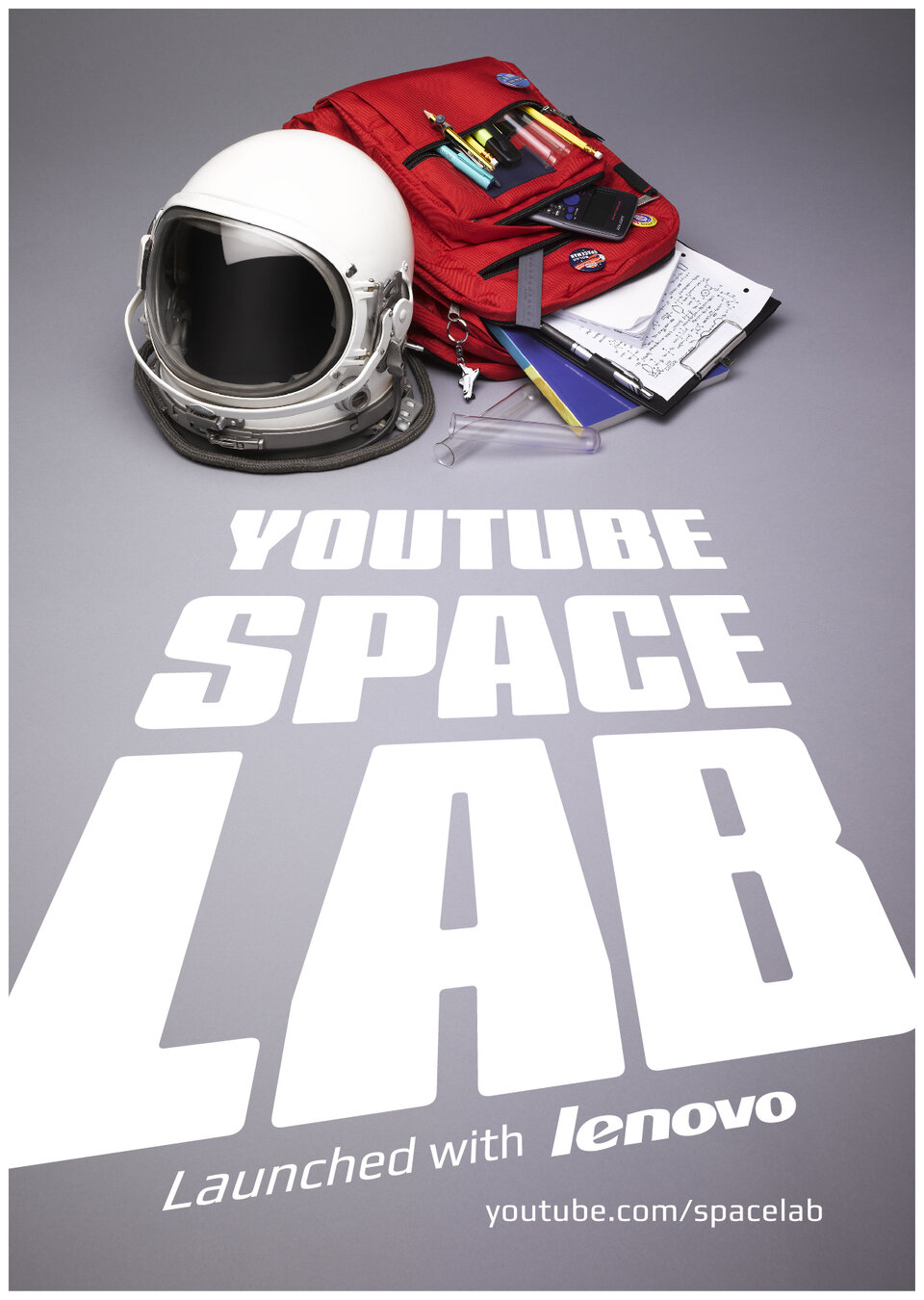
    YouTube Space Lab

    YouTube SpaceLab, launched in October 2011 with partners including NASA, ESA, CSA, Japan’a JAXA and Space Adventures, is a worldwide science competition that challenged 14–18-year-olds to design a science experiment for space.

    The world will now see the winning experiments performed by NASA astronaut Sunita Williams during a livestream on YouTube from 400 km above Earth aboard the Space Station.

    The 40-minute programme will begin with host Bill Nye interviewing the global winners and special guests such as Frank De Winne via Google+ Hangout.

    The event features the story of SpaceLab told through videos since its launch last year. Then, NASA’s Mission Control will connect the UK-based TV studio to the Station for a conversation with Sunita Williams about the winning experiments.

    “The YouTube SpaceLab campaign has been an excellent, creative way of reaching out to future generations of scientists, on the ground and in orbit,” comments Frank De Winne, Europe’s first commander of the orbital outpost.

    Teaching an old spider new tricks?

    EMEA-winner Amr Mohamed came up with an experiment to explore the question: “Can you teach an old spider new tricks?”

    As part of his prize, he travelled to Russia for a one-of-a-kind astronaut training experience in Star City, the training centre for Russian cosmonauts.

    He proposed investigating the effects of microgravity on how the zebra spider catches its prey, and whether it could adapt its behaviour in space.

    Continue reading...

    Rate this

    Views

    Share

    • Currently 0 out of 5 Stars.
    • 1
    • 2
    • 3
    • 4
    • 5
    Rating: 0/5 (0 votes cast)

    Thank you for rating!

    You have already rated this page, you can only rate it once!

    Your rating has been changed, thanks for rating!

    45
    Tweet
    • Related news
      • Space and science meet online for youngsters
        • Space Lab winners to send their experiments into space
          • Regional winners named in student Space Lab competition
            • European finalists selected in Space Lab student competition
              • Space Lab student competition on YouTube attracts 5500 teams
                • ESA joins YouTube Space Lab student space competition
                • YouTube Space Lab
                • Human Microgravity Spaceflight and Exploration Directorate
                  Human Microgravity Spaceflight and Exploration Directorate
                  Human Spaceflight
                • Human Spaceflight Education
                • the European Astronaut Centre
                  the European Astronaut Centre
                  European Astronaut Centre
                • YouTube SpaceLab
                • NASA Education
                • Space Adventures
                • Lenovo

    Connect with us

    • RSS
    • Youtube
    • Twitter
    • Flickr
    • G+
    • Facebook
    • Livestream
    • Subscribe
    • App Store
    • LATEST ARTICLES
    • · Rare merger reveals secrets of gal…
    • · Watching for hazards: ESA opens as…
    • · ESA astronaut Timothy Peake set fo…
    • · Space drives e-mobility
    • · Proba-V opens its eyes
    • FAQ

    • Jobs at ESA

    • Site Map

    • Contacts

    • Terms and conditions