Meet the teams: HyperMuscle
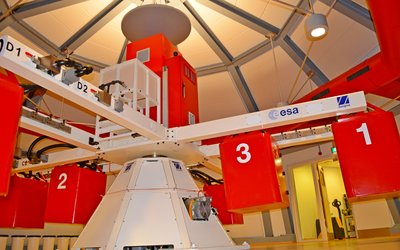
Four teams of university students were selected to develop and perform their hypergravity experiments during ESA’s ‘Spin your Thesis!’ 2010 campaign. Here is an introduction to the Italian team.


Investigation of hypergravity on proliferation, metabolism and differentiation of muscle cells
| University | Sculola Superiore Sant’Anna, Italian Institute of Technology Pisa, Italy |
| Endorsing professor |
Arianna Menciassi Scuola Superiore Sant’Anna, Pisa, Italy |
| ELGRA mentor |
Monica Monici ASAcampus, University of Florence, Italy |
| Team | Gianni Ciofani, Leonardo Ricotti, Jacopo Rigosa |

The HyperMuscle team was composed of three students from the Scuola Superiore Sant’Anna, Pisa, Italy. Their aim was to investigate the effects of hypergravity on muscle cell proliferation and differentiation.
Skeletal muscle undergoes adaptive changes in both fiber size and contractile phenotype in response to conditions of altered loading states (e.g., microgravity or hypergravity). In this project, the focus is on the assessment of muscle cell behaviour following exposure to different levels of hypergravity.
During its growth, a cell is driven and influenced by numerous stimuli: biochemical, mechanical and topological. Biological research is crucial in order to separate these three different stimuli and to improve knowledge of their importance in cellular processes. It is however impossible to separate biochemical and topological stimuli from mechanical stimuli completely. Mechanical stimuli are always present, imposed by the force of gravity. Gravity is essential for all organisms’ biological events on Earth. Mechanical stress, including gravity, pressure, and shear stress, induces various adaptive reactions that may play important roles in cell survival and growth. As reduced gravity levels lead to atrophy in skeletal muscle, maintenance of the skeletal muscle is highly dependent on altered gravity conditions.

In this project, the main goal is the investigation of the hypergravity effects on proliferation and differentiation of C2C12 cells, which are a model of skeletal muscle. With this aim, the students performed experiments exposing proliferating and differentiating cells at 2 h of different hypergravity intensities (namely 5, 10 and 20 g). After stimulation, cells were immediately fixed for cytoskeleton conformation analysis or cultured for further 24 h. After this they were either fixed or frozen to perform appropriate assays in their laboratories: DNA and protein content in proliferating cells; analysis of typical differentiation markers (MyoD, myogenin) both at genotypic and phenotypic level in differentiation samples.
The data collected on proliferation and differentiation process of myoblasts during exposure to different levels of hypergravity can contribute to the understanding of muscle behaviour at altered gravity forces. This could contribute to define new guidelines for measures taken against physiological modifications in human beings during space flights.
The results may also help to understand the potential modifications in skeletal muscle physiology in subjects involved in space missions during the hypergravity phases of the travel. Their findings, compared and coupled with data from experiments on microgravity-hypergravity cycles, could contribute to implementing appropriate countermeasures for undesired physiological phenomena.
Read the scientific article published by the PolVol team in the Elsevier journal.
Read the final experiment report here.