• → European Space Agency

      • Space for Europe
      • Space News
      • Space in Images
      • Space in Videos
    • About Us

      • Welcome to ESA
      • DG's News and Views
      • For Member State Delegations
      • Business with ESA
      • ESA Exhibitions
      • ESA Publications
      • Careers at ESA
    • Our Activities

      • Space News
      • Observing the Earth
      • Human Spaceflight
      • Launchers
      • Navigation
      • Space Science
      • Space Engineering
      • Operations
      • Technology
      • Telecommunications & Integrated Applications
    • For Public

    • For Media

    • For Educators

    • For Kids

    • ESA

    • Human Spaceflight and Exploration

    • Bedrest studies

    • What are bedrest studies?
    • Why bedrest studies?
    • History
    • Who takes part?
    • What can you do in bed?
    • Standing on your own two feet

    ESA > Our Activities > Human Spaceflight > Bedrest studies

    History

    The first bedrest studies with healthy people were conducted as early as the 19th century. The focus was not on spaceflight but on improving rehabilitation of the sick.

    When spaceflight became reality in the 1960s bedrest studies were used to simulate the effects of weightlessness on the human body. The results also apply to the rehabilitation of the sick. Bedrest is not the only way of submitting human bodies to effects similar to space travel.

    Spending time in water is another way of experiencing weightlessness, as scuba divers would agree. Long-term studies on people staying under water have been conducted, but they are not very practical for the scientists and doctors who have to monitor the volunteers.

    In the 1970s cosmonauts returning from spaceflight remarked to medical staff that they had trouble sleeping because they felt as if they were slipping out of the end of their bed. Only by raising the feet of their bed did they feel comfortable. The cosmonauts would lower their beds each night until they adapted to sleeping horizontally.


    Bedrest protein nutrition
    Bedrest meal

    Russian researchers took note of this practice and wondered if lying with your head down on Earth was closer to what it felt like to be in space. So the head-down bedrest study was born.

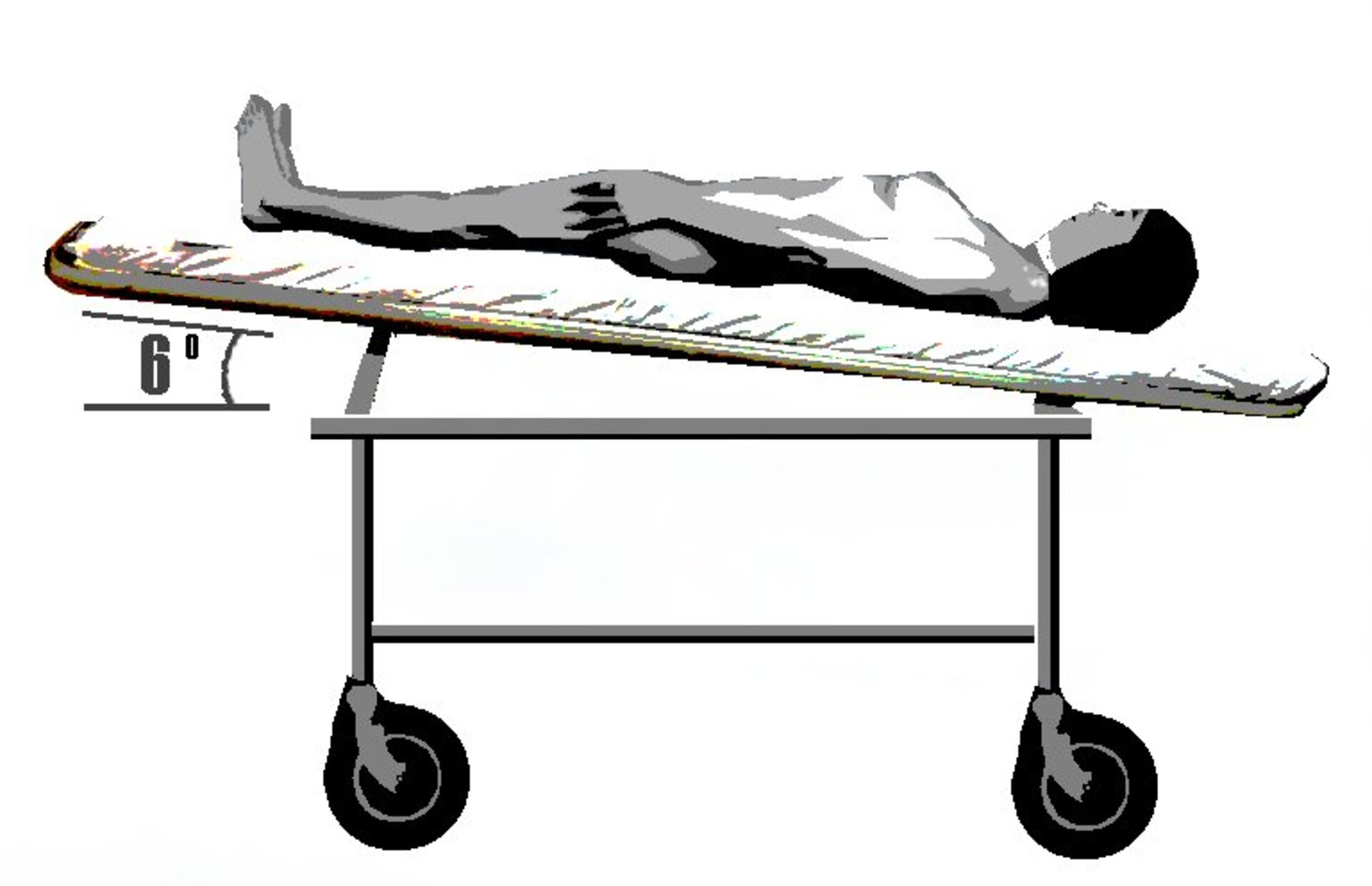
    After some experimentation the ideal angle was found to be 6° below horizontal. This angle offered a good compromise between participant comfort, practicality and physical response in the volunteers’ bodies. Americans and Russians experimented with bedrest studies throughout the 1970s.

    ESA started conducting bedrest studies in 2001 to complement its programme of isolation studies that started in the 1990s. Short-term, intermediate and long-term studies have been conducted with periods of bedrest ranging from five days to three months.

    The main areas of study have been exercise and nutrition. A 2003 study in Berlin, Germany, tested vibration as a form of exercise, while in 2005 in Toulouse, France, women-only volunteers were given nutritional supplements.

    Bedrest centrifuge

    The results from these studies have spawned many peer-reviewed papers and increased our understanding of how exercise and nutrition could help keep people on Earth healthy and active.

    In one study in 2010, volunteers were even subjected to artificial gravity created by a centrifuge. The volunteers could lie horizontally instead of on the more common 6° incline.
    Last update: 14 November 2012

    Rate this

    Views

    Share

    • Currently 0 out of 5 Stars.
    • 1
    • 2
    • 3
    • 4
    • 5
    Rating: 0/5 (0 votes cast)

    Thank you for rating!

    You have already rated this page, you can only rate it once!

    Your rating has been changed, thanks for rating!

    54
    facebook
    twitter
    reddit
    google plus
    digg
    tumbler
    digg
    blogger
    myspace
    • Previous bedrest studies
      • Women rising to the challenge of weightlessness
        • Paving the way for women to Mars: the last WISE volunteers back on their feet
          • WISE bed-rest study: second campaign under way
            • Female volunteers prepare for a second 'bedrest'
              • WISE study starts in Toulouse: 60 days of bed-rest for terrestrial female astronauts
                • ESA looking for more European women to volunteer for WISE bed-rest study in Toulouse next year
                  • ESA is looking for female volunteers for a bed-rest study in Toulouse next year
                    • End of the bedrest campaign
                      • Long-term bed rest study: second period 22 March - 27 July 2002
                      • Bedrest diaries
                        • Diaries bed rest study participants
                        • Bedrest studies

    Connect with us

    • RSS
    • Youtube
    • Twitter
    • Flickr
    • Google Buzz
    • Subscribe
    • App Store
    • LATEST ARTICLES
    • · CryoSat hits land
    • · Ariane 5 completes seven launches …
    • · Measuring skull pressure without t…
    • · Malargüe station inauguration
    • · The solar wind is swirly
    • FAQ

    • Jobs at ESA

    • Site Map

    • Contacts

    • Terms and conditions