• → European Space Agency

      • Space for Europe
      • Space News
      • Space in Images
      • Space in Videos
    • About Us

      • Welcome to ESA
      • DG's News and Views
      • For Member State Delegations
      • Business with ESA
      • ESA Exhibitions
      • ESA Publications
      • Careers at ESA
    • Our Activities

      • Space News
      • Observing the Earth
      • Human Spaceflight
      • Launchers
      • Navigation
      • Space Science
      • Space Engineering
      • Operations
      • Technology
      • Telecommunications & Integrated Applications
    • For Public

    • For Media

    • For Educators

    • For Kids

    • ESA

    • Human Spaceflight and Exploration

    • Bedrest studies

    • What are bedrest studies?
    • Why bedrest studies?
    • History
    • Who takes part?
    • What can you do in bed?
    • Standing on your own two feet

    ESA > Our Activities > Human Spaceflight > Bedrest studies

    What are bedrest studies?

    Bedrest studies offer scientists a way to see how the human body adapts to weightlessness. They allow researchers to test techniques to counteract the negative effects of living in space.

    The results benefit people on Earth – many negative effects of living in space are shared as people get older naturally, such as osteoporosis , muscle loss and orthostatic intolerance.

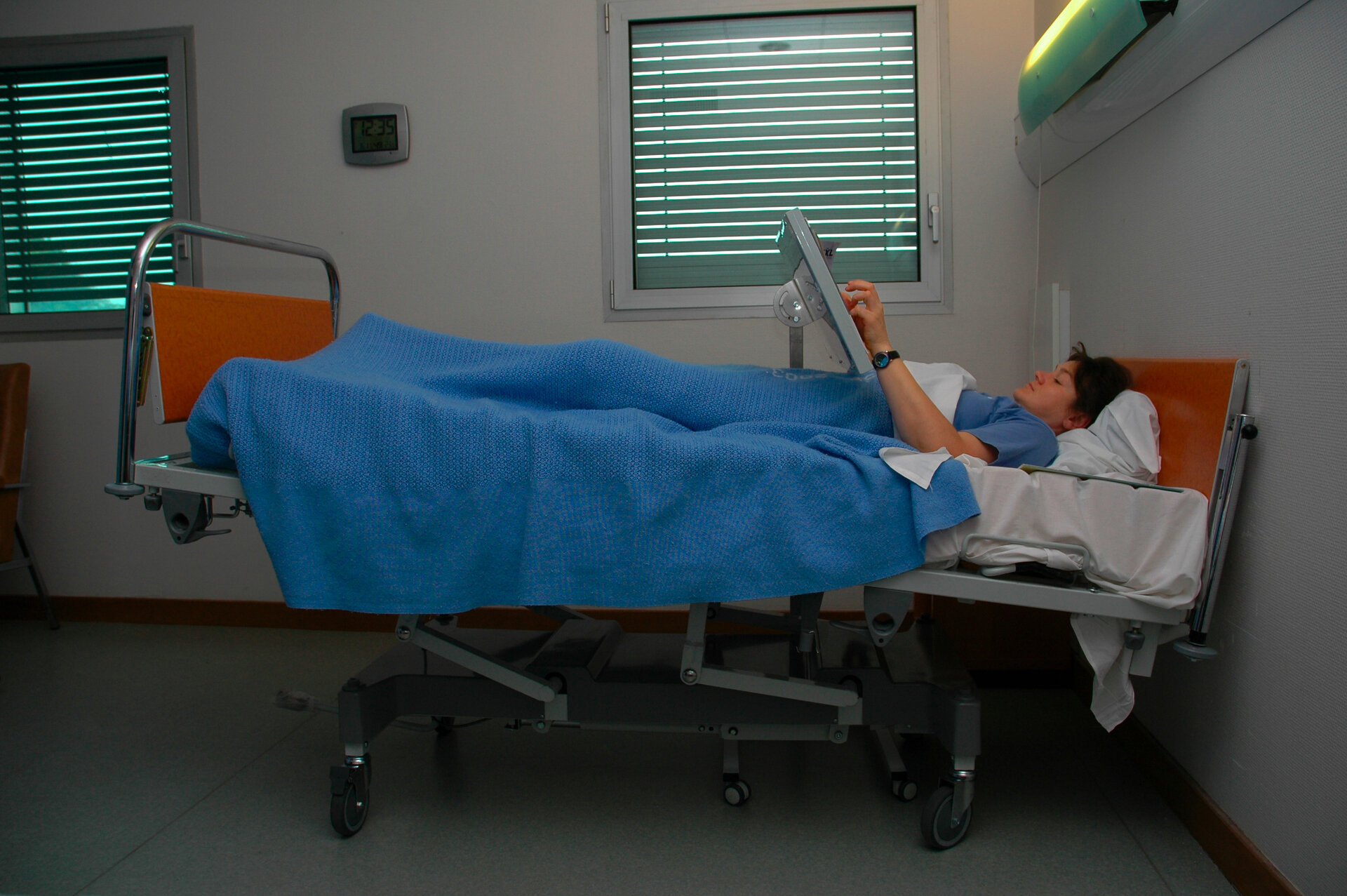
    Volunteers spend usually from five to 60 days in bed with their head down, usually at 6° below the horizontal. They may not stand up unless a research programme demands it and must perform all daily activities in bed including eating, showers and exercise.

    By submitting themselves to this upside-down regime, the volunteers’ bodies start to adapt as if they were in space.

    Scientists monitor the volunteers continuously to understand how their bodies change and why. Results allow measures to be devised that will help astronauts on space missions as well as bed-ridden people recuperating from illness.


    Bedrest volunteers enjoying a meal
    Bedrest test

    Bedrest studies offer a cheaper and more practical alternative to studying human bodies in space. The research often takes place in hospitals or clinics with specialised equipment and personnel.
    Last update: 12 November 2012

    Rate this

    Views

    Share

    • Currently 0 out of 5 Stars.
    • 1
    • 2
    • 3
    • 4
    • 5
    Rating: 0/5 (0 votes cast)

    Thank you for rating!

    You have already rated this page, you can only rate it once!

    Your rating has been changed, thanks for rating!

    108
    facebook
    twitter
    reddit
    google plus
    digg
    tumbler
    digg
    blogger
    myspace

    Connect with us

    • RSS
    • Youtube
    • Twitter
    • Flickr
    • Google Buzz
    • Subscribe
    • App Store
    • LATEST ARTICLES
    • · CryoSat hits land
    • · Ariane 5 completes seven launches …
    • · Measuring skull pressure without t…
    • · Malargüe station inauguration
    • · The solar wind is swirly
    • FAQ

    • Jobs at ESA

    • Site Map

    • Contacts

    • Terms and conditions