• → European Space Agency

      • Space for Europe
      • Space News
      • Space in Images
      • Space in Videos
    • About Us

      • Welcome to ESA
      • DG's News and Views
      • For Member State Delegations
      • Business with ESA
      • ESA Exhibitions
      • ESA Publications
      • Careers at ESA
    • Our Activities

      • Space News
      • Observing the Earth
      • Human Spaceflight
      • Launchers
      • Navigation
      • Space Science
      • Space Engineering
      • Operations
      • Technology
      • Telecommunications & Integrated Applications
    • For Public

    • For Media

    • For Educators

    • For Kids

    • ESA

    • Delta Mission

    • Human Spaceflight

    • Astronauts

    • International Space Station

    • DELTA Mission
    • About the mission
    • Why DELTA?
    • Mission facts
    • Behind the scenes
    • Soyuz spacecraft
    • Soyuz launcher
    • Factsheets (pdf)
    • Science programme
    • Experiment overview
    • Physiology
    • Biology
    • Microbiology
    • Physical science
    • Earth observation
    • Technology
    • Education
    • Meet the crew
    • André Kuipers
    • Gennadi Padalka
    • Mike Fincke
    • Expedition Eight
    • DELTA Mission live
    • Live webstreaming
    • ESA Television
    • Mission briefings
    • Multimedia
    • Image gallery
    • DELTA: Video gallery
    • Soyuz training with Frank De Winne
    • Soyuz mission: to ISS and back
    • Services
    • Mailing list

    ESA > Our Activities > Human Spaceflight > Delta Mission

    European experiments ready for activation on ISS

    Progress M1-11
    Progress M1-11 approaches the Space Station
    3 February 2004

    After arriving at the International Space Station on board the Russian Progress M1-11 supply vehicle, the European experiment, PROMISS-3, was activated last Sunday. Also delivered to the Station was the European Matroshka experiment facility, which will be attached to the outside of the Station during a spacewalk on 26 February. Other ESA experiment hardware included in the cargo will be used during the upcoming DELTA Mission.

    The unmanned Progress spacecraft, which was launched from Baikonur Cosmodrome in Kazakhstan on Thursday afternoon, docked in automatic mode with the Russian Zvezda service module at 16:13 Moscow time (13:13 UT) on Saturday 31 January 2004.

    The 2.5 tonnes of Progress cargo included food, water and fuel, two new Russian Orlan-M spacesuits, as well as gifts and letters for the two crew members currently on board ISS, NASA astronaut Michael Foale and Russian cosmonaut Alexander Kaleri.

    PROMISS experiment - examples of protein crystals in solution
    Protein crystals will be grown in space

    Also amongst the cargo was scientific equipment for a number of European Space Agency experiments. One European experiment, PROMISS-3, has since been installed in the Microgravity Science Glovebox (MSG), and was activated at 16:27 UT on Sunday 1 February 2004.

    PROMISS is an experiment that aims to improve the understanding of protein crystal growth processes. PROMISS-3 will study the influence of crystal growth conditions on the quality of the obtained crystals.

    PROMISS-3 will run continuously for 30 days, after which the samples will be placed in a return container and then stored in an incubator to keep them at around 22 degrees C. The return container will be brought back to Earth with Soyuz 7S in April 2004.
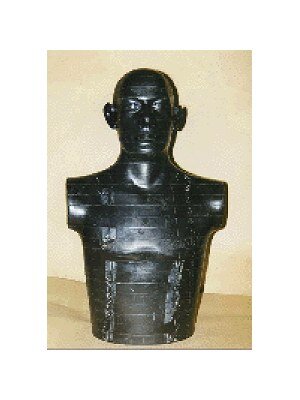

    Matroschka mannequin
    Matroschka mannequin

    Also included in the science hardware to have arrived at the Station is a human mannequin – the European Matroshka experiment facility. This will be attached to the outside of the Station's Zvezda module during a spacewalk on 26 February 2004, where it will remain for a year. Matroshka will be used to measure radiation levels experienced by astronauts during spacewalks.

    The human shaped Matroshka facility, consists of a head and torso, and is made of materials that reflect the composition of the human body. Sensors within the mannequin will measure radiation doses at organ sites such as stomach, lungs, kidney, colon and eyes.

    Other European experiment hardware brought to ISS will be used during the upcoming DELTA Mission with Dutch ESA astronaut André Kuipers, who is scheduled to visit the ISS for a 10-day mission in April 2004.

    Rate this

    Views

    Share

    • Currently 0 out of 5 Stars.
    • 1
    • 2
    • 3
    • 4
    • 5
    Rating: 0/5 (0 votes cast)

    Thank you for rating!

    You have already rated this page, you can only rate it once!

    Your rating has been changed, thanks for rating!

    33
    Tweet
    • Related articles
      • Successful Progress launch paves the way for further scientific utilisation of the ISS by Europe
      • International Space Station
      • ESA's ISS utilisation website
      • RKK Energia
      • DLR: Matroshka - depth dose measurements in a human phantom
      • On Station: Matroshka

    Connect with us

    • RSS
    • Youtube
    • Twitter
    • Flickr
    • G+
    • Facebook
    • Livestream
    • Subscribe
    • App Store
    • LATEST ARTICLES
    • · ESA astronaut Timothy Peake set fo…
    • · Space drives e-mobility
    • · Proba-V opens its eyes
    • · First new Galileo satellite arrive…
    • · Next destination: space
    • FAQ

    • Jobs at ESA

    • Site Map

    • Contacts

    • Terms and conditions
