• → European Space Agency

      • Space for Europe
      • Space News
      • Space in Images
      • Space in Videos
    • About Us

      • Welcome to ESA
      • DG's News and Views
      • For Member State Delegations
      • Business with ESA
      • ESA Exhibitions
      • ESA Publications
      • Careers at ESA
    • Our Activities

      • Space News
      • Observing the Earth
      • Human Spaceflight
      • Launchers
      • Navigation
      • Space Science
      • Space Engineering
      • Operations
      • Technology
      • Telecommunications & Integrated Applications
    • For Public

    • For Media

      • Media
      • ESA TV
      • Videos for professionals
      • Photos
    • For Educators

    • For Kids

    • ESA

    • Human Spaceflight

    • Astronauts

    • International Space Station

    • Research

    • Education

    • Our vision
    • About human spaceflight
    • Current missions
    • Volare
    • Bedrest studies
    • ATV
    • Concordia
    • Past missions

      • PromISSe
      • Mars500
      • MagISStra
      • DAMA mission
      • Node-3 & Cupola
      • Expert
      • Alissé
      • OasISS
      • Columbus
      • Esperia
      • Celsius
      • Astrolab
      • Eneide
      • DELTA
      • Cervantes
      • Odissea
      • Marco Polo
      • Andromède
      • STS-100
    • Multimedia
    • Video
    • Multimedia gallery
    • RSS feeds
    • Resources
    • Experiment archive
    • Services
    • Subscribe

    ESA > Our Activities > Human Spaceflight

    Delving inside Earth from space

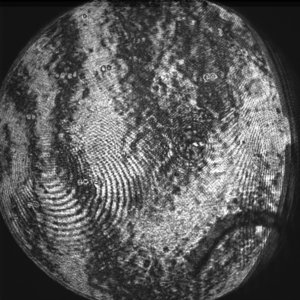
    Geoflow data
    12 June 2012

    ESA astronaut André Kuipers is running experiments on the International Space Station that are shedding light on conditions deep inside Earth. Orbiting some 400 km above us, Geoflow is offering insights into the inner workings of our planet.

    Descending 3000 km under our feet, Earth’s mantle is a semi-solid fluid under our thin outer crust. The highly viscous layers vary with temperature, pressure and depth.

    Understanding how the mantle flows is a major interest for geophysics because it could help to explain earthquakes or volcanic eruptions. Computers can model it, but how can scientists be sure they are correct?

    The deepest that humans have ever drilled is just over 12 km, so investigating the mantle directly is out of reach for the immediate future.
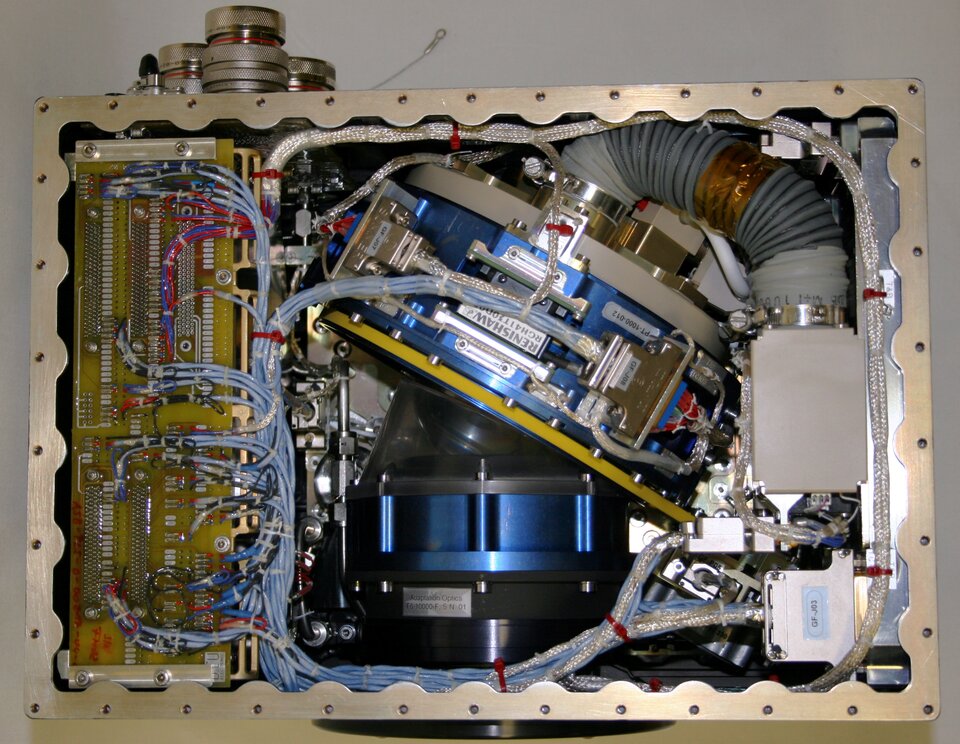
    Geoflow experiment

    Instead of probing Earth’s depths directly, six European teams led by the University of Cottbus in Germany looked to recreate aspects of mantle flow in a laboratory. Experiments simulating these conditions can verify and improve the computer models.

    This poses a different problem, however. How can gravity be simulated without Earth’s gravity itself influencing the results?

    The solution is to send an experiment to our largest weightless laboratory: the International Space Station.


    Planet in a box

    Geoflow spheres

    ESA sponsored the development of an experiment that mimics the geometry of a planet. Called Geoflow, it contains two revolving concentric spheres with a liquid between them.

    The inner sphere represents Earth’s core, with the outer sphere acting as the crust. The liquid, of course, is the mantle.

    Free from the influence of Earth’s gravity, a high-voltage electrical field creates artificial gravity for the experiment.

    As the spheres rotate slowly and a temperature difference is created between the shells, movement in the liquid is closely monitored. The temperatures can be controlled down to a tenth of a degree.

    Hawaii volcanoes

    André has seen plumes of hotter liquid rising towards the outer shell – as predicted by computer simulations.

    Mushroom-like plumes in fluids exposed to strong temperature differences might explain the Hawaiian line of volcanoes in the South Pacific.

    A better understanding of our planet is not the only outcome of Geoflow. The results could also benefit industry by improving spherical gyroscopes, bearings and centrifugal pumps, for example.
    Rate this

    Views

    Share

    • Currently 5 out of 5 Stars.
    • 1
    • 2
    • 3
    • 4
    • 5
    Rating: 5/5 (1 votes cast)

    Thank you for rating!

    You have already rated this page, you can only rate it once!

    Your rating has been changed, thanks for rating!

    235
    Tweet
    • Related articles
      • Geoflow experiment starts the flow of data from the Fluid Science Laboratory
      • Geoflow II experiment details
      • Partner universities
      • Brandenburgische Technische Universität Cottbus
      • University of Leeds
      • Institut Non Lineaire de Nice
      • Max Planck Institute for the Physics of Complex Systems
      • PMMH-ESPCI Paris
      • University of Potsdam
      • University Le Havre
      • Search experiments
      • Experiment archive
      • Follow André!
      • Follow André's mission
      • PromISSe mission logo text part only
        PromISSe mission logo text part only
      • André's blog
      • PromISSe blog
      • Columbus
      • Follow @astro_andre
      • André on Flickr
      •  ESA on YouTube
      • ESA on Flickr
      • ESA on Twitter

    Connect with us

    • RSS
    • Youtube
    • Twitter
    • Flickr
    • G+
    • Facebook
    • Livestream
    • Subscribe
    • App Store
    • LATEST ARTICLES
    • · Rare merger reveals secrets of gal…
    • · Watching for hazards: ESA opens as…
    • · ESA astronaut Timothy Peake set fo…
    • · Space drives e-mobility
    • · Proba-V opens its eyes
    • FAQ

    • Jobs at ESA

    • Site Map

    • Contacts

    • Terms and conditions