

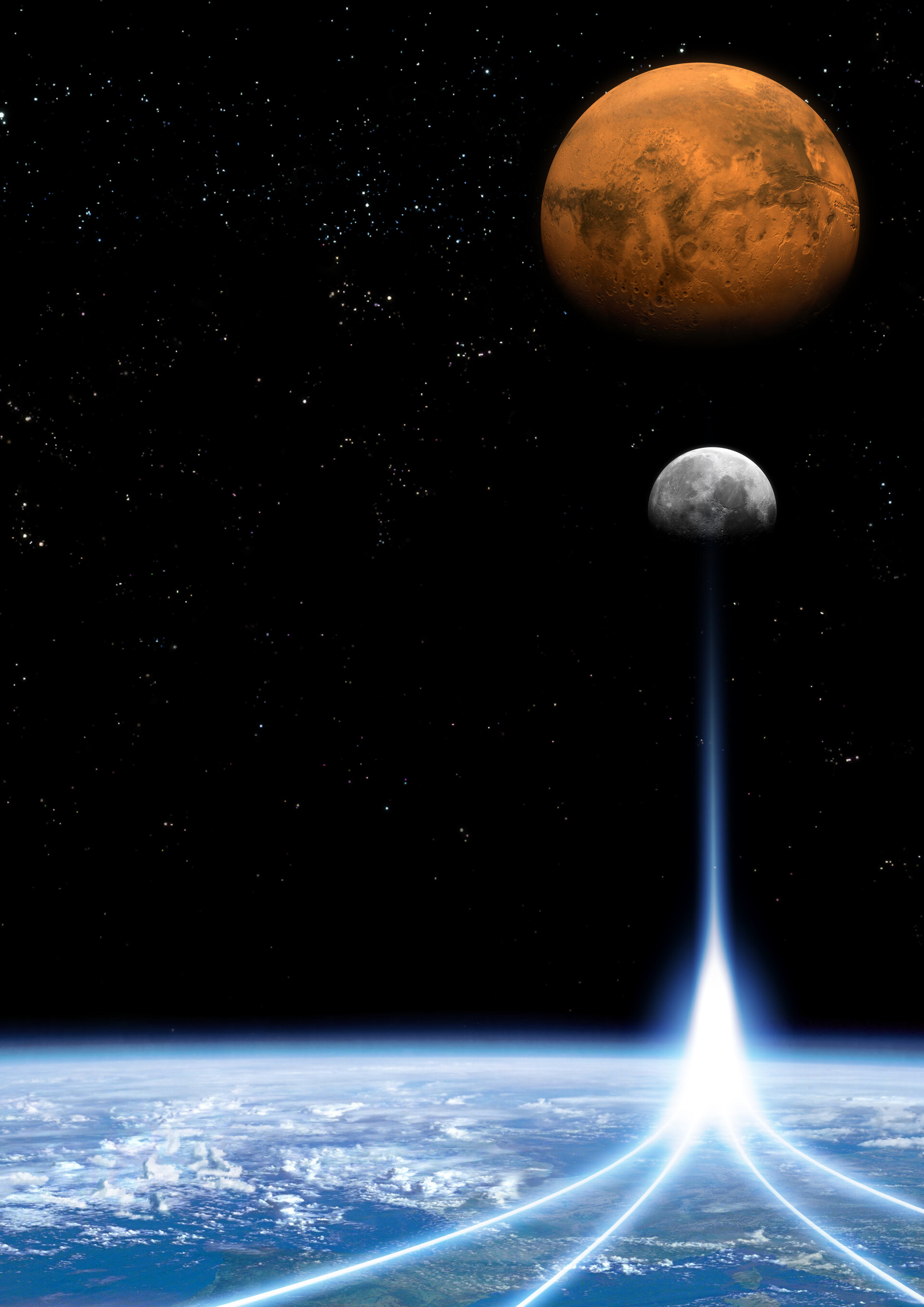
Exploring together: The Global Exploration Strategy
Space activities help to define nations and their place in the world. Countries that explore space are envied as frontier nations with cultural vigour and leading technologies. The number of countries involved in space exploration is growing steadily and we are entering a new era of historic significance, in which we will extend human presence beyond Earth's orbit, both physically and culturally.
An action plan
The Global Exploration Strategy is key to unlocking humanity's future in space. With increasing intent and determination, our partners plan to return to the Moon and beyond with the goal of sustained and ultimately self-sufficient human presence beyond Earth. It is an enormous challenge that no single nation can undertake on its own. We must do it together.
This is why fourteen space agencies developed the Global Exploration Strategy: The Framework for Coordination, which presents a vision for human space exploration, focussing on destinations within the Solar System where we may one day live and work. It elaborates an action plan to share the strategies and efforts of individual nations so that all can achieve their exploration goals more effectively and safely.
A partnership between humans and robots is essential to the success of such ventures. Robotic spacecraft are our scouts and proxies, venturing first into hostile environments to gather critical intelligence that makes human exploration feasible. Humans will then bring unique decision-making capabilities that allow them to respond to new situations and proactively push the boundaries further.
Social, intellectual and economic benefits
This Global Exploration Strategy will bring significant social, intellectual and economic benefits to people on Earth. We will learn about the evolution of the Solar System and how to survive in difficult environments. This new knowledge will help us understand Earth better, and enable us to create more sustainable societies here.
This new era of space exploration will strengthen international partnerships and global security through the sharing of challenging and peaceful goals. It will inspire people everywhere, particularly youth. It will steer many students toward careers in science and technology and provide them with challenging jobs that encourage knowledge, innovation and creativity.
Europe cannot afford to remain at the margin of what is bound to be one of the greatest undertakings of this century. Expanding human presence in the Universe, namely on the Moon and later on Mars, will positively and permanently mark humankind, our societies and our citizens. We need to keep this direction and at the same time consider a step forward to enhance our role and increase our autonomy, both to reinforce partnerships and to better serve European interests.