• → European Space Agency

      • Space for Europe
      • Space News
      • Space in Images
      • Space in Videos
    • About Us

      • Welcome to ESA
      • DG's News and Views
      • For Member State Delegations
      • Business with ESA
      • ESA Exhibitions
      • ESA Publications
      • Careers at ESA
    • Our Activities

      • Space News
      • Observing the Earth
      • Human Spaceflight
      • Launchers
      • Navigation
      • Space Science
      • Space Engineering
      • Operations
      • Technology
      • Telecommunications & Integrated Applications
    • For Public

    • For Media

    • For Educators

    • For Kids

    • ESA

    • Human Spaceflight

    • Astronauts

    • International Space Station

    • Research

    • Education

    • Exploration

    • About exploration
    • Exploring together: The Global Exploration Strategy
    • Preparation for human exploration
    • Europe's first steps on the Moon: the Lunar Lander
    • Services
    • Calendar
    • Subscribe
    • RSS feeds

    ESA > Our Activities > Human Spaceflight > Exploration

    Postcard from Mars 2

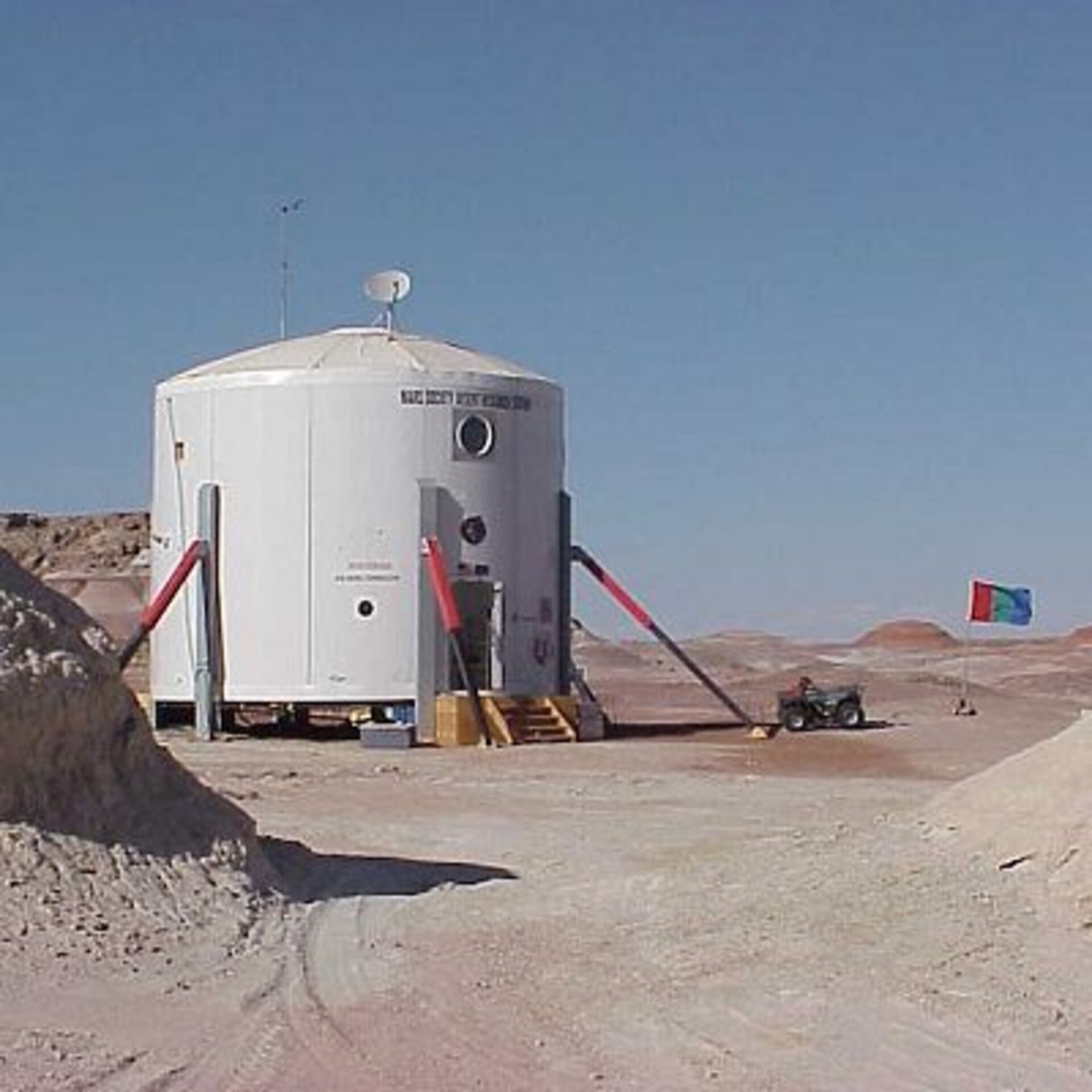
    Martian Hab with flag
    The Hab with the Martian flag Red-Green-Blue
    8 April 2002

    Over the next two weeks, ESA physicist-engineer Vladimir Pletser, who develops ISS payloads and organizes zero-gravity parabolic flights for the Agency, is on his second mission to Mars.

    Well, not exactly Mars, but his two weeks in a habitat in the desert of Utah are as close as anyone is going to get for now.

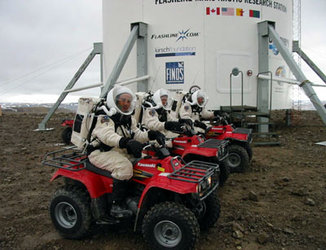
    The habitat in Utah is the second of four built by the Mars Society with private international funds. Last summer Vladimir spent 10 days at the first Mars habitat on Devon Island in Canada's Nunavut territory. Over the next couple of years, a further two habitats will be built in Iceland and in the Australian outback.

    Crew 5 patch
    Crew 5 patch

    It is hoped that the Mars habitats will teach us whether a manned mission to the Sun’s fourth planet is feasible, and what it would be like to live there ourselves. During the first simulation some crews found they could get by on less water than the previously estimated 45 litres per day per person. This is a significant finding since the amount of water needed has a huge effect on the mass and cost of the mission.

    Six crew members will in turn spend two weeks in the Martian habitat in Utah, conducting field experiments in geology, geophysics and biology during simulated EVAs. Vladimir will be responsible for a simple experiment to assess the psychological aspects of growing food in the habitat and in the base greenhouse.

    Over the next couple of weeks Vladimir Pletser will be keeping a diary of his mission. Each day the latest update will be posted on this web site.

    Rate this

    Views

    Share

    • Currently 0 out of 5 Stars.
    • 1
    • 2
    • 3
    • 4
    • 5
    Rating: 0/5 (0 votes cast)

    Thank you for rating!

    You have already rated this page, you can only rate it once!

    Your rating has been changed, thanks for rating!

    8
    facebook
    twitter
    reddit
    google plus
    digg
    tumbler
    digg
    blogger
    myspace
    • Mars Diary
    • Day 13: Friday 19 April
    • Day 12: Thursday 18 April
    • Day 11: Wednesday 17 April
    • Day 10: Tuesday 16 April
    • Day 9: Monday 15 April
    • Day 7 & 8: Sunday 14 April
    • Day 6: Friday 12 April
    • Day 5: Thursday 11 April
    • Day 4: Wednesday 10 April
    • Day 3: Tuesday 9 April
    • Day 2: Monday 8 April
    • Day 1: Sunday 7 April
    • Related links
    • The Mars Society
      • Postcard from Mars

    Connect with us

    • RSS
    • Youtube
    • Twitter
    • Flickr
    • Google Buzz
    • Subscribe
    • App Store
    • LATEST ARTICLES
    • · CryoSat hits land
    • · Ariane 5 completes seven launches …
    • · Measuring skull pressure without t…
    • · Malargüe station inauguration
    • · The solar wind is swirly
    • FAQ

    • Jobs at ESA

    • Site Map

    • Contacts

    • Terms and conditions