• → European Space Agency

      • Space for Europe
      • Space News
      • Space in Images
      • Space in Videos
    • About Us

      • Welcome to ESA
      • DG's News and Views
      • For Member State Delegations
      • Business with ESA
      • ESA Exhibitions
      • ESA Publications
      • Careers at ESA
    • Our Activities

      • Space News
      • Observing the Earth
      • Human Spaceflight
      • Launchers
      • Navigation
      • Space Science
      • Space Engineering
      • Operations
      • Technology
      • Telecommunications & Integrated Applications
    • For Public

    • For Media

    • For Educators

    • For Kids

    • ESA

    • Human Spaceflight

    • Astronauts

    • International Space Station

    • Research

    • Education

    • Our vision
    • About human spaceflight
    • Current missions
    • Volare
    • Bedrest studies
    • ATV
    • Concordia
    • Past missions

      • PromISSe
      • Mars500
      • MagISStra
      • DAMA mission
      • Node-3 & Cupola
      • Expert
      • Alissé
      • OasISS
      • Columbus
      • Esperia
      • Celsius
      • Astrolab
      • Eneide
      • DELTA
      • Cervantes
      • Odissea
      • Marco Polo
      • Andromède
      • STS-100
    • Multimedia
    • Video
    • Multimedia gallery
    • RSS feeds
    • Resources
    • Experiment archive
    • Services
    • Subscribe

    ESA > Our Activities > Human Spaceflight

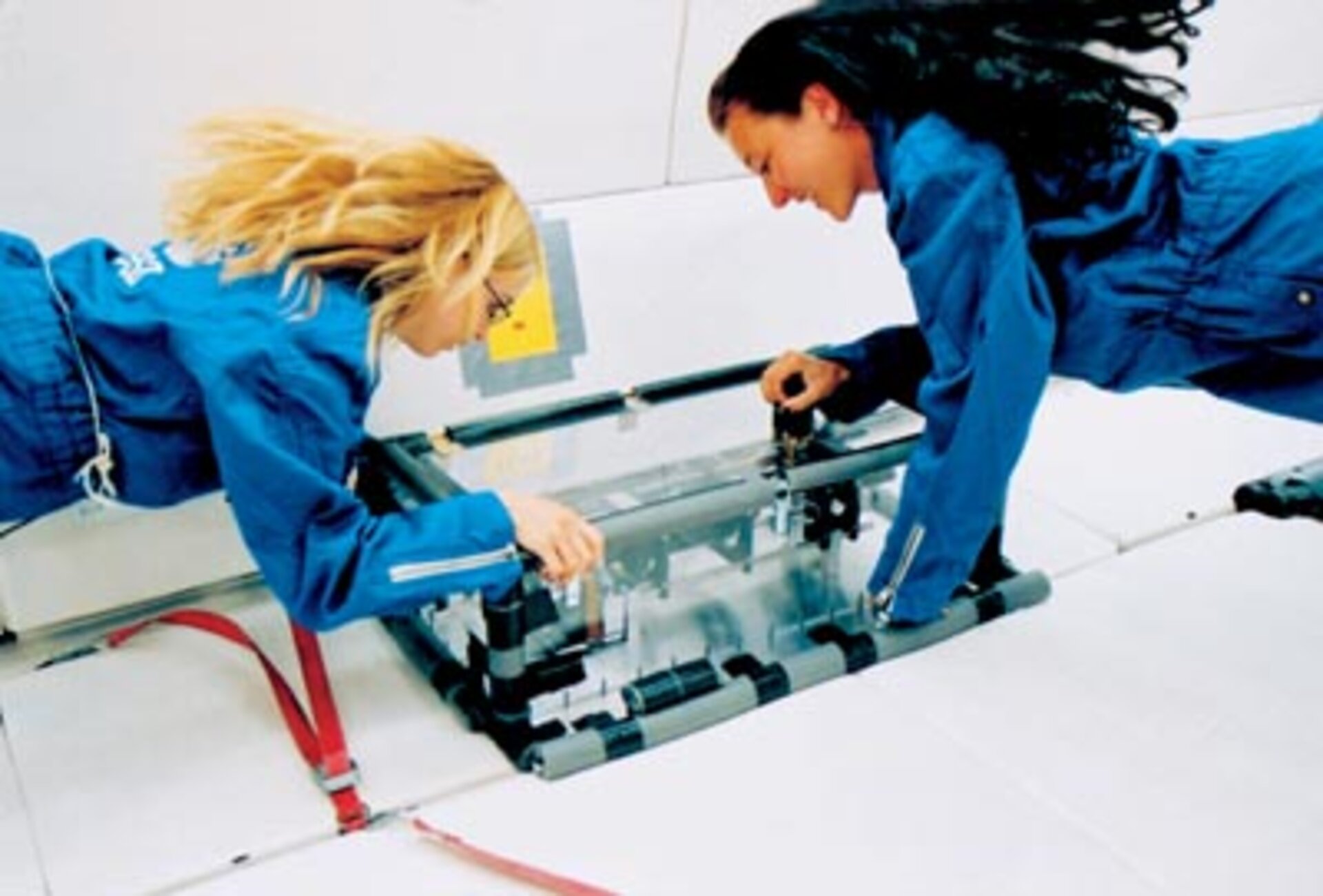
    Students working in Zero-G
    Students working in Zero-G

    Highlights of the airborne zero gravity research

    The parabolic flight symposium provided an overview of what has been achieved on the European parabolic flights over the 25 years.

    Some of the most interesting results and questions are:

    How were the Earth and other planets born some 4.6 billion years ago?
    A flame in microgravity

    Taking advantage of microgravity conditions to investigate how tiny dust and ice grains behave, we can better understand the conditions in the primordial Solar System; how the interplanetary dust and gas around the young Sun came together and finally formed the Solar System we see today.


    Strong and light metallic foams

    Metal nanoparticles produced in microgravity
    Metal nanoparticles produced in microgravity

    The behaviour of dust, ice, gas and crystals, vibrations, and heat and mass transfer are some of the most interesting topics of physical science that can be best studied in weightlessness. One experiment involved Xray studies of metallic foam, created by melting various metals and blowing gas through them. These novel materials are light but still structurally very stable.

    Better semiconductors? New drugs? Diamonds?
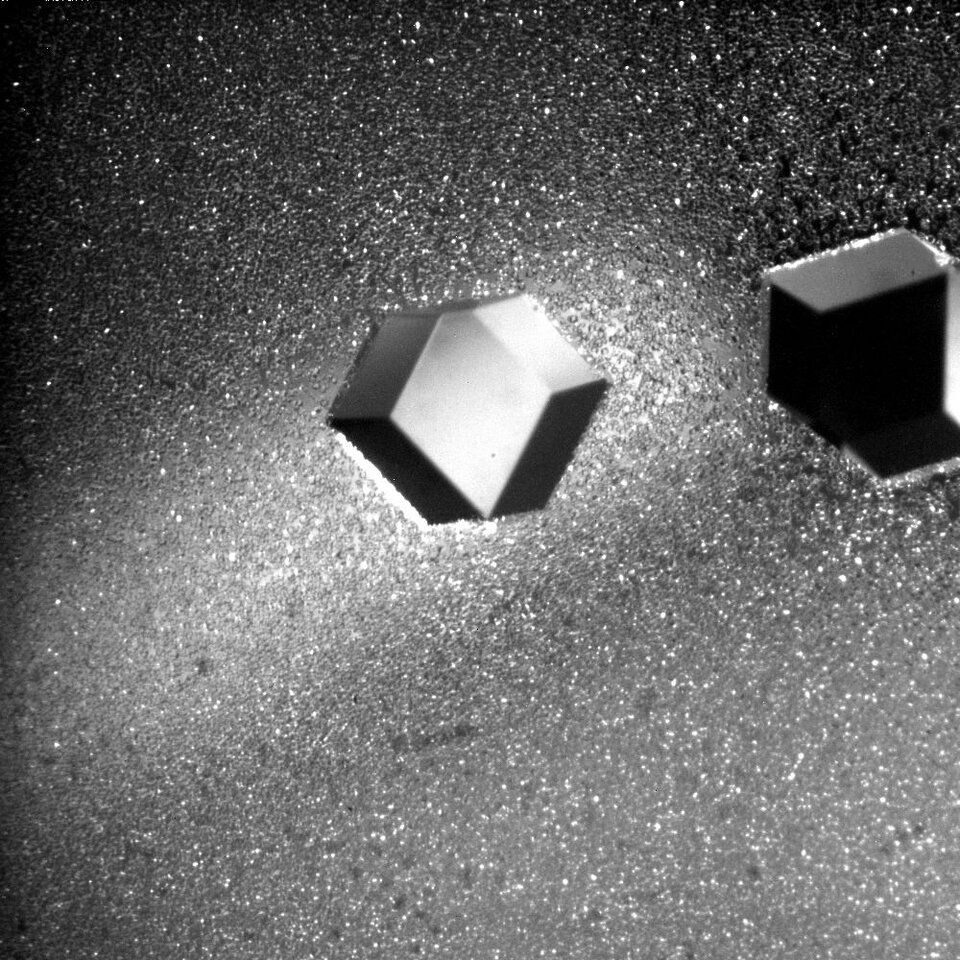
    Protein crystals
    Protein crystals similar to these are expected to grow inside PCDF

    Another experiment, already conducted on the International Space Station, has provided insight into complex plasmas, condensed matter (crystallisation) and fluid dynamics. Further applications might be in semiconductor production, medicine development, astrophysics and even fusion energy. In one experiment, involving high-energy plasma beams, some miniature diamonds were created as a byproduct.

    How do we perceive depth and height?
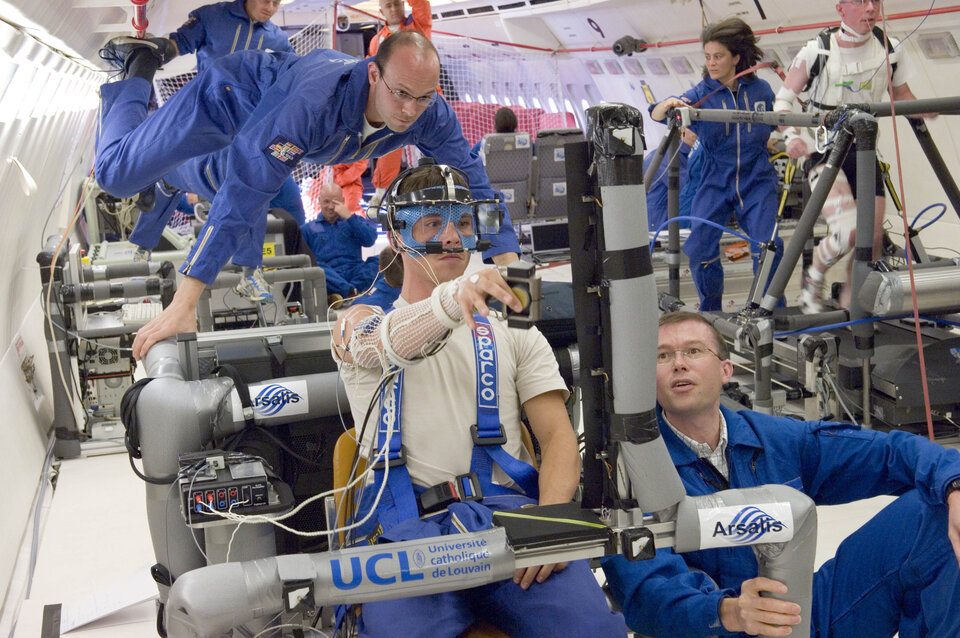
    Team of the Catholic University of Louvain
    The team of the Catholic University of Louvain conducting the experiment on dextrous manipulation

    The human physiological response to microgravity is still a big question. The cardiovascular system and the way we observe and sense the world around us are affected by gravity. Parabolic flights are a superb platform for these studies, perhaps leading to new kinds of treatments, such as prostheses.

    Better immunity? Stronger plants?

    Rat pituitary cell
    The Space Biology Group researches the behaviour of cells in weightlessness

    It is well known that the immune system is less reactive under microgravity conditions; biological researchers are therefore looking into immune cells on the molecular level and trying to understand how they react to microgravity. Biologists have also studied muscle atrophy and the gravity-signalling chain in the roots of plants.

    A comprehensive list of experiments performed during ESA’s parabolic flight campaigns can be found at: http://eea.spaceflight.esa.int

    Last update: 27 November 2009

    Rate this

    Views

    Share

    • Currently 5 out of 5 Stars.
    • 1
    • 2
    • 3
    • 4
    • 5
    Rating: 5/5 (1 votes cast)

    Thank you for rating!

    You have already rated this page, you can only rate it once!

    Your rating has been changed, thanks for rating!

    21
    Tweet
    • Related links
    • Slideshow: 50 ESA parabolic flight campaigns
    • Fly me to ... a lunar parabola

    Connect with us

    • RSS
    • Youtube
    • Twitter
    • Flickr
    • G+
    • Facebook
    • Livestream
    • Subscribe
    • App Store
    • LATEST ARTICLES
    • · ESA astronaut Timothy Peake set fo…
    • · Space drives e-mobility
    • · Proba-V opens its eyes
    • · First new Galileo satellite arrive…
    • · Next destination: space
    • FAQ

    • Jobs at ESA

    • Site Map

    • Contacts

    • Terms and conditions