Control centres
ESA human spaceflight operations consist of planning, preparation, monitoring and management of European activities in the Columbus laboratory on the International Space Station (ISS).
Several operations centres across ESA's Member States ensure smooth European operations on the Space Station. ESA currently works with a decentralised scheme for European operations.
There are different types of centres working together:
- European User Support and Operations Centres.
- European Astronaut Centre Crew Operations Support Centre.
- Commercial Operations Centres.
- Columbus Control Centre.
User centres
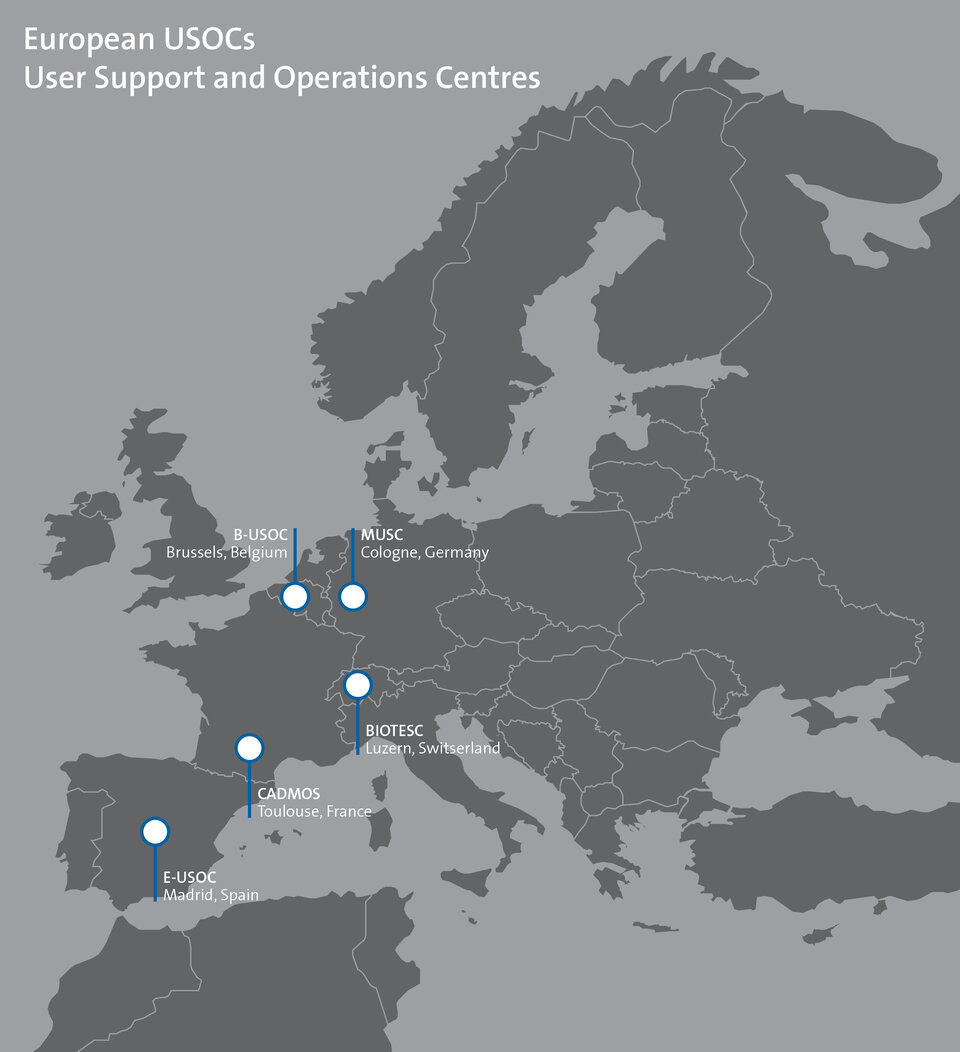
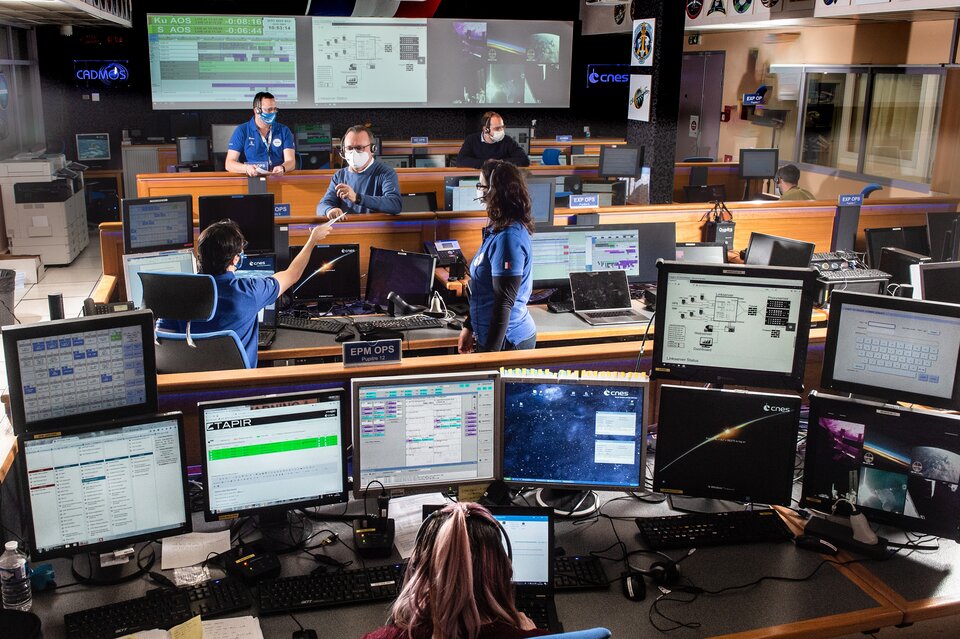
The European User Support and Operations Centres (USOCs) are responsible for the preparation and in-flight operations of ESA scientific experiments and payloads inside the Columbus laboratory.
They provide an end-to-end service by developing the experiments' procedures before its launch, operating the payloads once in orbit and providing the experimental data to the scientific team.
Its main goal is to ensure the successful development of experiments on the European Columbus module. These centres are distributed throughout Europe and work as a network to operate ESA payloads according to their field of expertise.
These facilities act as an interface between the scientists and the International Space Station.
European Astronaut Centre Crew Operations Support centre (ECOS)
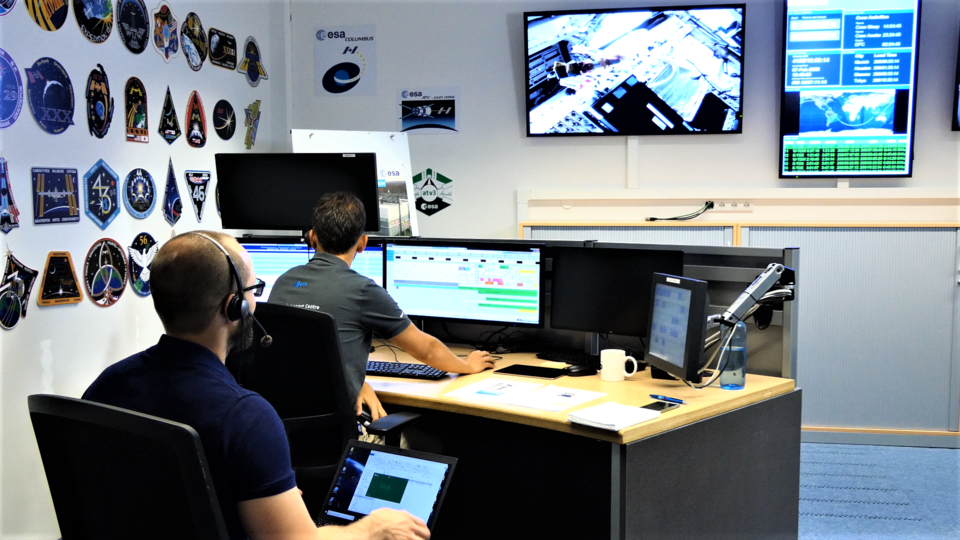
ECOS runs and implements European payloads on the International Space Station in the fields of space medicine, space training and crew systems.
The main tasks of this operations centre are the flight procedures development and the preparation, integration and execution of different research activities, technology demonstrations and system activities. In addition, ECOS takes care of the Mission Operation Implementation Concept (MOIC) and the collection of in-flight data. To perform all these activities, ECOS receives the inputs of developers and scientists.
Commercial Operations Centres
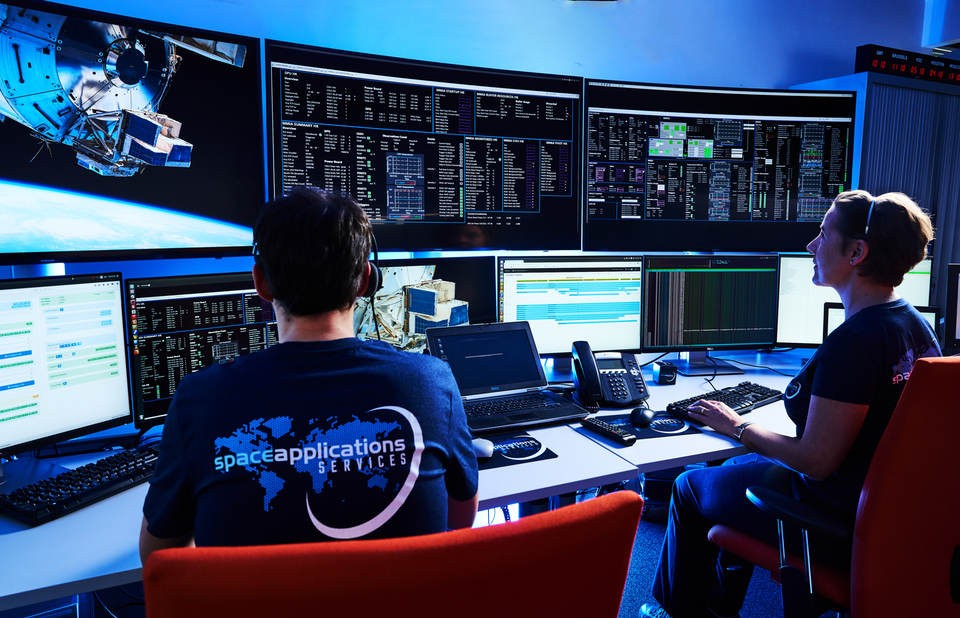
Three commercial operations centres exist in Europe:
- Advanced Closed Loop System Operations Centre.
- Bartolomeo Control Centre.
- International Commercial Experiment Cubes Mission Control Centre.
Through a Public-Private Partnership (PPP) with ESA, these centres provide space access to private customers and develop competitive utilisation services for future customers.
Columbus Control Centre (COL-CC)
The Columbus Control Centre is located at the Space Operations Centre of the German Space Agency (DLR), in Oberpfaffenhofen, near Munich in Germany. This centre is open 24 hours a day, seven days a week.
Col-CC commands, controls and coordinates the European Columbus laboratory and the European payloads on the Space Station.
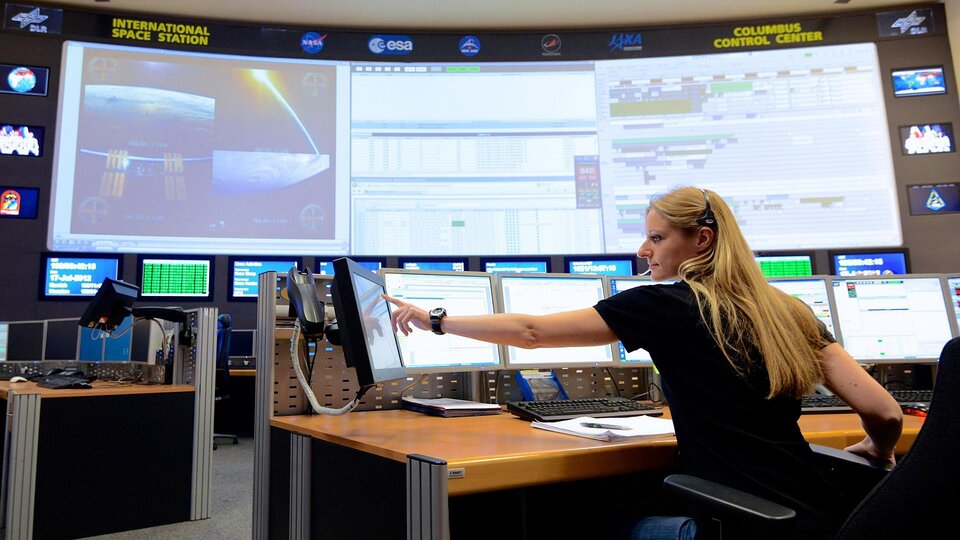
The Flight Control Team is in close contact with the Mission Control Centre in Houston, USA which has overall responsibility for the International Space Station, together with the Mission Control Centre in Moscow. In addition, Col-CC coordinates operations with the Space Station Payload Operations and Integration Centre at the Marshall Space Flight Centre in Huntsville, Alabama, USA, which is responsible for operating European experiments.
All the ground services for Columbus are provided by Col-CC. This includes relaying communications (voice, video and data) to sites where Station users are located such as the European Astronaut Centre (EAC) and industrial support sites.
Learn more about all the roles within the Flight Control Team in this booklet.