Greenhouse in Space: Food in Space lesson (Part 1)
5, 4, 3, 2, 1….lift off!
ESA’s MagISStra mission has begun as three more astronauts head off to the International Space Station from Baikonur in Kazakhstan.
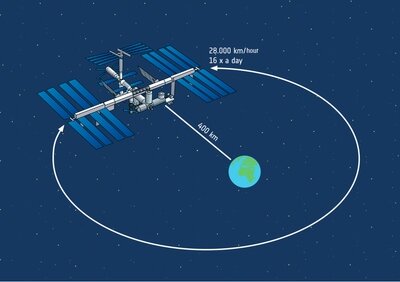
The ISS is an incredible space ship that orbits 400 kilometres above the earth 16 times a day at a speed of 28000 kilometres per hour.
For the next days and even months these astronauts will live, work, and sleep on board this spaceship where the internal environment is very different to that what is usually experienced by human beings on earth. For example, everything has to be fixed or tied down or it will float away because of the microgravity conditions in space.
All the food and water the astronauts need has to be transported to the ISS. Materials are taken on board from Earth and help sustain the crew in this relatively closed space.
They need to have carefully planned meals which allow them all their nutritional needs and exercise to maintain their health on board the Space station.
Cargo ships such as ATV, HTV and Progress bring supplies of food and water to the ISS.
The astronauts work and maintain the ISS. They carry out many scientific experiments which help mankind in areas of medicine and technology. In conditions of weightlessness, experiments can be carried out in the absence of gravity and compared with what happens on Earth.
Before we look at one very special experiment involving growing plants on board the ISS lets look at why plants are so important to us.
Part A: Importance of plants

Plants are multi cellular living things. They grow, excrete, respire, reproduce and respond to external stimuli.
They are our main source of food and without plants there would be no humans or animals. Can you think of reasons why?
Think about food chains and food webs you have studied.
What do all the food chains begin with? Draw some food chains and food webs making them as complex as you like. From these you should be able to clearly see the essential role of plants. Every food chain has at its start point, organisms that are able to produce their own food (plants and chemotrophs).
On Earth we have all the ingredients necessary for life: Air, water, light, nutrients and warmth. We (and all animals) are able to get our energy to live and grow from the food we eat and the oxygen from the air.
We break down complex molecules from the food we eat (carbohydrates, proteins and fats) into simpler molecules that our bodies can use (glucose. amino acids, fatty acids and glycerol). We use these to build the molecules that allow us to live, move and grow.
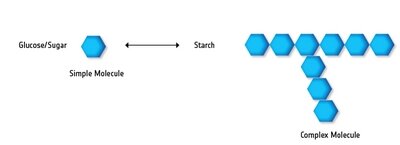
Plants do this in a different way. They use simple molecules such as carbon dioxide from the air, and water to construct more complex molecules such as glucose. With a few more nutrients that plants get from fertile soil (such as nitrogen or sulphur), plants can use glucose to make even more complex molecules such as carbohydrates, proteins and fats which they store in special structures or their leaves.
The process by which plants make glucose from carbon dioxide and water is called photosynthesis and uses sunlight energy. A by-product of photosynthesis is oxygen.
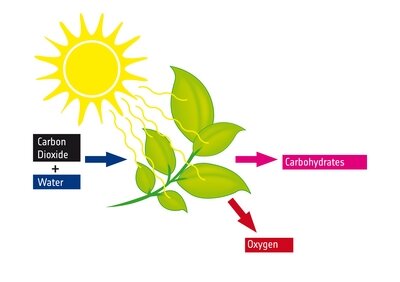
So plants use water and sunlight to grow and they produce oxygen. Animals on the other hand eat plants (and other animals!), use oxygen and breathe out carbon dioxide. In most food chains, we could describe plants as the “kitchens” of planet earth.
So how does a seed become a plant?
The dried seeds will swell up as they take in water (imbibition). This is what has happened with the Arabidopsis seeds that were planted in the greenhouse.
You can try this in the classroom with other seeds too: Take a few beans or corn seeds. Put them in water and watch what happens.
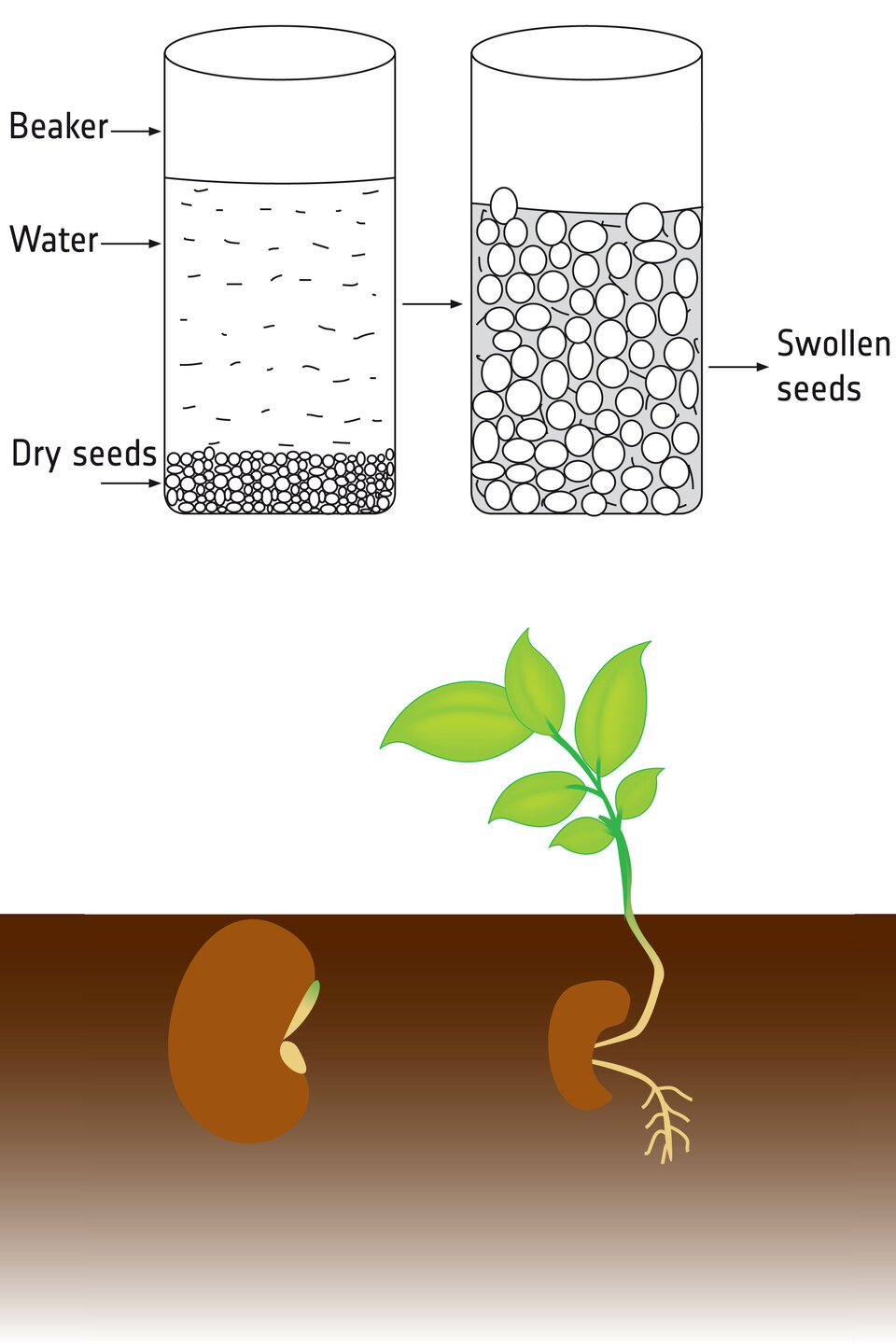
As this happens the seed coat will break open exposing the cotyledons which contain the nutrients stored in the seed. The cotyledons provide the seed with enough energy to continue to grow into a plant. They also protect the young shoot and young root. What grows first?
The root will anchor the plant onto the soil and allow the young seedling to obtain water and nutrients via root hairs. The process of a seed becoming a plant is called germination.
As the young shoot emerges above ground, the first foliage leaves are formed. These allow the plant to start producing its own food as the food stores are used up. The plant continues to grow and eventually produces flowers and seeds.
Part B: Food in Space
Astronauts live on board the Space station. Watch and read about life on board here.
All the food is brought on board from Earth.
Due to the duration of the mission on the ISS and the exchange of crew which allow both fresh supplies to be ferried in, there is always enough food, water and oxygen to sustain the astronauts.
However, for long term missions e.g. to Mars where the travel time and length of the journey there and back would take one and a half years, a different strategy needs to be implemented.
For long term missions many preparations have to be made and tested before we can be ready to send people so far away. Studies are being conducted right now by a team from the European Space Agency and the Russian Institute for Biomedical Problems (IBMP) in Moscow, called Mars500.
One of the solutions could be that astronauts produce fresh food and become partially self sufficient. Therefore special greenhouses on board the travelling spacecrafts, on orbiting stations or on the new planets’ surfaces need to be developed.
A greenhouse could be an essential addition to the sustainability of space travel. Whilst the environment of space differs greatly from that of earth, there are certain elements that could allow this process to take place. The essential ingredients for plants to grow are water, nutrients, air (oxygen and carbon dioxide) and light.
Let’s look at how a greenhouse in space would work. How would it differ from here on earth?
During the MagISStra mission ESA astronaut Paolo Nespoli started a mini greenhouse activity. This is just one of the many experiments he will be conducting during his six month mission on the International Space station. Have a look at part of the day he started this activity (17th February 2011 at 14.25 CET). You can see this on the yellow note attached to his schedule for that day.
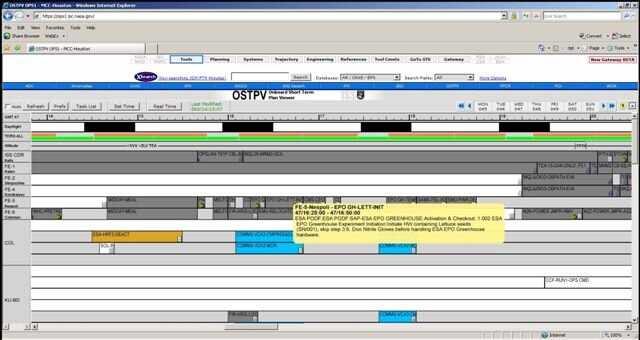
Click here to see how Paolo started his space experiment.
Plants provide us with food. On earth, it is relatively easy to grow and cultivate plants. However, as mankind decides to explore and leave the earth environment we are going to have to find a way to grow food away from earth because it is very expensive to take all the food a crew would need if they journeyed to Mars. For a long time now scientists have been devising ways in which astronauts could become self sustainable on long term missions by growing their own food.
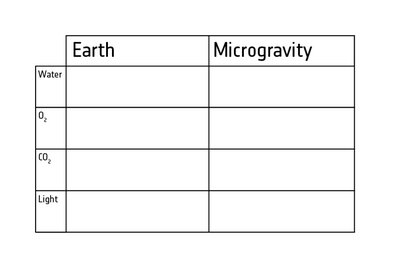
What happens in the space environment and how would plants behave in microgravity? What special conditions are needed and why? Complete the table below to compare and contrast all the ways in which plants obtain their water (how do you water plants on earth and how does Paolo do this?), where do oxygen and carbon dioxide molecules come from and where does the light energy that drives photosynthesis originate from?
The plant that was chosen to be grown in the experiment is called Arabidopsis thaliana. It is an angiosperm (flowering plant) and a dicot (two cotyledons in the seed) and belongs to the mustard family (Brassicaceae). It is commonly known as mouse-ear cress and is considered a weed.
When fully mature it looks like in the photo below on the left.
The plant is small and has a flat rosette of leaves from which a flower stalk grows about 15 to 30 cms long. It is also self pollinating and grows in a relatively small space. Arabidopsis has a short life cycle of about 6 weeks from germination to seed maturation.
It produces seeds in fruiting bodies called siliqua (seed capsule of 2 fused carpels). It has been extensively studied in plant sciences and genetics.
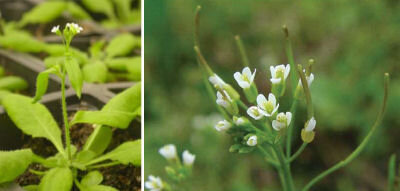
The seeds are every small and need to be carefully handled when planting. In the space greenhouse all the seeds were already placed inside the growth chamber and held in place within a special water soluble paper.
When Paolo started the experiment by adding water with a syringe the paper dissolved and the seeds were able to germinate.
Here is the first picture of the space plant as one of the seeds emerges from the substrate after 5 days.
After about 3 weeks the space greenhouse showed signs of mould growth.
On board the ISS keeping the internal environment is really critical for the heath of the crew. So in this situation the greenhouse had to be removed from the ISS. Watch here how Paolo disposed his greenhouse.
However, at the same time as the experiment was started on the ISS, the crew of the Mars500 project also started the experiment. The Mars 500 crew are simulating a possible mission to Mars – you can read more about this on the Mars500 site.
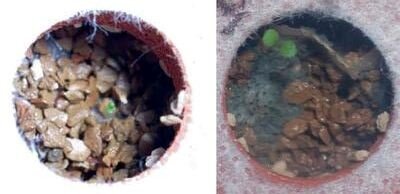
You can follow the growth of your plant with that of the crew on Mars 500 and send your results to the isseducationteam@esa.int at the end of the project (end of June 2011).
A final conclusion of results from all the different countries as well as that of the Mars500 crew will be analysed and published in this lesson on line as soon as all the data is received.