• → European Space Agency

      • Space for Europe
      • Space News
      • Space in Images
      • Space in Videos
    • About Us

      • Welcome to ESA
      • DG's news and views
      • For Member State Delegations
      • Business with ESA
      • Law at ESA
      • ESA Exhibitions
      • ESA Publications
      • Careers at ESA
    • Our Activities

      • Space News
      • Observing the Earth
      • Human Spaceflight
      • Space Transportation
      • Navigation
      • Space Science
      • Space Engineering & Technology
      • Operations
      • Telecommunications & Integrated Applications
      • Preparing for the Future
    • Careers at ESA

    • For Media

      • Media
      • ESA TV
      • Videos for professionals
      • Photos
    • For Educators

    • For Kids

    • ESA

    • Human Spaceflight

    • Astronauts

    • International Space Station

    • Research

    • Education

    • About research in space
    • Research areas
    • Human health
    • Aging
    • Plants
    • Life support
    • Exobiology
    • Physics and materials
    • Radiation
    • Technology
    • Platforms and facilities
    • International Space Station
    • Sounding rockets
    • Parabolic flights
    • Drop towers
    • Bedrest and ground studies
    • Hypergravity
    • Research activities
    • Research Announcements
    • Experiment archive
    • Multimedia
    • Images
    • Videos
    • Web Streaming Network
    • Printed products
    • Brochures
    • European user guide to low gravity platforms
    • Space for life newsletter

    ESA > Our Activities > Human Spaceflight > Research

    Loading...
    Life in the Solar System
    Access the video

    Exobiology

    What are the limits to life and can it survive space travel? Can life hitchhike across the Galaxy, and where did life come from to begin with? How can we protect life on Earth and avoid contaminating other planets we explore? Exobiology seeks to answer these questions and ESA research is at the forefront of finding answers.
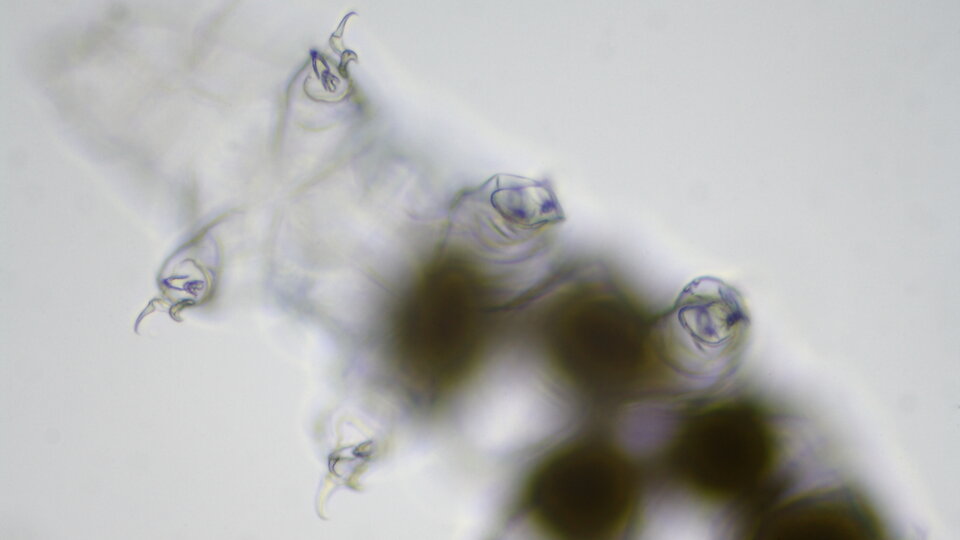
    Tardigrade

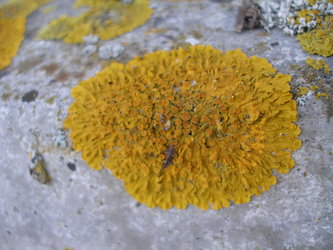
    ESA has already found life that can survive spaceflight. Both lichen and small organisms called tardigrades or ‘water bears’ have spent months attached outside the International Space Station and returned to Earth alive and well.

    The Agency has a long history of experiments exposing life to the harsh conditions of space. The atmosphere protects all life from the Sun’s UV rays and cosmic radiation so satellites are the only way to experiment with the space environment.

    Biopan recovery from Foton-11
    Early exobiology capsule

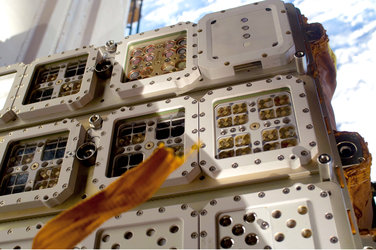
    The International Space Station offers a practical permanent laboratory for exobiology research and multiple experiments have submitted life forms to the daunting environment outside our protective atmosphere.

    Bacteria, seeds, lichens and algae are repeatedly frozen, thawed, vacuum-dried and exposed to radiation for months. The samples endure temperature swings from –27oC to +46oC, crossing the freezing point 569 times as they orbit Earth during a six-month mission. The results of the Expose-E study were published in a special edition of the Astrobiology journal.

    Surviving in space

    Expose facility

    Humans cannot survive in space without a spacesuit, but some life forms can. One lichen in the Expose experiment returned to Earth and continued to grow normally after living outside the Space Station for 18 months. Some plant seeds also sprouted back on Earth, showing a remarkable and unexpected resistance to open space.

    Living organisms surviving in open space support the idea of ‘panspermia’ – life spreading from one planet to another, or even between star systems. It seems possible that organisms could colonise planets by hitching rides on asteroids. ESA is probing this intriguing theory on future Station missions with different samples. 

    More experiments will change parameters, adding a layer of protection to the experiment facility and recreating the atmospheres of Mars and other planets. Researchers can submit proposals to send organisms further afield on spacecraft that venture beyond low-Earth orbit.

    The findings from ESA’s exobiology studies reveal the limits of life and also teach us how to protect life on Earth.

    Last update: 24 April 2015

    Rate this

    Views

    Share

    • Currently 4.5 out of 5 Stars.
    • 1
    • 2
    • 3
    • 4
    • 5
    Rating: 4.4/5 (21 votes cast)

    Thank you for rating!

    You have already rated this page, you can only rate it once!

    Your rating has been changed, thanks for rating!

    4466
    Tweet

    Related articles

    Exposed to space and back on Earth05 July 2016

    Exposed to space and back on Earth05 July 2016 In the excitement of watching Tim Peake, Yuri Malenchenko and Tim Kopra land on Earth on 18 June after 186 days in space, all attention was focused on the astronauts and their bumpy ride. 

    Russian spacewalk marks end of ESA’s exposed space chemistry03 February 2016

    Russian spacewalk marks end of ESA’s exposed space chemistry03 February 2016

    Space Kombucha in the search for life and its origin29 July 2015

    Space Kombucha in the search for life and its origin29 July 2015 You might know it as a drink for hipsters or as an ancient brew drunk for centuries in Eurasia, but the culture that ferments sugary tea into Kombucha is going around the world. Bolted to the outside of the International Space Station are the same bac...

    The worst trip around the world22 December 2014

    The worst trip around the world22 December 2014

    Lichen

    The toughest life on Earth22 June 2012

    Lichen

    The toughest life on Earth22 June 2012 You can freeze it, thaw it, vacuum dry it and expose it to radiation but still life survives. ESA’s research on the International Space Station is giving credibility to theories that life came from outer space – as well as helping to create better sun...

    Live long and prosper, Xanthoria elegans01 February 2010

    Live long and prosper, Xanthoria elegans01 February 2010 Space is a hostile environment for living things, but small organisms on the Expose-E experiment unit outside Europe’s Columbus ISS laboratory module have resisted the solar UV radiation, cosmic rays, vacuum and varying temperatures for 18 months. A c...

    Water bears

    Tiny animals survive exposure to space10 November 2008

    Water bears

    Tiny animals survive exposure to space10 November 2008 Scientists recently revealed that tiny creatures called water bears are the first animals to survive exposure to space. Sending water bears into space is one of several ESA experiments looking at organisms which can survive longer periods in open space.

    • Experiment archive
    • International Space Station Benefits for Humanity
    • European space laboratory Columbus
    • App Store
    • Subscribe
    • mobile version
    • LATEST ARTICLES
    • · Counting calories in space
    • · How to rescue a Moonwalker in need
    • · See our seasons change from space
    • · Preparing for Mercury: BepiColombo…
    • · Giant iceberg in the making
    • FAQ

    • Site Map

    • Contacts

    • Terms and conditions