• → European Space Agency

      • Space for Europe
      • Space News
      • Space in Images
      • Space in Videos
    • About Us

      • Welcome to ESA
      • DG's news and views
      • For Member State Delegations
      • Business with ESA
      • Law at ESA
      • ESA Exhibitions
      • ESA Publications
      • Careers at ESA
    • Our Activities

      • Space News
      • Observing the Earth
      • Human Spaceflight
      • Space Transportation
      • Navigation
      • Space Science
      • Space Engineering & Technology
      • Operations
      • Telecommunications & Integrated Applications
      • Preparing for the Future
    • Careers at ESA

    • For Media

      • Media
      • ESA TV
      • Videos for professionals
      • Photos
    • For Educators

    • For Kids

    • ESA

    • Human Spaceflight

    • Astronauts

    • International Space Station

    • Research

    • Education

    • About research in space
    • Research areas
    • Human health
    • Aging
    • Plants
    • Life support
    • Exobiology
    • Physics and materials
    • Radiation
    • Technology
    • Platforms and facilities
    • International Space Station
    • Sounding rockets
    • Parabolic flights
    • Drop towers
    • Bedrest and ground studies
    • Hypergravity
    • Research activities
    • Research Announcements
    • Experiment archive
    • Multimedia
    • Images
    • Videos
    • Web Streaming Network
    • Printed products
    • Brochures
    • European user guide to low gravity platforms
    • Space for life newsletter

    ESA > Our Activities > Human Spaceflight > Research

    Hypergravity

    Large Diameter Centrifuge

    Space is synonymous with weightlessness, but changing variables both ways in an experiment – up and down – is the best way to tease out the secrets of the inner workings of physics and nature.

    It shouldn’t be surprising then that ESA has a centrifuge for hypergravity experiments. With a full range of gravity levels at their disposal, gravity becomes just another variable for scientists in the laboratory.

    Loading...
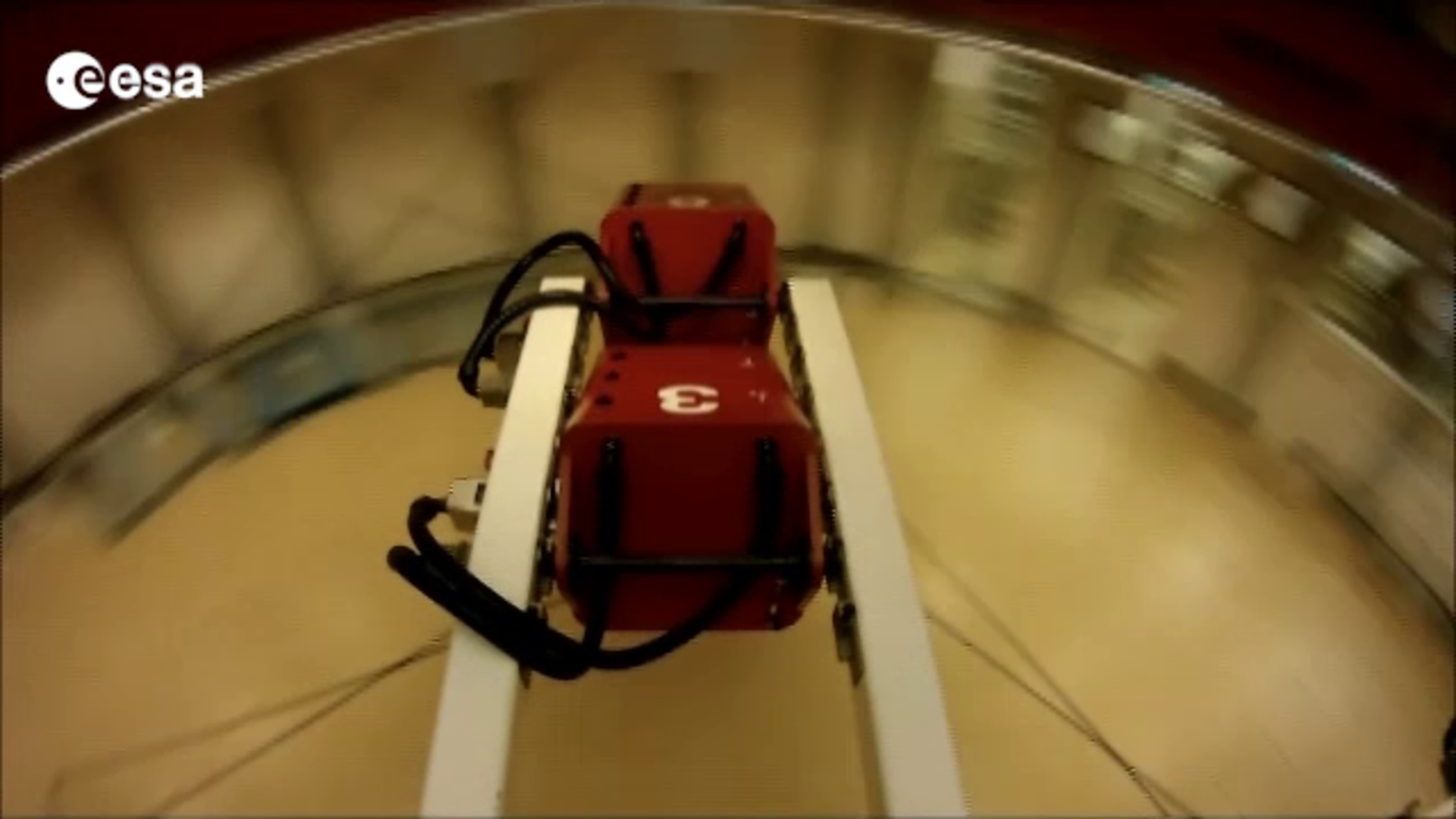
    ESA ESTEC Large Diameter Centrifuge
    Access the video

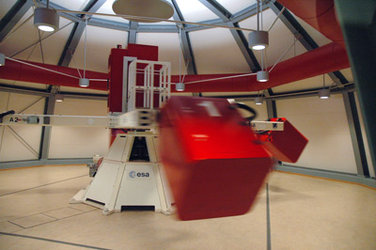
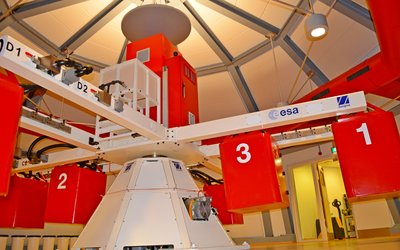
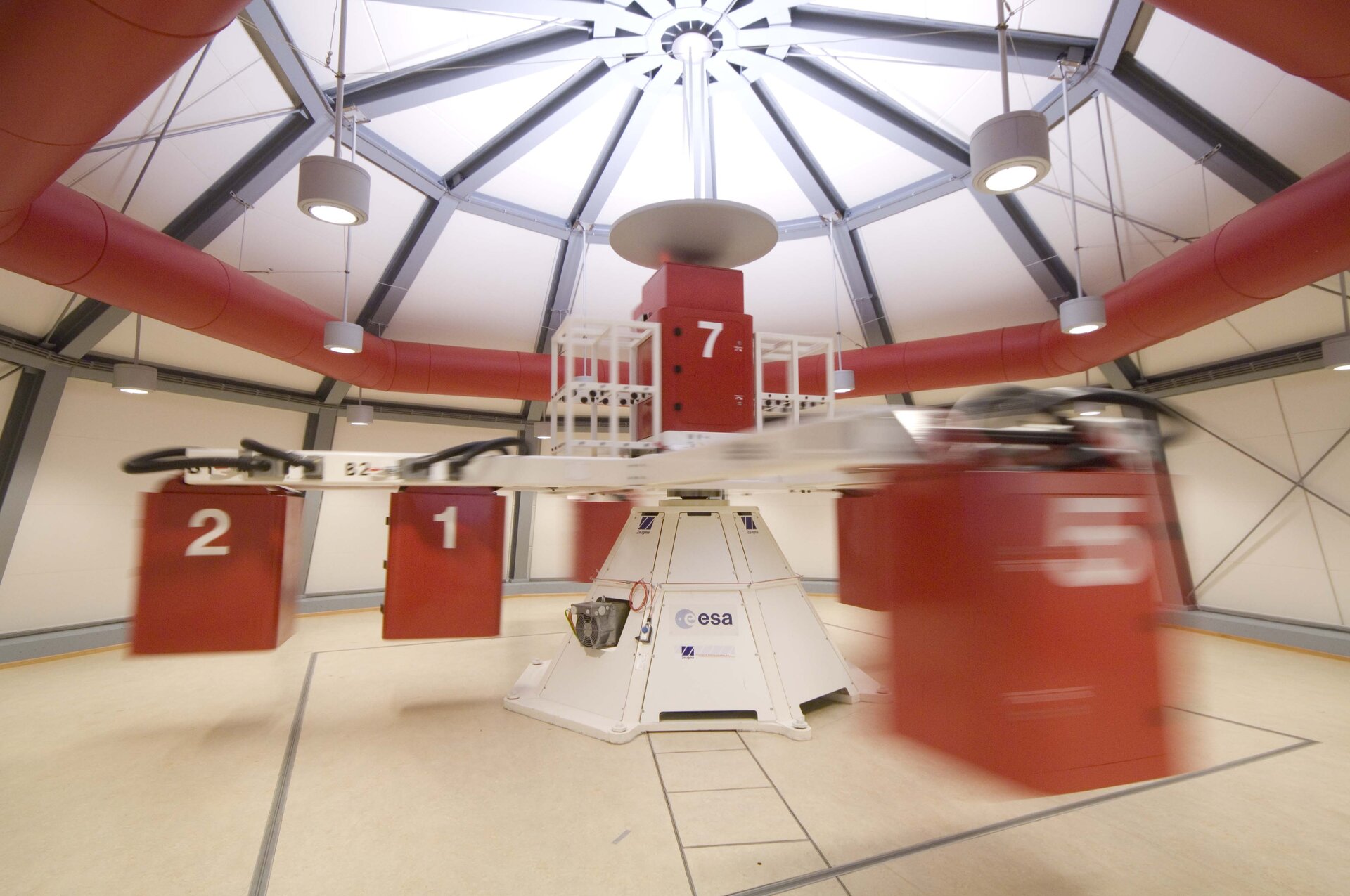
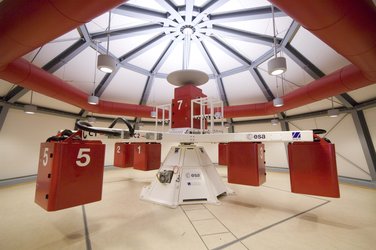
    The Large Diameter Centrifuge at ESA’s technical heart, ESTEC, can spin at 67 revolutions a minute to recreate gravity 20 times more than we feel on Earth. The four arms can carry up to eight experiments of up to 80 kg each to spin under different gravity levels.

    Long-during projects can even be left spinning for six months to examine, for example, how a plant would grow on Mars or other larger planets.

    Aside from physical science and technological experiments, the centrifuge can put cells, plants and even small animals under hypergravity. The range of scientific research that can benefit from hypergravity includes biology, biochemistry, microbiology, opto-physics, material and fluid sciences, geology and plasma physics.

    Centrifuge gondola

    The experiments can be powered and connections run back to the control centre for continuous monitoring, including video.

    Researchers interested in adding weight to their experiments can submit proposals at any time. For students, ESA runs a yearly ‘Spin Your Thesis!’ programme. Four teams of two to four students can take their experiments for a spin.

    Spin Your Thesis! is a great opportunity for students to conduct experiments in hypergravity. The results can be published in papers and journals, and be presented at international conferences. University students are encouraged to apply.
    Last update: 12 June 2014

    Rate this

    Views

    Share

    • Currently 5 out of 5 Stars.
    • 1
    • 2
    • 3
    • 4
    • 5
    Rating: 5/5 (3 votes cast)

    Thank you for rating!

    You have already rated this page, you can only rate it once!

    Your rating has been changed, thanks for rating!

    1947
    Tweet

    Related articles

    The Large Diameter Centrifuge at ESA-ESTEC

    Your chance to perform microgravity or hypergravity experiments22 January 2014

    The Large Diameter Centrifuge at ESA-ESTEC

    Your chance to perform microgravity or hypergravity experiments22 January 2014 Are you a university student who dreams of using a world-class gravitational facility for experiments? If yes then ESA’s Education Office wants to hear from you. All you have to decide is whether you want to go heavy or light. In other words: hypergra...

    ESA centrifuge opens door to high-gravity worlds30 September 2011

    ESA centrifuge opens door to high-gravity worlds30 September 2011 Astronauts’ jobs sometimes weigh heavy on them: crews returning from space briefly endure ‘g-loading’ more than four times Earth normal. Scientists interested in hypergravity need to create it for minutes, days or even weeks at a time. Fortunately, ES...

    • Experiment archive
    • International Space Station Benefits for Humanity
    • European space laboratory Columbus
    • More information
    • About Spin Your Thesis!
    • The Large Diameter centrifuge
    • Hypergravity research for students
    • Current opportunities
    • Current experiments
    • Previous experiments
      • How to apply
        • Conditions to apply
        • Programme phases
          • List of documents
          • Schedule 2017
          • Related links
          • Life, Physical Sciences and Life Support Laboratory
          • ELGRA
          • Register for ESA Education projects
    • App Store
    • Subscribe
    • mobile version
    • LATEST ARTICLES
    • · Counting calories in space
    • · How to rescue a Moonwalker in need
    • · See our seasons change from space
    • · Preparing for Mercury: BepiColombo…
    • · Giant iceberg in the making
    • FAQ

    • Site Map

    • Contacts

    • Terms and conditions