• → European Space Agency

      • Space for Europe
      • Space News
      • Space in Images
      • Space in Videos
    • About Us

      • Welcome to ESA
      • DG's news and views
      • For Member State Delegations
      • Business with ESA
      • Law at ESA
      • ESA Exhibitions
      • ESA Publications
      • Careers at ESA
    • Our Activities

      • Space News
      • Observing the Earth
      • Human Spaceflight
      • Space Transportation
      • Navigation
      • Space Science
      • Space Engineering & Technology
      • Operations
      • Telecommunications & Integrated Applications
      • Preparing for the Future
    • Careers at ESA

    • For Media

      • Media
      • ESA TV
      • Videos for professionals
      • Photos
    • For Educators

    • For Kids

    • ESA

    • Human Spaceflight

    • Astronauts

    • International Space Station

    • Research

    • Education

    • About research in space
    • Research areas
    • Human health
    • Aging
    • Plants
    • Life support
    • Exobiology
    • Physics and materials
    • Radiation
    • Technology
    • Platforms and facilities
    • International Space Station
    • Sounding rockets
    • Parabolic flights
    • Drop towers
    • Bedrest and ground studies
    • Hypergravity
    • Research activities
    • Research Announcements
    • Experiment archive
    • Multimedia
    • Images
    • Videos
    • Web Streaming Network
    • Printed products
    • Brochures
    • European user guide to low gravity platforms
    • Space for life newsletter

    ESA > Our Activities > Human Spaceflight > Research

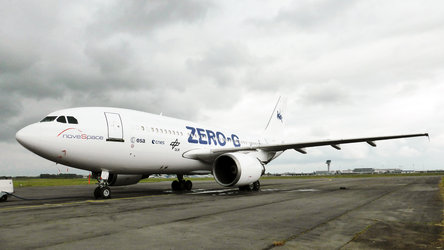
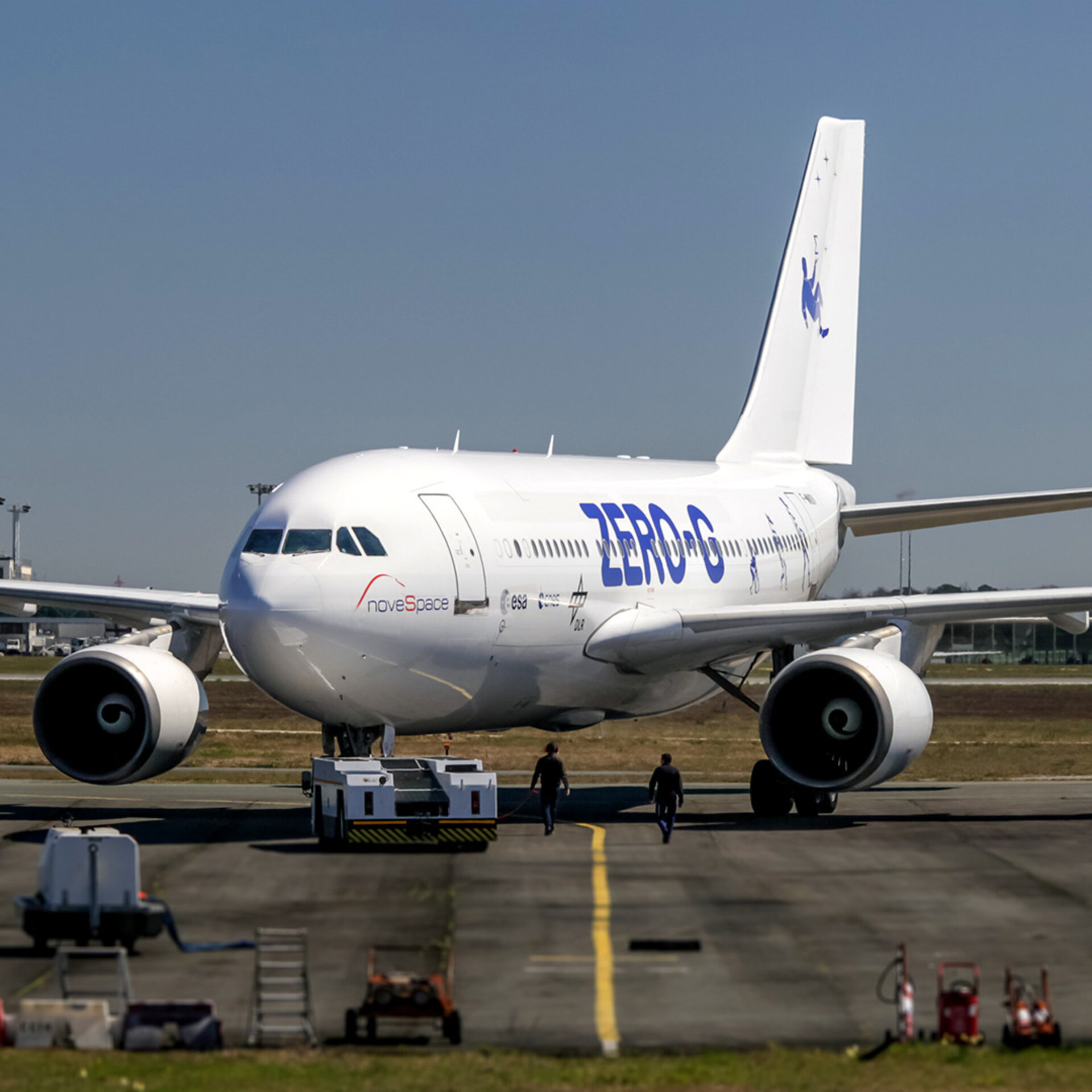
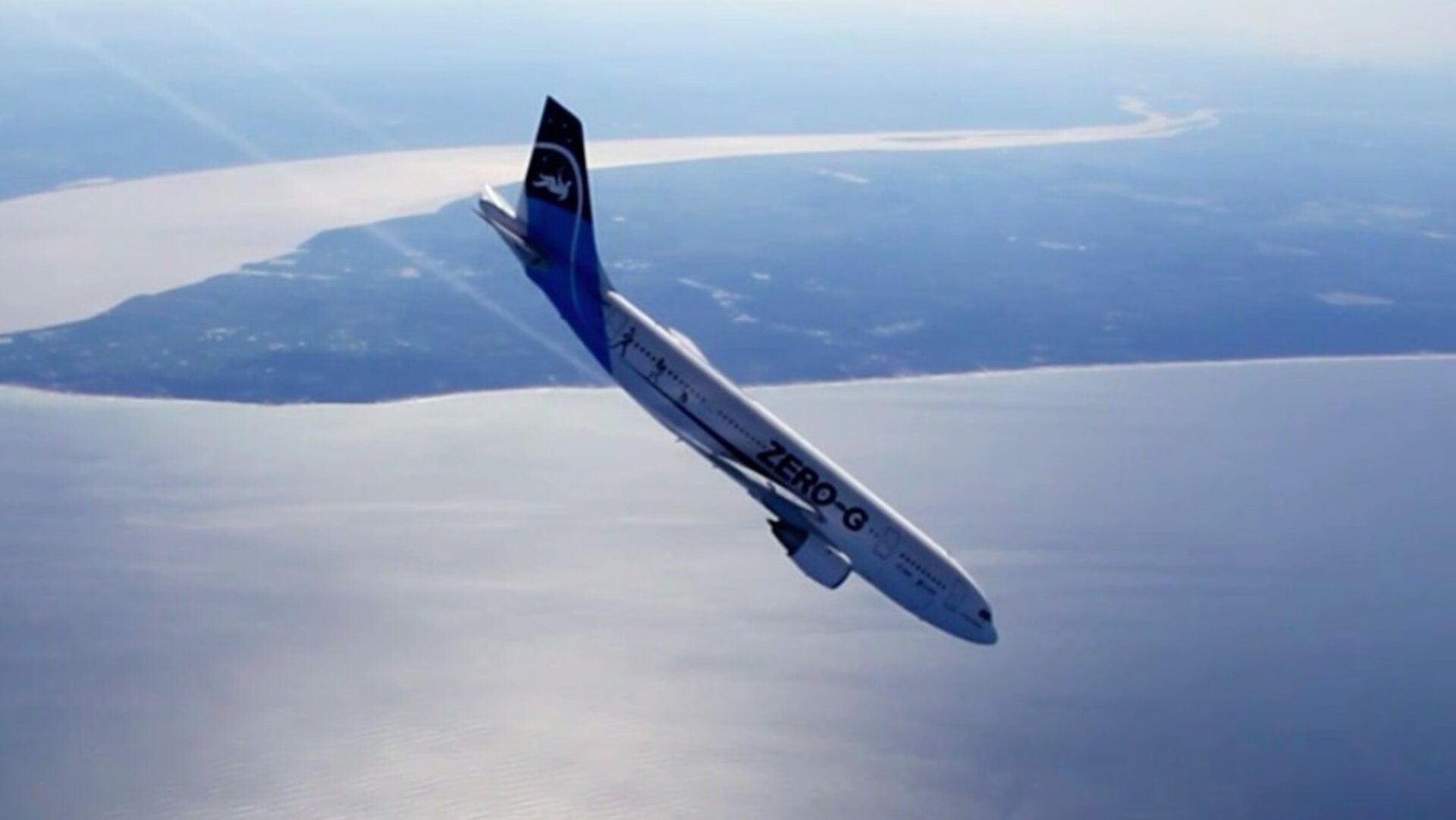
    Zero-G Airbus A300 during parabolic flight descent

    Parabolic flights

    Riding at the top of the apex on a rollercoaster gives you that unmistakeable feeling that your innards are floating freely inside your body. For a brief moment, your body is weightless until gravity takes hold and you hurtle on to the next corkscrew roll or loop.

    Parabolic flights exploit this same feeling but in overdrive. A refitted aircraft flies up and down at 45º angles – at the top of the curve the passengers and experiments experience around 20 seconds of microgravity. Before and after the weightless period increased gravity up to 2g is part of the ride.

    ESA astronaut Alexander Gerst during parabolic flight

    Parabolic flights are useful for short-duration scientific and technological investigations in reduced gravity. These flights are the only way to test microgravity with humans without going through lengthy astronaut-training and flights to the International Space Station. For this reason, parabolic flights are often used to validate space instruments and train astronauts before spaceflight.

    A typical parabolic flight campaign offers 30 periods of weightlessness per flight with three flights conducted over the course of a week. The aircraft can also fly in arcs that simulate lunar or martian gravity levels by adjusting the angle of attack.

    Along with drop tower experiments, experiments flown on parabolic flights are a useful preparation for longer-duration studies on sounding rockets or even the International Space Station. Much useful data can be gathered from parabolic flights and experiments can be tweaked before going further into space.
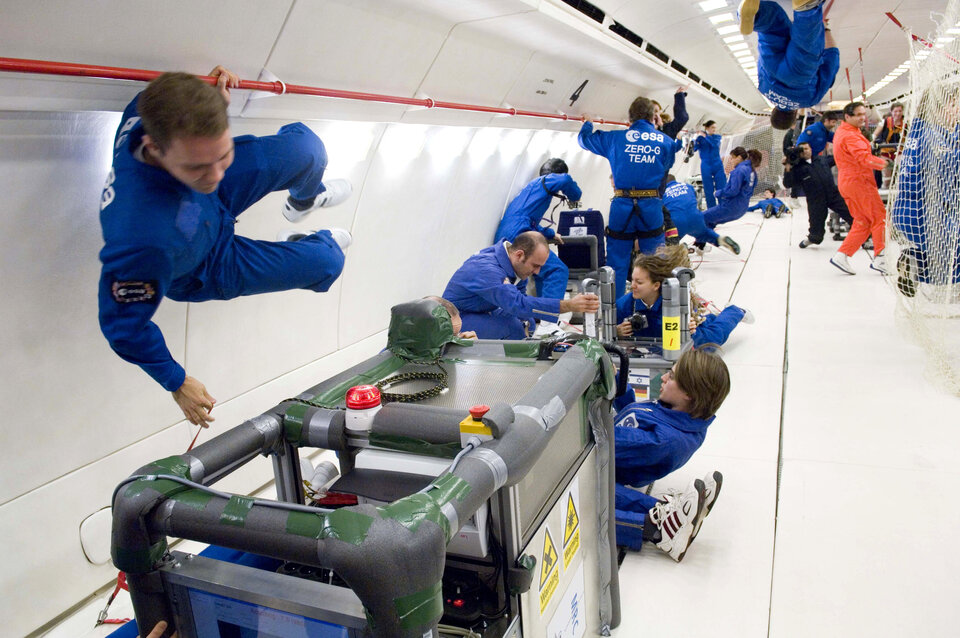
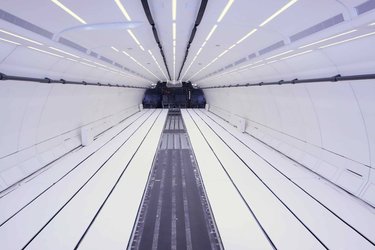
    Inside view of Zero-G A300 Airbus during parabolic flight

    The advantages for researchers to take their experiments on this rollercoaster ride are short waiting times between submitting a proposal and its flight and as well as the low cost – once a research proposal is accepted, ESA finances the flight. Parabolic flights are hands-on, researchers can join the ride and intervene, modify and monitor experiments as they float around.

    ESA’s parabolic flight campaigns for science and technology investigations are generally performed twice a year, in spring and autumn.

    Scientists and investigators can submit proposals to run experiments during parabolic flight campaigns under reduced gravity at any time – so do not hesitate to get writing.
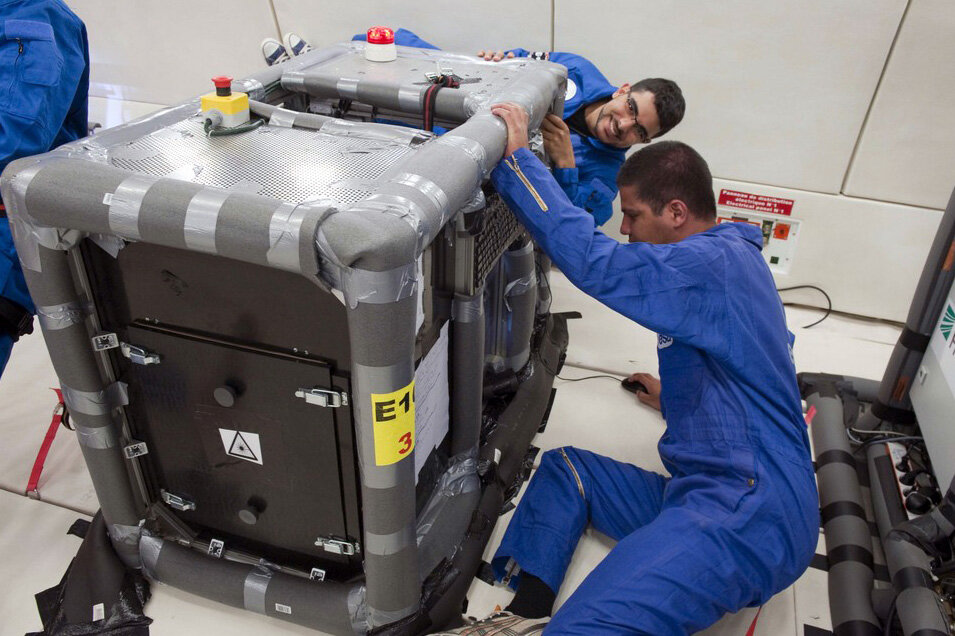
    Working on parabolic flight experiment

    Last update: 11 May 2015

    Rate this

    Views

    Share

    • Currently 5 out of 5 Stars.
    • 1
    • 2
    • 3
    • 4
    • 5
    Rating: 4.8/5 (27 votes cast)

    Thank you for rating!

    You have already rated this page, you can only rate it once!

    Your rating has been changed, thanks for rating!

    8502
    Tweet

    Related articles

    Moon and Mars on a plane26 September 2016

    Moon and Mars on a plane26 September 2016 Who wouldn’t want to run an experiment in lunar or martian gravity? ESA is offering European researchers the chance to test their theories on aircraft flights that offer 20 seconds of reduced gravity.

    European space agencies inaugurate altered-gravity aircraft08 May 2015

    European space agencies inaugurate altered-gravity aircraft08 May 2015 ESA, France’s space agency CNES and the German aerospace centre DLR inaugurated the Airbus A310 ZERO-G refitted for altered gravity by running 12 scientific experiments this week.

    Chocolate mousse

    Space for dessert?09 July 2012

    Chocolate mousse

    Space for dessert?09 July 2012 All chefs know that preparing the perfect chocolate mousse is one part science and one part art. ESA’s microgravity research is helping the food industry understand the science behind the foams found in many types of food and drink such as meringues a...

    Parabolic Flight Campaign

    Experience weightlessness on board the 'Zero-G' Airbus26 March 2003

    Parabolic Flight Campaign

    Experience weightlessness on board the 'Zero-G' Airbus26 March 2003 The only way to get away from the sensation and effects of gravity is to give in to it. That is why the 'Zero-G' Airbus A300 that ESA uses for parabolic flights has to 'freefall' through the air - with no force other than gravity acting on it - to gen...

    • More information
      • Parabolic flights guidelines
        • Airbus A310 Zero-G
        • Fly your thesis!
        • ESA user guide to low gravity platforms
    • App Store
    • Subscribe
    • mobile version
    • LATEST ARTICLES
    • · Counting calories in space
    • · How to rescue a Moonwalker in need
    • · See our seasons change from space
    • · Preparing for Mercury: BepiColombo…
    • · Giant iceberg in the making
    • FAQ

    • Site Map

    • Contacts

    • Terms and conditions