• → European Space Agency

      • Space for Europe
      • Space News
      • Space in Images
      • Space in Videos
    • About Us

      • Welcome to ESA
      • DG's news and views
      • For Member State Delegations
      • Business with ESA
      • Law at ESA
      • ESA Exhibitions
      • ESA Publications
      • Careers at ESA
    • Our Activities

      • Space News
      • Observing the Earth
      • Human Spaceflight
      • Space Transportation
      • Navigation
      • Space Science
      • Space Engineering & Technology
      • Operations
      • Telecommunications & Integrated Applications
      • Preparing for the Future
    • Careers at ESA

    • For Media

      • Media
      • ESA TV
      • Videos for professionals
      • Photos
    • For Educators

    • For Kids

    • ESA

    • Human Spaceflight

    • Astronauts

    • International Space Station

    • Research

    • Education

    • About research in space
    • Research areas
    • Human health
    • Aging
    • Plants
    • Life support
    • Exobiology
    • Physics and materials
    • Radiation
    • Technology
    • Platforms and facilities
    • International Space Station
    • Sounding rockets
    • Parabolic flights
    • Drop towers
    • Bedrest and ground studies
    • Hypergravity
    • Research activities
    • Research Announcements
    • Experiment archive
    • Multimedia
    • Images
    • Videos
    • Web Streaming Network
    • Printed products
    • Brochures
    • European user guide to low gravity platforms
    • Space for life newsletter

    ESA > Our Activities > Human Spaceflight > Research

    Sounding rockets

    Maser launch

    Rocketing to weightlessness

    What goes up must come down. But what if during the journey you could research metal furnaces or biological processes free of gravity’s effects?

    Sounding rockets launch experiments to the edge of space before falling back to Earth. These flights can carry 100-kg experiments up to 750 km high with up to 13 minutes of microgravity included in the ticket.

    Once the rocket motors shut off, the experiments enter freefall, even though at this point they are still heading upwards. On the downward arc parachutes deploy and gravity takes over once again, lowering the experiments to the ground with impact speeds of around 8 m/s.

    ESA has used sounding rockets for over 30 years to investigate phenomena under microgravity from Esrange in northern Sweden.

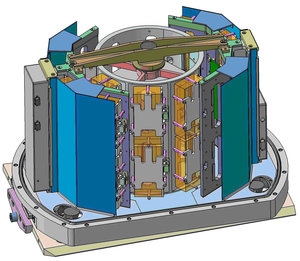
    Experiments are held in circular containers with diameters of up to 60 cm. The containers are held by elastic dampers to reduce launch vibrations.

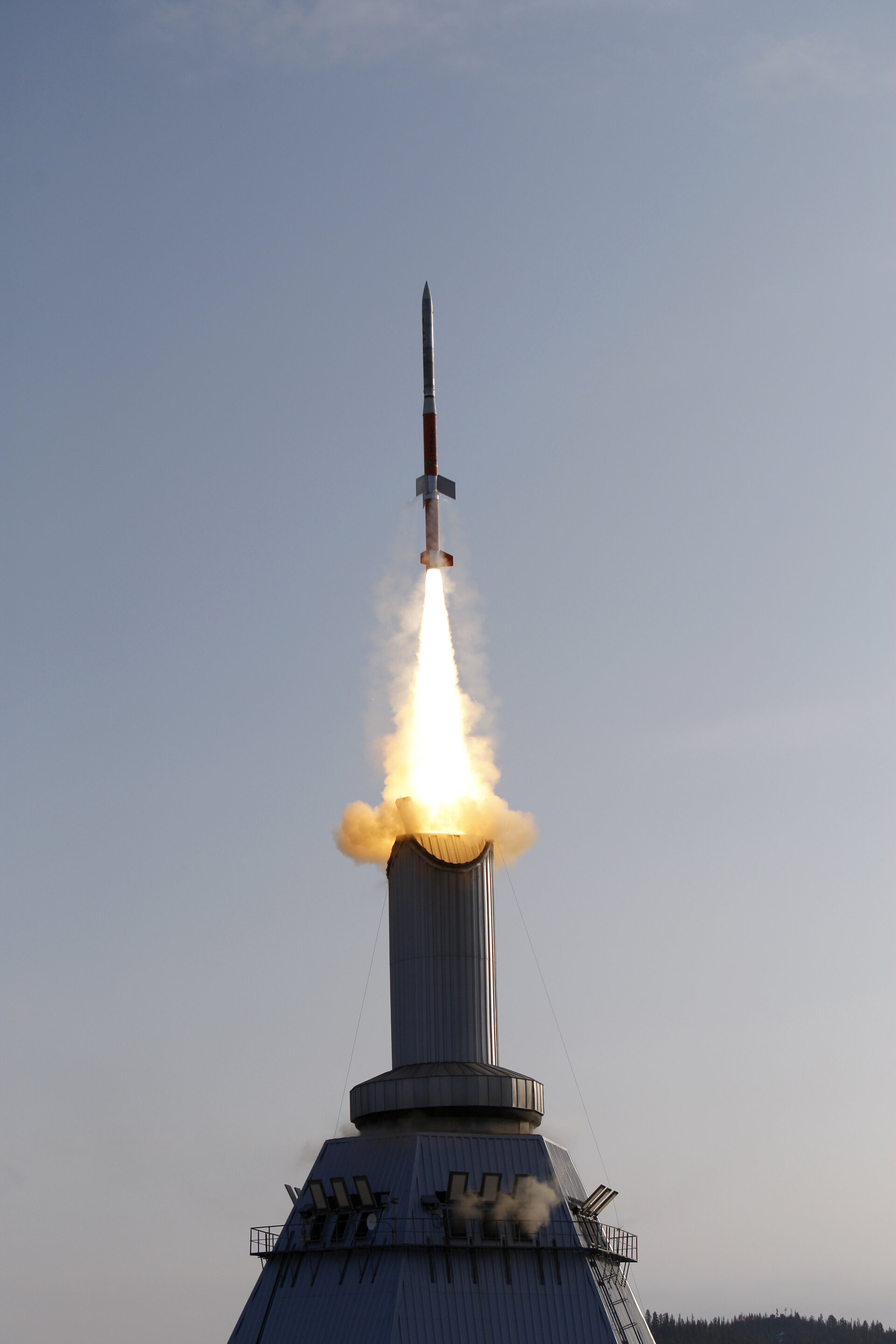
    DLR/MORABA
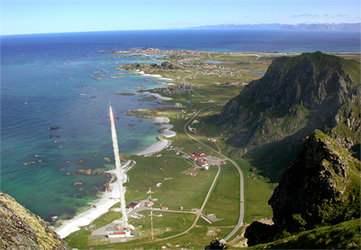
    REXUS 11 Launch

    A service module sends data and receives commands from mission control to keep everything on course while sending video to ground stations.

    The separation module detaches from the experiments when the rocket motors kick out and a recovery system deploys the parachute from the nosecone. The functional modules are reused from one flight to the next.

    The experiment modules can be reused if experiments require repeated runs in microgravity with new samples or under different conditions. The combination of standard and modular blocks gives sounding rocket programmes strong reliability and flexibility.

    As data from the experiments are sent during flight to ground stations, researchers can follow the course of their experiments live and even change parameters while in flight.

    At launch the rockets produce a peak of around 12 g and further vibrations last for about 45 sec, the time needed for the complete burn of the rocket motors.

    The experiment modules are transported back to the launch site by helicopter as quickly as possible.

    State-of-the-art facilities are available at Esrange for the scientific teams. The laboratories include microscopes, centrifuges and incubators so investigators can prepare and analyse their experiments around flight.

    Sending your experiment to the edge of space is easier than you might think – contact us for more information.
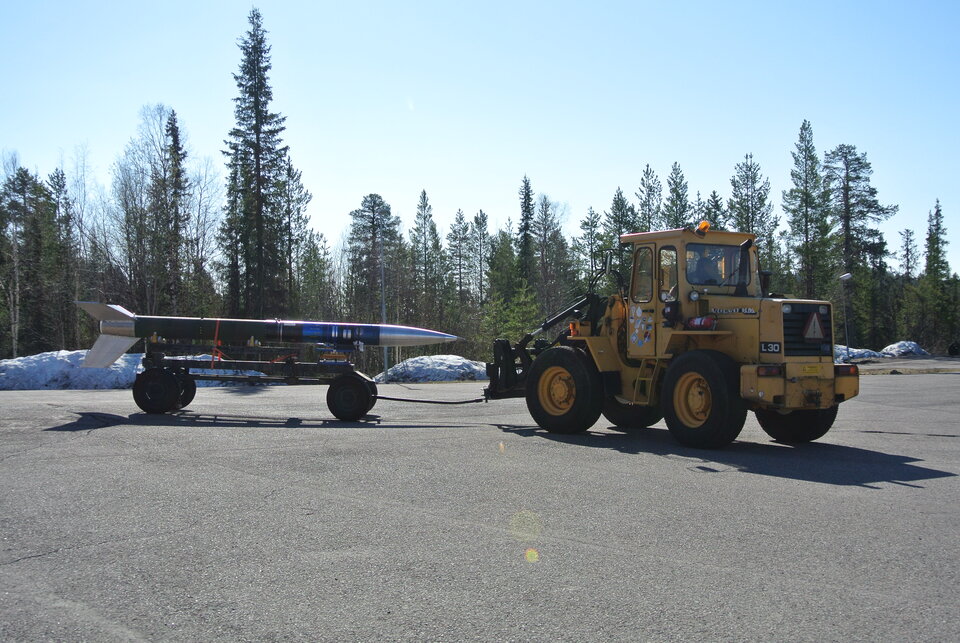
    The REXUS 15 sounding rocket is rolled out for launch

    Last update: 11 May 2015

    Rate this

    Views

    Share

    • Currently 4.5 out of 5 Stars.
    • 1
    • 2
    • 3
    • 4
    • 5
    Rating: 4.7/5 (6 votes cast)

    Thank you for rating!

    You have already rated this page, you can only rate it once!

    Your rating has been changed, thanks for rating!

    2899
    Tweet

    Related articles

    REXUS/BEXUS programme now open again for university student proposals16 June 2014

    REXUS/BEXUS programme now open again for university student proposals16 June 2014 The Swedish National Space Board (SNSB) and the German Space Agency (DLR) are again offering university students the chance to send their experiments into the stratosphere or mesosphere. The Rocket/Balloon Experiments for University Students (REXUS/BE...

    Maser launch

    Maser rocket experiments sounding good13 February 2012

    Maser launch

    Maser rocket experiments sounding good13 February 2012 Five experiments on a Maser rocket were launched from northern Sweden today. Faster than most people take a coffee break, Maser-12 travelled 250 km upwards, provided six precious minutes of microgravity, and landed safely back on Earth.

    50 years of space for Norway17 August 2012

    50 years of space for Norway17 August 2012 Not many countries can claim to have been using space for 50 years but it was on 18 August 1962 that the Andøya rocket facility in Norway launched its first rocket. Norway is celebrating this anniversary with His Majesty King Harald and ESA astronaut...

    • More information
      • Biology in Microgravity module (BIM)
        • Weightless metal X-ray
        • Related links
        • Swedish Space Corporation: Rockets and balloons
        • Astrium, Sounding rockets
        • ESA user guide to low gravity platforms
    • App Store
    • Subscribe
    • mobile version
    • LATEST ARTICLES
    • · Counting calories in space
    • · How to rescue a Moonwalker in need
    • · See our seasons change from space
    • · Preparing for Mercury: BepiColombo…
    • · Giant iceberg in the making
    • FAQ

    • Site Map

    • Contacts

    • Terms and conditions