• → European Space Agency

      • Space for Europe
      • Space News
      • Space in Images
      • Space in Videos
    • About Us

      • Welcome to ESA
      • DG's News and Views
      • For Member State Delegations
      • Business with ESA
      • ESA Exhibitions
      • ESA Publications
      • Careers at ESA
    • Our Activities

      • Space News
      • Observing the Earth
      • Human Spaceflight
      • Launchers
      • Navigation
      • Space Science
      • Space Engineering
      • Operations
      • Technology
      • Telecommunications & Integrated Applications
    • For Public

    • For Media

    • For Educators

    • For Kids

    • ESA

    • Navigation

    • EGNOS

    • Galileo

    • Evolution

    • About satellite navigation
    • Europe's satellite navigation services
    • Resources
    • Development Facilities
    • Navipedia
    • Multimedia
    • Galileo's In-Orbit Validation phase - 2012 video
    • Galileo - Europe leads the way 3D video
    • Image gallery
    • Video gallery
    • Documents
    • Galileo factsheet (PDF)
    • Galileo IOV factsheet (PDF)
    • Galileo FOC factsheet (PDF)
    • GNSS Evolution factsheet (PDF)
    • Galileo IOV brochure (PDF)
    • Galileo IOV brochures in French and German (PDF)
    • Archives
    • News archive
    • Navigation projects
    • Services
    • Subscribe

    ESA > Our Activities > Navigation

    GIOVE-A navigation signal available to users

    2 March 2007

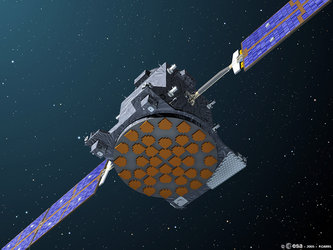
    The GIOVE-A Signal-in-Space Interface Control Document, the document that gives the technical details of the signals transmitted by the GIOVE-A satellite, has been released. This will allow receiver manufacturers and research institutions to use a real signal for their research and development.

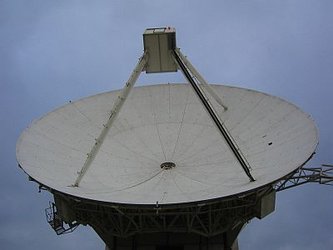
    Following the launch of GIOVE-A on 28 December 2005 from the Baikonur Cosmodrome and the transmission of the first Galileo signals from medium Earth orbit on 12 January 2006, ESA and Surrey Satellite Technology Limited (SSTL – United Kingdom) have completed the GIOVE-A in-orbit validation activities. The GIOVE-A signal validation has been accomplished through a network of 13 Galileo Experimental Sensor Stations (GESS), deployed world wide, and a GIOVE Processing Centre which computes precise orbits and clock timings for the GIOVE satellites, based on the measurements made by the GESS and satellite laser ranging stations.

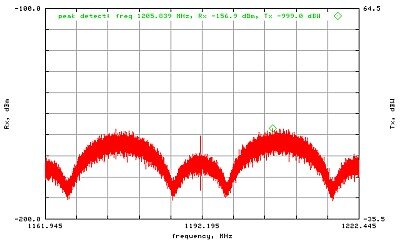
    GIOVE-A L1 in-band spectrum
    GIOVE-A L1 in-band spectrum

    The GIOVE-A Signal-in-Space Interface Control Document (SIS-ICD) is the key document that will allow any user to build a receiver able to track GIOVE-A signals, interpret the navigation message and compute the distance between the satellite and the receiver. Following the successfully in-orbit validation mission, ESA has decided to release the SIS-ICD to the public to allow receiver manufacturers and research centres to benefit from experiments with a real Signal-in-Space for research and development purposes.

    This is possible since the nominal GIOVE-A navigation Signal-in–Space (SIS) is fully representative of the future Galileo navigation signals, on all three Galileo frequency bands, even though GIOVE-A uses specific spreading codes that are different from the nominal codes of the final Galileo constellation to allow unambiguous identification of the spacecraft. These codes are described in the GIOVE-A public document and with knowledge of them the GIOVE-A signals can be used for code and carrier phase tracking in precisely the same way the future Galileo signals will be used. All GIOVE-A signal spectra are identical to the future Galileo navigation SIS spectra.


    GIOVE-A E5 in-band spectrum
    GIOVE-A E5 in-band spectrum

    The navigation data symbol rates are identical with the nominal Galileo data rates for all public signals, and the same principles as in the final Galileo navigation signal are used for message encoding. The navigation message structure of GIOVE-A is different from the future Galileo navigation signal, but the low level elements of the message differ only in minor details. The content of the GIOVE-A navigation message is complete with all ingredients such as, for example, ephemeris and clock correction, that are needed for pseudo-range calculation and further positioning processing, thus leading to a full set of navigation signals.

    The time for simulation is over, so the ESA Galileo project team is putting at the disposal of the user community the information needed to support the validation of demanding Galileo user applications with a real satellite.

    The GIOVE-A Signal-in-Space ICD is available at the GIOVE web site: http://www.giove.esa.int/

    Rate this

    Views

    Share

    • Currently 0 out of 5 Stars.
    • 1
    • 2
    • 3
    • 4
    • 5
    Rating: 0/5 (0 votes cast)

    Thank you for rating!

    You have already rated this page, you can only rate it once!

    Your rating has been changed, thanks for rating!

    92
    Tweet
    • Galileo
      Galileo
      First Galileo Launch
    • GIOVE website
    • Related news
      • One year of Galileo signals; new website opens
        • GIOVE mission core infrastructure
          • One year in space for Galileo In-Orbit Validation Element
            • GIOVE A transmits loud and clear
              • GIOVE. The clock is ticking
                • First Galileo signals transmitted by GIOVE-A
                  • First Galileo satellite on orbit to demonstrate key technologies
                  • Related links
                  • Galileo website (European Commission)
                  • European GNSS Agency
                  • Surrey Satellite Technology - GIOVE A
                  • Galileo Tour
                    Galileo Tour
                    Galileo Tour

    Connect with us

    • RSS
    • Youtube
    • Twitter
    • Flickr
    • G+
    • Facebook
    • Livestream
    • Subscribe
    • App Store
    • LATEST ARTICLES
    • · ESA astronaut Timothy Peake set fo…
    • · Space drives e-mobility
    • · Proba-V opens its eyes
    • · First new Galileo satellite arrive…
    • · Next destination: space
    • FAQ

    • Jobs at ESA

    • Site Map

    • Contacts

    • Terms and conditions