GOCE satellite launch – mapping the Earth’s gravity as never before
ESA PR 04-2009. ESA is about to launch the most sophisticated of Earth Observation satellites to investigate the Earth’s gravitational field with unprecedented resolution and accuracy.
GOCE data will be crucial for obtaining accurate measurements of ocean circulation and sea-level change, both of which are affected by climate change. The data will help to better understand processes occurring inside the Earth which are linked to volcanoes and earthquakes.
The 'Gravity field and steady-state Ocean Circulation Explorer' (GOCE) will be placed in a low altitude orbit by a Russian Rockot vehicle. Launch is scheduled to take place at 15:21 CET (14:21 GMT, 17:21 local time) on Monday, 16 March 2009, from the Plesetsk Cosmodrome in Northern Russia, some 800 km north of Moscow. Rockot is operated by Eurockot Launch Services, a joint venture between EADS Astrium and the Khrunichev Space Centre (Russia).

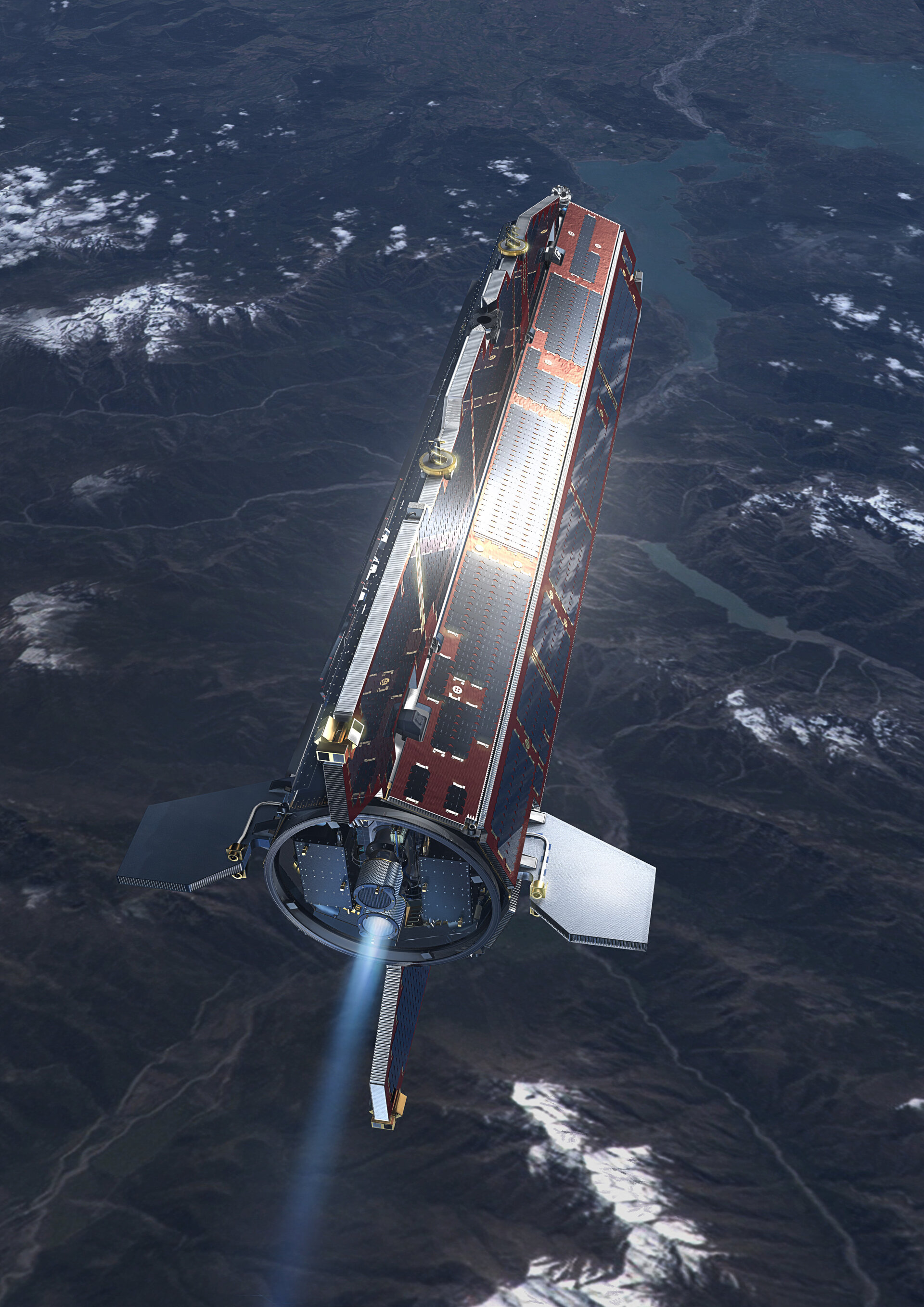
ESA’s 1-tonne spacecraft carries a highly sensitive gradiometer to measure the variations of the gravity field in three dimensions. The data collected will provide a high-resolution map of the 'geoid' (the reference surface of the planet) and of gravitational anomalies. Such a map will not only greatly improve our knowledge and understanding of the Earth’s internal structure, but will also be used to provide much better reference data for ocean and climate studies and ocean circulation. Practical mission applications will also include construction, planning & surveying as well as providing reference data on sea levels.
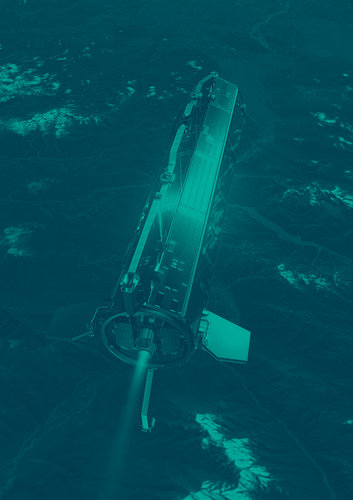
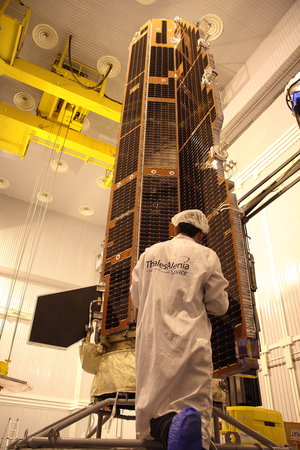
To make this mission possible, ESA, together with a consortium of 45 European companies led by Thales Alenia Space and the science community had to overcome some impressive technical challenges. The spacecraft had to be designed to orbit the Earth at close enough quarters to gather high-accuracy gravitational data while being able to filter out disturbances caused by the remaining traces of the atmosphere in low Earth orbit (at an altitude of only 260 km). This resulted in a slender 5-m long arrowhead shape for aerodynamics with low power ion thrusters to compensate for atmospheric drag.
GOCE is the first of a series of Earth Explorer satellites to be placed in orbit. The Earth Explorer missions have been designed by ESA to promote research on the Earth’s atmosphere, biosphere, hydrosphere, cryosphere and interior.
Two other Earth Explorer missions are also scheduled for launch in 2009: SMOS (summer) to study soil moisture and ocean salinity and CryoSat-2 (late autumn) to measure ice sheet thickness.
Additional Earth Explorer missions have been designed to address specific topics: Swarm to survey the evolution of the magnetic field (launch scheduled for 2010). ADM-Aeolus for atmospheric dynamics (2011), and EarthCARE to investigate the Earth’s radiative balance (2013).
The main launch event for GOCE will be held at ESA’s ESRIN establishment in Frascati, Italy. ESA senior management and programme specialists will be on hand there for explanations and interviews. The Press Centre at ESRIN will be open from 10:00 hrs to 19:00 hrs, hosting a media workshop from 10:00 hrs to 14:00 hrs and a launch event from 14:30 hrs to 19:00 hrs
A live televised transmission of the launch will bring images from Plesetsk and from mission control at ESA/ESOC in Darmstadt, Germany to broadcasters (further details on the TV transmission at http://television.esa.int). The general public can also follow a web-streamed video transmission at: http://www.esa.int/goce
Media representatives wishing to follow the event at ESA ESRIN or to follow the launch live from one of the other ESA establishments are requested to fill in the attached accreditation form and to fax it back to the place of their choice.
For further information:
Franco Bonacina,
ESA Spokesman and Head of Media Relations Office
Communication and Knowledge Department
Tel: + 33 1 5369 7299
Fax: + 33 1 6369 7690
Email: franco.bonacina@esa.int
Dieter Isakeit
Head of the ESA/ESRIN Corporate Communication Office
Communication and Knowledge Department
Tel. +39 06 94180 950
Fax +39 06 94180 952
Email: dieter.isakeit@esa.int
Media queries: media @ esa.int