European satellites provide new insight into ozone-depleting chemical species
Using data from the MIPAS and GOME-2 satellite instruments, scientists have for the first time detected important bromine species in the atmosphere. These new measurements will help scientists to understand better sources of ozone-depleting species and to improve simulations of stratospheric ozone chemistry.
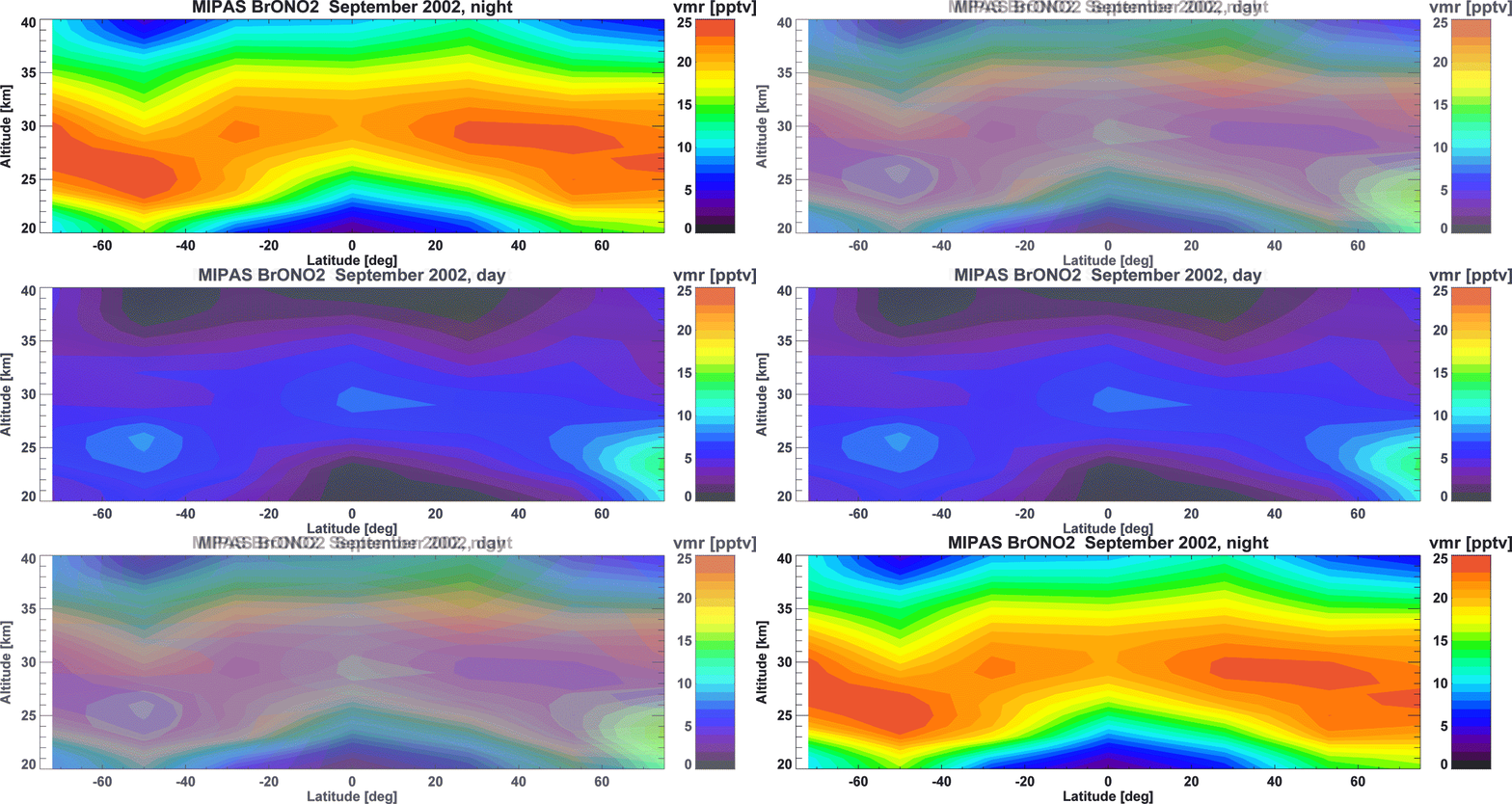
Despite the detection of bromine monoxide (BrO) in the atmosphere some 20 years ago, bromine nitrate (BrONO2) was first observed in 2008 when scientists from the Karlsruhe Institute of Technology discovered the gas’s weak signal with data from MIPAS (the Michelson Interferometer for Passive Atmospheric Sounding).
"By comparing the novel MIPAS BrONO2 dataset with model calculations and BrO measurements by SCIAMACHY on Envisat, our general understanding of stratospheric bromine chemistry has been clearly confirmed," said Michael Höpfner of Germany’s Karlsruhe Institute of Technology. "These new observations also enable an independent estimation of the total amount of bromine in the stratosphere, which is important for understanding the origins of stratospheric bromine."
The stratospheric ozone layer that protects life on Earth from harmful ultraviolet rays is vulnerable to certain chemicals in the atmosphere such as chlorine and bromine. In spite of its much smaller concentrations, bromine is actually, after chlorine, the second most important halogen species destroying ozone in the stratosphere.
Since chlorine levels in the stratosphere have been dropping since the ban on man-made chlorofluorocarbons, bromine will become even more important in stratospheric ozone chemistry. Bromine’s importance will increase in part because there are more natural sources, such as volcanoes, for bromine emissions than for chlorine.
Volcanoes have long been known to play an important role in influencing stratospheric ozone chemistry because of the gases and particles they shoot into the atmosphere. New findings from space suggest they are also a very important source of atmospheric bromine.
The reactive chemical bromine monoxide has been measured in a number of volcanic plumes around the globe, but until recently it had never been measured by a space instrument.

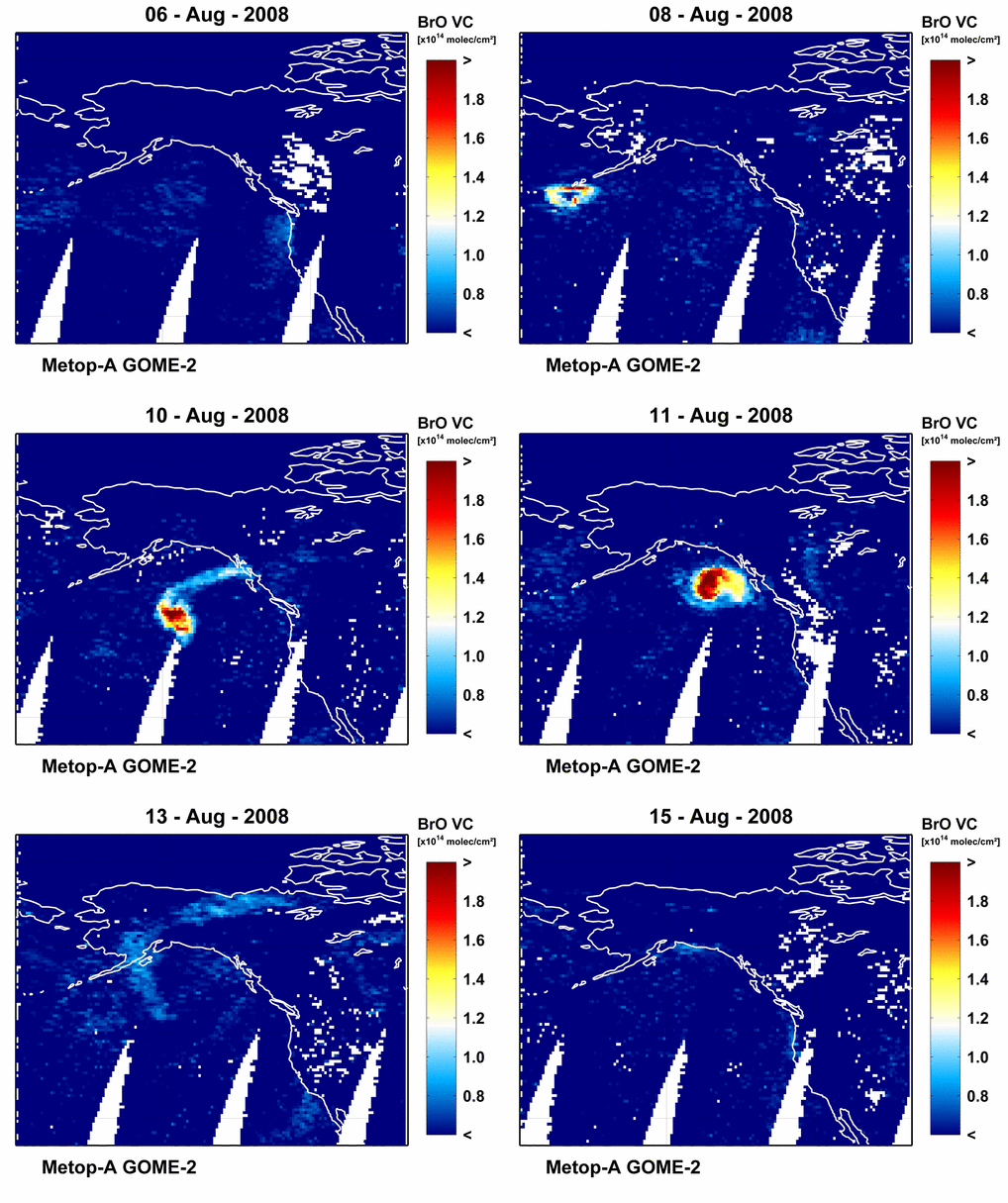
In August 2008, the Kasatochi Volcano in Alaska's Aleutian Islands erupted explosively, sending a cloud of volcanic ash and gas more than 11 km into the atmosphere.
The following day, scientists from the Brussels-based Belgian Institute for Space Aeronomy identified high bromine concentrations in the vicinity of the volcano with Envisat’s SCIAMACHY instrument and the Global Ozone Monitoring Experiment-2 (GOME-2) instrument aboard MetOp-A. (MetOp-A, developed by ESA and the European Organisation for the Exploitation of Meteorological Satellites (EUMETSAT), is Europe's first polar-orbiting satellite dedicated to operational meteorology.)
"Because of the good regional coverage of the GOME-2 instrument, the transport of the Kasatochi BrO plume could be followed for six days after the eruption," Michel Van Roozendael from the Belgian Institute for Space Aeronomy said. "Using the Lagrangian dispersion model, results show that the volcanic BrO was directly injected into the upper troposphere/lower stratosphere at altitudes ranging from 8
"The total mass of reactive bromine released in the atmosphere was estimated around 50 - 120 tonnes, which corresponds to approximately 25% of the previously estimated total annual mass of reactive bromine emitted by volcanic activity."