• → European Space Agency

      • Space for Europe
      • Space News
      • Space in Images
      • Space in Videos
    • About Us

      • Welcome to ESA
      • DG's News and Views
      • For Member State Delegations
      • Business with ESA
      • ESA Exhibitions
      • ESA Publications
      • Careers at ESA
    • Our Activities

      • Space News
      • Observing the Earth
      • Human Spaceflight
      • Launchers
      • Navigation
      • Space Science
      • Space Engineering
      • Operations
      • Technology
      • Telecommunications & Integrated Applications
    • For Public

    • For Media

      • Media
      • ESA TV
      • Videos for professionals
      • Photos
    • For Educators

    • For Kids

    • ESA

    • Operations

    • Ground Systems Engineering

    • Space Debris

    • SSA

    • Operations
    • Operations home
    • Background
    • About Operations
    • The Right Stuff
    • Multimedia

      • Images
      • Videos
    • SSA programme
    • Space Situational Awareness
    • Teams on ground
    • Ground Systems Engineering
    • EGOS - Ground operation system
    • Missions in space
    • Solar and planetary
    • Astronomy & fundamental physics
    • Earth observation
    • Human spaceflight
    • Technology demonstration
    • Estrack operations
    • Past missions
    • ESA mission history
    • - Find a mission: A...Z
    • Mission control centres
    • ATV Control Centre (ATV-CC)
    • Columbus Control Centre (Col-CC)
    • Ground stations
    • Estrack tracking stations
    • ESTRACK Control Centre
    • - Find a station: A...Z
    • OPS Community
    • Advanced Operations Concepts Office
    • HSO Exchange
    • Knowledge Management at ESA's Operations team

    ESA > Our Activities > Operations

    Cebreros marks major readiness milestone

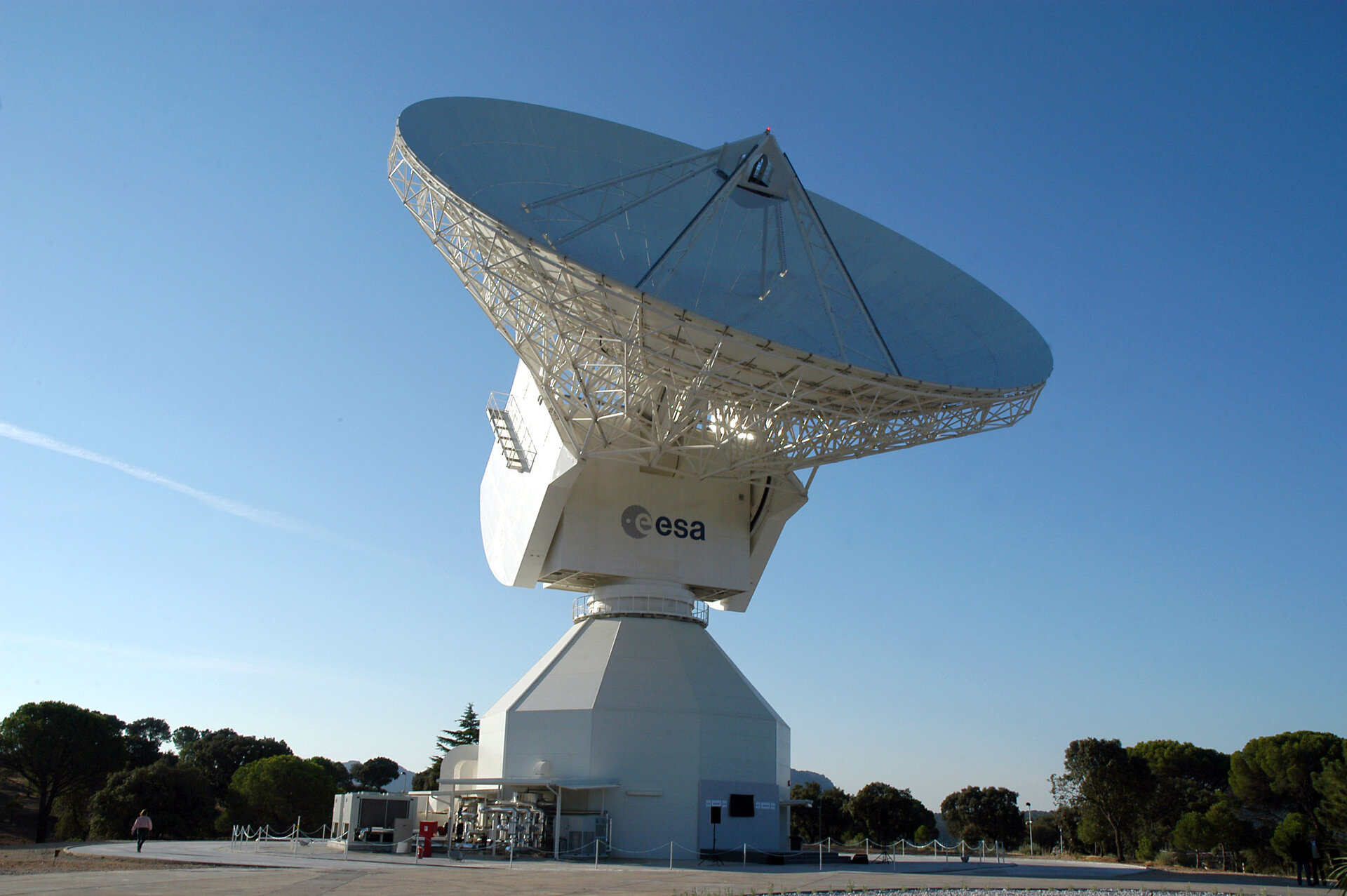
    Cebreros 35-metre deep space antenna
    Cebreros 35 m deep space antenna
    24 June 2005

    On 9 June, a powerful new 35-metre antenna, presently undergoing acceptance testing at Cebreros, Spain, successfully picked up signals and tracked Rosetta and SMART-1. It is ESA's second deep-space ground station in its class and adds Ka-band reception capability and high pointing precision to the ESTRACK network.

    Construction of the new ground station, located in the Spanish province of Avila, has proceeded in record time. Procurement activities started in February 2003, and in spring 2004, on-site work was initiated.

    After successful assembly of the antenna structure in November 2004 and the acceptance testing of radio-frequency components, the system is now entering final on-site testing. All portions of the antenna's infrastructure, including power systems, buildings and communications, are already complete and are ready to hand over for operations.

    Tuned in to signals from distant space
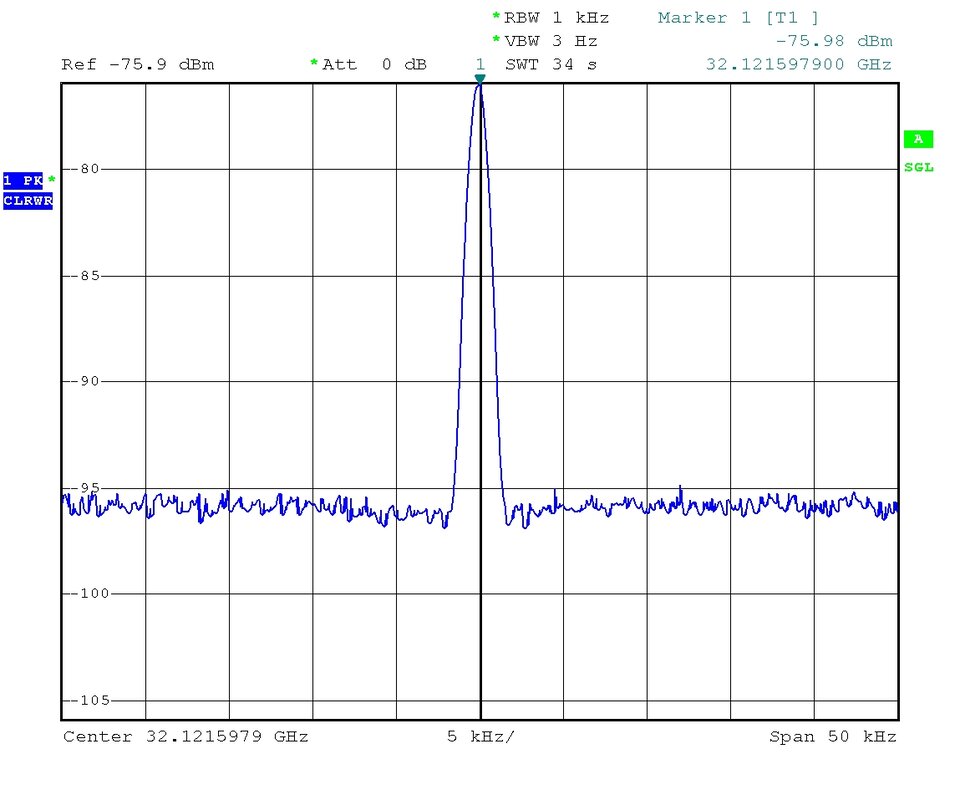
    SMART-1 calls Cebreros
    Ka-band signals from SMART-1

    Successful reception of signals from the two spacecraft demonstrates that the antenna is working well. Rosetta, Europe's comet-chaser, is presently 46 million km from Earth while SMART-1 is orbiting the Moon.

    Cebreros will be capable of receiving signals in the X and Ka bands. The X band (7-8 GHz) is used for routine telecommanding and to transmit high-volume data to Earth; the Ka band (32 GHz) offers enhanced data reception rates and will be used for future missions.

    Additional measurements using radio-emitting stars gave good first results with respect to pointing accuracy and antenna performance, indicating that the station's specifications will be met.

    Full operational readiness of the antenna is anticipated for 30 September 2005, and Cebreros is subsequently scheduled to swing into operation to support the Venus Express mission, scheduled for launch on 26 October 2005.

    With Cebreros, Spain, and New Norcia, Australia, ESA spacecraft operations will benefit from two 35-metre deep-space antennas. Future plans foresee the possible construction of a third 35-metre station at an American longitude to become ready by the end of 2009.


    ESTRACK family grows
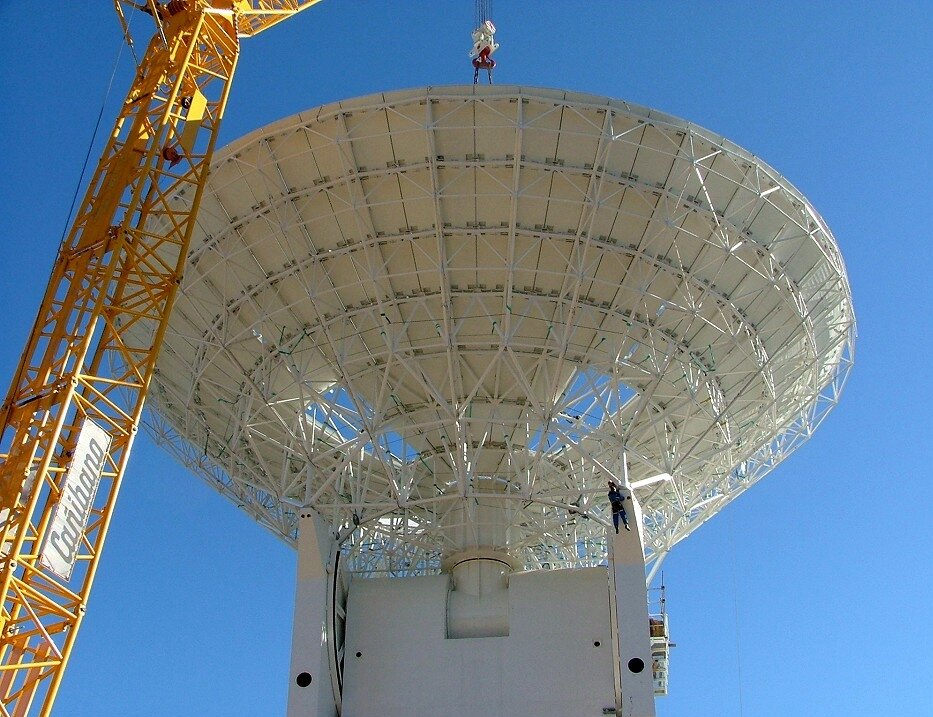
    Cebreros 35-metre deep space antenna
    Mounting dish of Cebreros 35m antenna

    Cebreros is the latest station to join ESTRACK, ESA's worldwide network of ground stations operated from the agency's Space Operations Centre (ESOC) in Darmstadt, Germany. Ground stations are used for sending commands to spacecraft and receiving data from onboard instruments.

    With Cebreros, there are 8 stations in ESTRACK, located in Europe, Africa, South America and Australia. Additional stations in Kenya, Chile and Norway are available when needed. The system is highly automated and most stations run with little or no manned intervention for routine operations, providing a significant cost benefit.

    For more information:

    Manfred Warhaut
    ESA Planetary Exploration Missions Division
    Manfred.Warhaut @ esa.int

    Rolf Martin
    ESA Ground Station Antenna Section
    Rolf.Martin @ esa.int

    Rate this

    Views

    Share

    • Currently 0 out of 5 Stars.
    • 1
    • 2
    • 3
    • 4
    • 5
    Rating: 0/5 (0 votes cast)

    Thank you for rating!

    You have already rated this page, you can only rate it once!

    Your rating has been changed, thanks for rating!

    35
    Tweet
    • More news
      • ESA to build a deep space ground station in Cebreros (Spain)
      • More information
      • Online album:
        MSG-2 LEOP training
      • ESTRACK tracking stations
      • Operations
        • ESOC
          • Rosetta
            • SMART-1
            • Venus Express

    Connect with us

    • RSS
    • Youtube
    • Twitter
    • Flickr
    • G+
    • Facebook
    • Livestream
    • Subscribe
    • App Store
    • ESA Operations Twitter

    Follow ESA operations

    • LATEST ARTICLES
    • · Rare merger reveals secrets of gal…
    • · Watching for hazards: ESA opens as…
    • · ESA astronaut Timothy Peake set fo…
    • · Space drives e-mobility
    • · Proba-V opens its eyes
    • FAQ

    • Jobs at ESA

    • Site Map

    • Contacts

    • Terms and conditions