• → European Space Agency

      • Space for Europe
      • Space News
      • Space in Images
      • Space in Videos
    • About Us

      • Welcome to ESA
      • DG's News and Views
      • For Member State Delegations
      • Business with ESA
      • ESA Exhibitions
      • ESA Publications
      • Careers at ESA
    • Our Activities

      • Space News
      • Observing the Earth
      • Human Spaceflight
      • Launchers
      • Navigation
      • Space Science
      • Space Engineering
      • Operations
      • Technology
      • Telecommunications & Integrated Applications
    • For Public

    • For Media

    • For Educators

    • For Kids

    • ESA

    • Operations

    • Ground Systems Engineering

    • Space Debris

    • SSA

    • Operations
    • Operations home
    • Background
    • About Operations
    • The Right Stuff
    • Multimedia

      • Images
      • Videos
    • SSA programme
    • Space Situational Awareness
    • Teams on ground
    • Ground Systems Engineering
    • EGOS - Ground operation system
    • Missions in space
    • Solar and planetary
    • Astronomy & fundamental physics
    • Earth observation
    • Human spaceflight
    • Technology demonstration
    • Estrack operations
    • Past missions
    • ESA mission history
    • - Find a mission: A...Z
    • Mission control centres
    • ATV Control Centre (ATV-CC)
    • Columbus Control Centre (Col-CC)
    • Ground stations
    • Estrack tracking stations
    • ESTRACK Control Centre
    • - Find a station: A...Z
    • OPS Community
    • Advanced Operations Concepts Office
    • HSO Exchange
    • Knowledge Management at ESA's Operations team

    ESA > Our Activities > Operations

    Investigation on Envisat continues

    Pleiades image of Envisat
    20 April 2012

    Optical, radar and laser observations of the Envisat satellite show that it is still in a stable orbit. Efforts to regain contact with the satellite have been under way since 8 April, when it unexpectedly stopped sending data to Earth.

    To determine if Envisat has entered its ‘safe mode’ – which would be a starting point for revival – the recovery team is drawing on every information source available.

    Valuable help is coming from many European and international partners. France’s new Pleiades satellite normally provides very high-resolution images of Earth, but is now focusing on Envisat to shed more light on the situation.

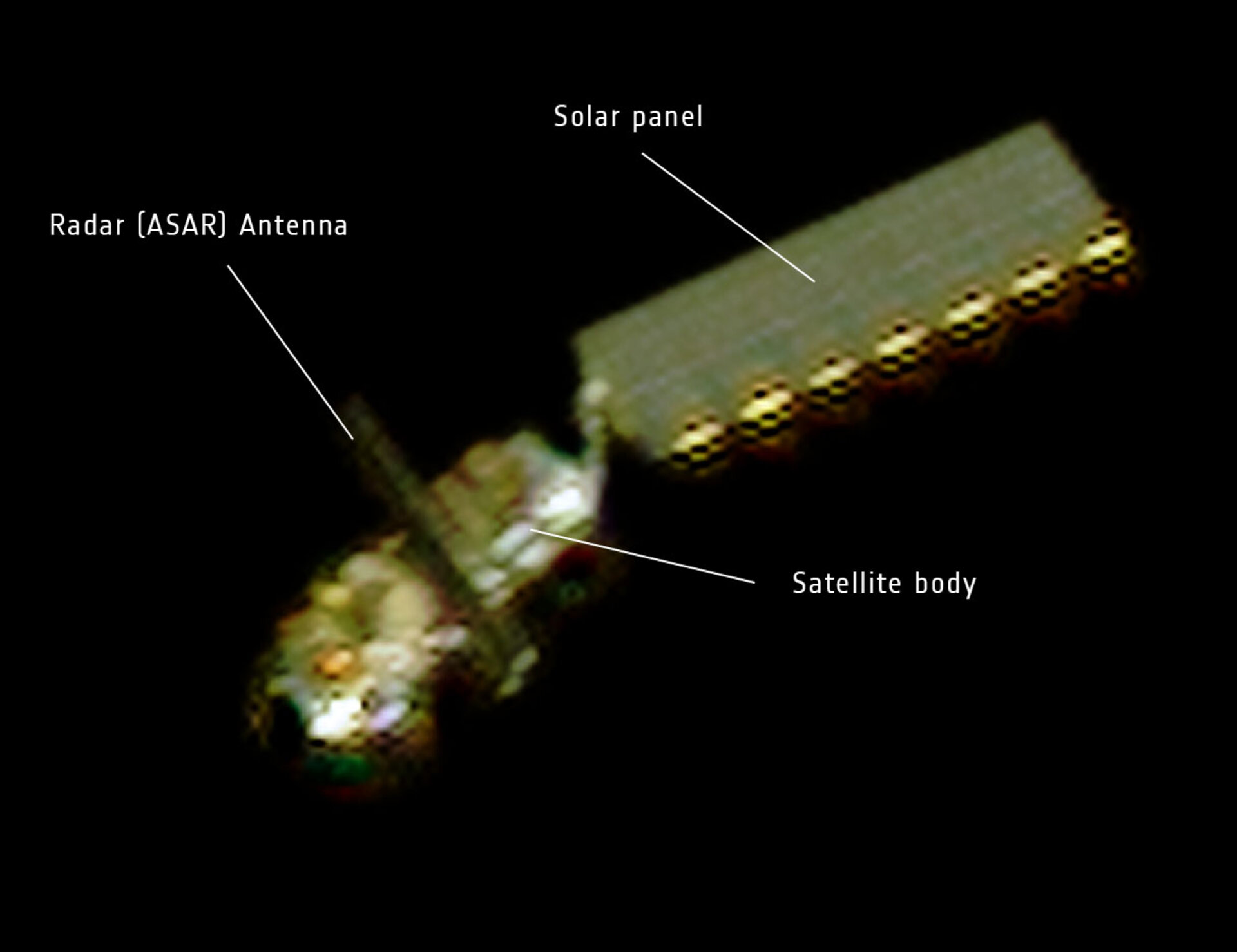
    On 15 April, the French space agency CNES turned Pleiades to capture images of Envisat passing within about 100 km. This remarkable feat was possible thanks to the exceptional agility of Pleiades.

    Flight specialists and engineers are using the images to determine the orientation of Envisat’s solar panel – the satellite’s power source.

    If the panel is in a suitable position for sufficient exposure to the Sun, enough power is being generated to put Envisat into safe mode, and could allow for re-establishing communications with Earth.

    “We are really grateful to CNES for offering to acquire images of Envisat using their Pleiades and Spot satellites,” said Volker Liebig, ESA’s Director of Earth Observation Programmes.
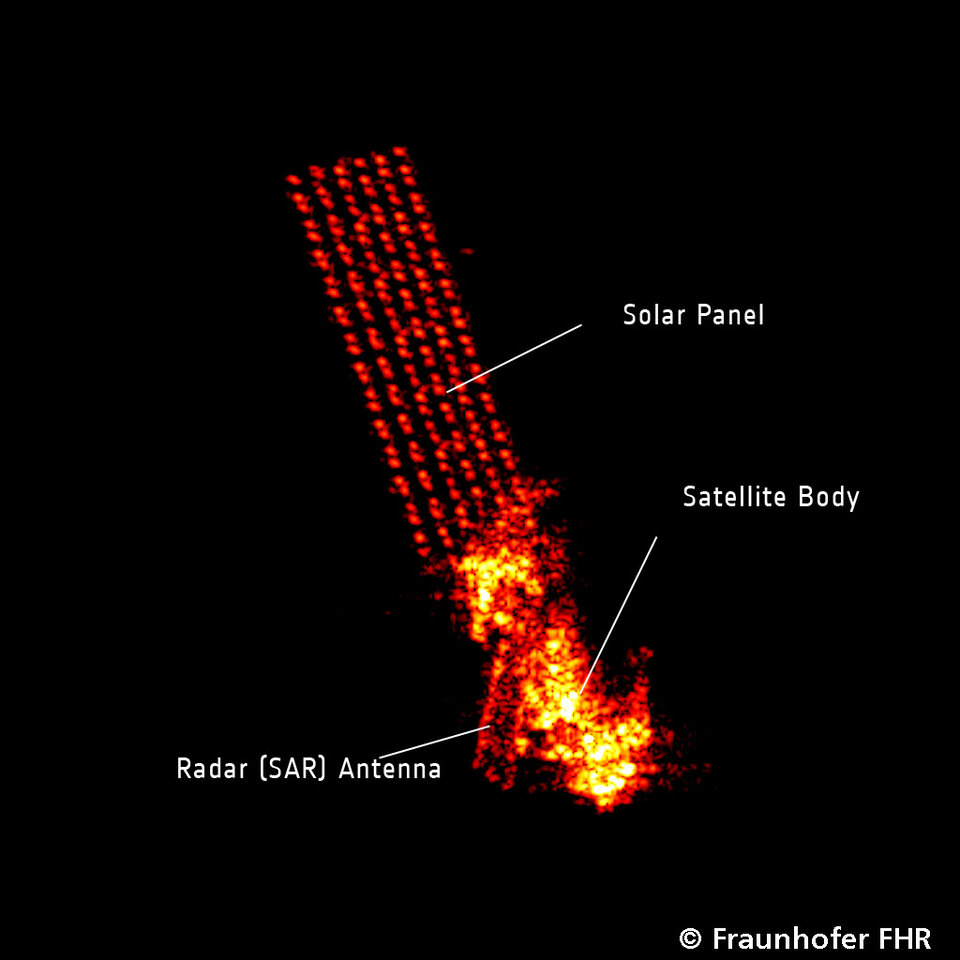
    Radar image of Envisat

    “Additional observations being acquired across the globe show how the international space community has come together to track this veteran satellite.”

    The Fraunhofer Institute for High Frequency Physics and Radar Techniques in Wachtberg, Germany, is also providing images to help determine Envisat’s orientation.

    Images from the TIRA ground-based tracking and imaging radar show the satellite’s body, solar panel and radar antenna.

    “These unique images will enable us to analyse Envisat’s orientation, which will indicate whether we are able to regain contact with the satellite,” said Manfred Warhaut, Head of ESA’s Mission Operations Department.

    Information on Envisat’s orbit is being provided by the US Joint Space Operations Center. In addition, multiple laser ranging stations on the ground are providing information to verify the stability of the satellite’s orbit.

    The sudden interruption of Envisat services has disrupted data provision to the international Earth observation user community, which relies on data continuity.

    The launch of the upcoming Sentinel series being developed for Europe’s Global Monitoring for Environment and Security (GMES) programme has become even more urgent.

    The Sentinels will provide the data needed for information services to improve the management of the environment, understand and mitigate the effects of climate change and ensure civil security.

    Rate this

    Views

    Share

    • Currently 0 out of 5 Stars.
    • 1
    • 2
    • 3
    • 4
    • 5
    Rating: 0/5 (0 votes cast)

    Thank you for rating!

    You have already rated this page, you can only rate it once!

    Your rating has been changed, thanks for rating!

    273
    Tweet
    • Envisat's 10th birthday
    • Interview with Envisat mission manager
    • Related news
      • Envisat services interrupted
        • Satellite observes rapid ice shelf disintegration in Antarctic
          • Satellite captures images of sandstorm
            • Happy birthday, Envisat
            • Related links
            • CNES
            • Pleiades
            • Pleiades images
            • Fraunhofer FHR
            • GMES
            • Related missions
            • Envisat
            • Sentinels
            • Operations
            • Earth Observation

    Connect with us

    • RSS
    • Youtube
    • Twitter
    • Flickr
    • G+
    • Facebook
    • Livestream
    • Subscribe
    • App Store
    • ESA Operations Twitter

    Follow ESA operations

    • LATEST ARTICLES
    • · Proba-V opens its eyes
    • · First new Galileo satellite arrive…
    • · Next destination: space
    • · Leak repaired on International Spa…
    • · After Chelyabinsk: European expert…
    • FAQ

    • Jobs at ESA

    • Site Map

    • Contacts

    • Terms and conditions