Swarm operations
Editor's note: This page is no longer being updated, but will be preserved as a record. Click here for the latest information on Swarm.
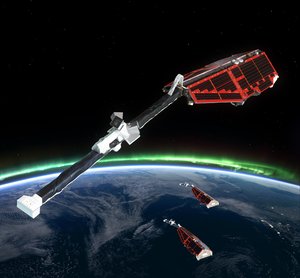
The Swarm mission is unravelling one of the most mysterious aspects of our planet: the magnetic field. The magnetic field and electric currents in and around Earth generate complex forces that have immeasurable impact on everyday life. The field can be thought of as a huge bubble, protecting us from cosmic radiation and charged particles that bombard Earth in solar winds.
Although we know that the magnetic field originates from several places, exactly how it is generated and why it changes is not yet fully understood.
Swarm comprises a constellation of three satellites, initially orbiting in two different near-polar orbits at 460 and 530 km altitude. The primary ground station is Kiruna, while the mission's Processing and Archiving Element, managed by ESA/ESRIN, is overseeing the generation of data products from the science data stream and is interfacing with the scientific community.
The mission
The Swarm Mission Operations Centre (MOC) is located at ESA's ESOC establishment in Darmstadt, Germany.
| ROLE | Earth observation - explore our planet's magnetic field |
| LAUNCH DATE | 22 November 2013 |
| LAUNCHER/LOCATION | Rockot, Plesetsk Cosmodrome, russia |
| LAUNCH MASS | 500 kg each of three satellites |
| ORBIT | Near-polar, two satellites initially at 460 km; one at 530 km |
| PERIOD | 15 orbits daily |
| NOMINAL MISSION | 4 years |
| + Three identical Swarm satellites are measuring very precisely the magnetic signals comprising Earth's magnetic field + | |
The Flight Control Team

The Flight Control Team operations the Swarm satellites from a Dedicated Control Room located at ESOC. Juan Piñeiro, an experienced engineer, has been Spacecraft Operations Manager (SOM) since 2009.
From 2007-11, ESOC engineers and mission planners developed the overall ground control infrastructure, flight control procedures and interfaces with other teams. Specific training for the Flight Control Team began in 2012, and the months prior to launch in late 2013 were dedicated to intensive team training in a series of realistic simulations.
Mission operations overview
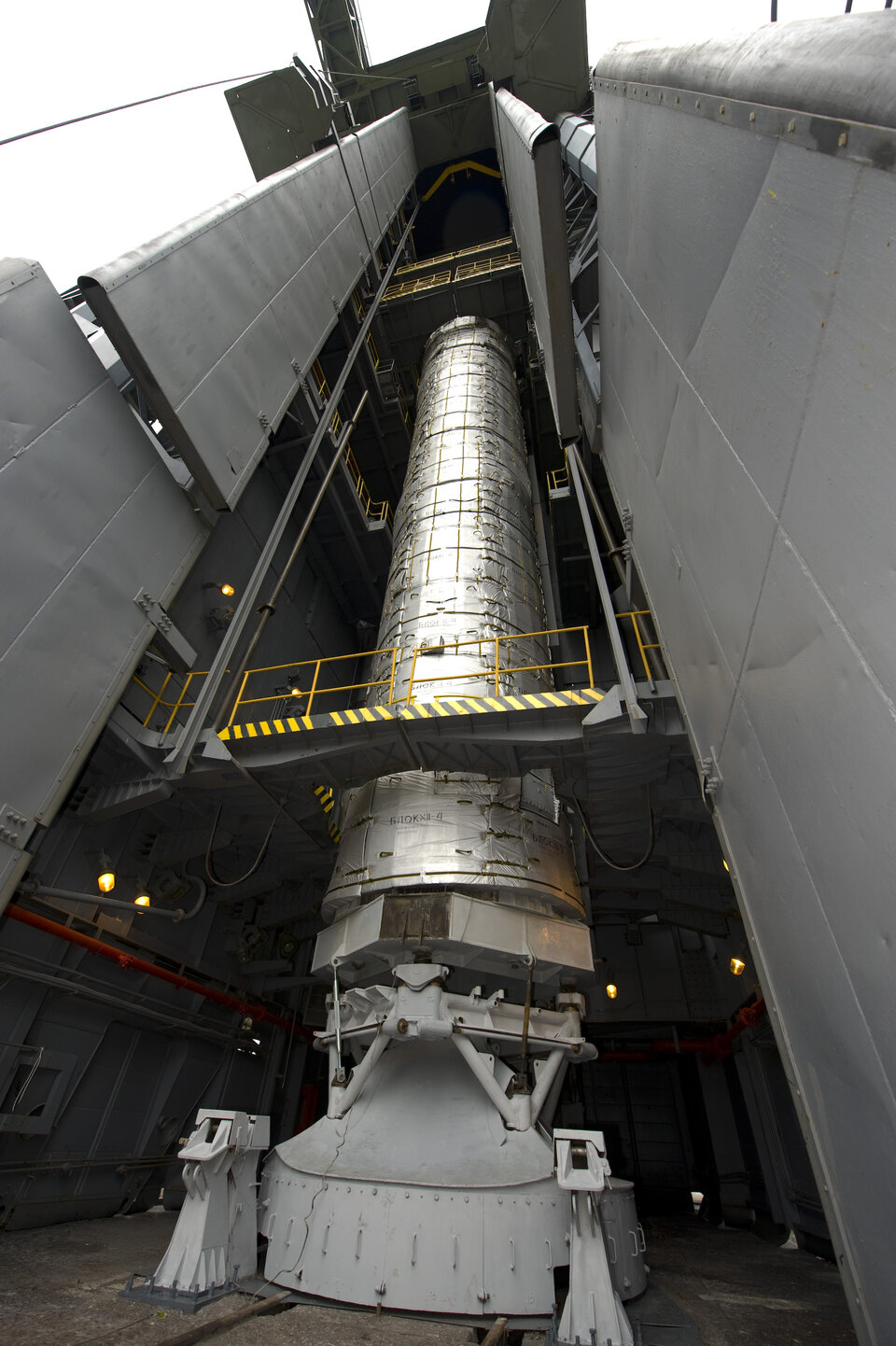
The three Swarm satellites were launched together on a Rockot launcher from Plesetsk, Russia.
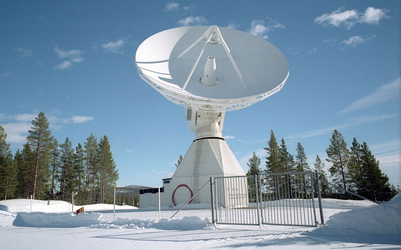
In orbit, all operations are controlled from ESOC, while data processing and archiving is handled from ESA/ESRIN. The 15m Estrack station at Kiruna is the mission's dedicated ground tracking station, while other stations provide support as needed.
All Swarm satellites were placed into orbit by a single launch vehicle. After separation from the launcher, the satellites' subsystems were activated to allow contact between the satellites and ground stations.
In the critical Launch and Early Orbit Phase (LEOP), four ground stations were used to provide additional data and telemetry contact.


Access the video
LEOP lasted approximately three days for the full activation of the satellites, followed by a commissioning phase of around three months.
The commissioning phase was used to check out all satellite subsystems and the payloads. The orbit acquisition phase - which occurred in parallel with the commissioning phase - started around seven weeks after launch and comprised of a series of hundreds of small thrust manoeuvres with the aim of bringing the satellites into the initial orbit of the routine phase.
After commissioning, the nominal four-year mission phase began. In routine operations, the Flight Control Team manage:
- Overall satellite operations planning
- Satellite monitoring and control
- Flight dynamics and manoeuvre
- On-board software maintenance
- Mission simulation
Mission control system

Swarm uses ESA's SCOS-2000® mission control system.
Originally developed to support ESA missions, the software is now being promoted as a product and licenses are being granted in the fields of space research and technology. SCOS-2000® is part of the ESA Ground Operation System (EGOS) project, aimed at standardising the infrastructure used throughout European Space Agency ground segments with the goal of improving reliability, cost effectiveness and interoperability.
Closely coordinated with the ground segment dedicated to operation control, a separate Payload Data Ground Segment (PDGS) handles the scientific data coming from Swarm. Once received on ground, science data are transferred to the PDGS centre, located in Farnborough, UK. The PDGS is responsible for data processing, data archiving and user services.
The ground station - Kiruna
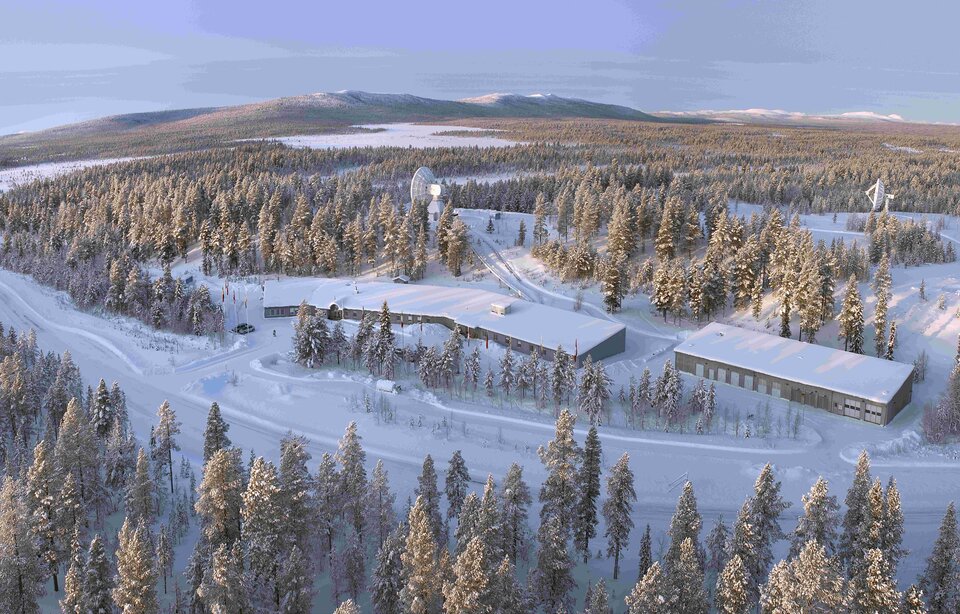
For routine operations, the mission uses ESA's 15m Kiruna ground station – part of the Agency's ESTRACK global network – for command, control and tracking of the three satellites.
Kiruna provides daily visibility for the satellites in both the upper and lower Swarm orbits; the number of visible passes per day varies from nine (for the upper satellite, at beginning of mission), to six (for the lower pair, at the end of mission – when the orbit altitude will be as low as 300 km). For routine operations, one pass per day per satellite is sufficient to cover the monitoring and control needs.
Tracking, Telemetry & Commanding (TT&C) communication is be done at S-band frequencies, providing an uplink of 4 kbps and a downlink of 6 Mbps.
The platform and payload
The platform
The Swarm platform - the portion of the spacecraft dedicated to flight operations - comprises the following subsystems:
- Structure/mechanical
- Power
- Telemetry/telecommand
- Attitude and orbit control (AOC)
- Thermal control
- Data handling
The overall structure consists of the Bus Assembly, Solar Generator Assembly, Boom Assembly and Launch Adaptor.
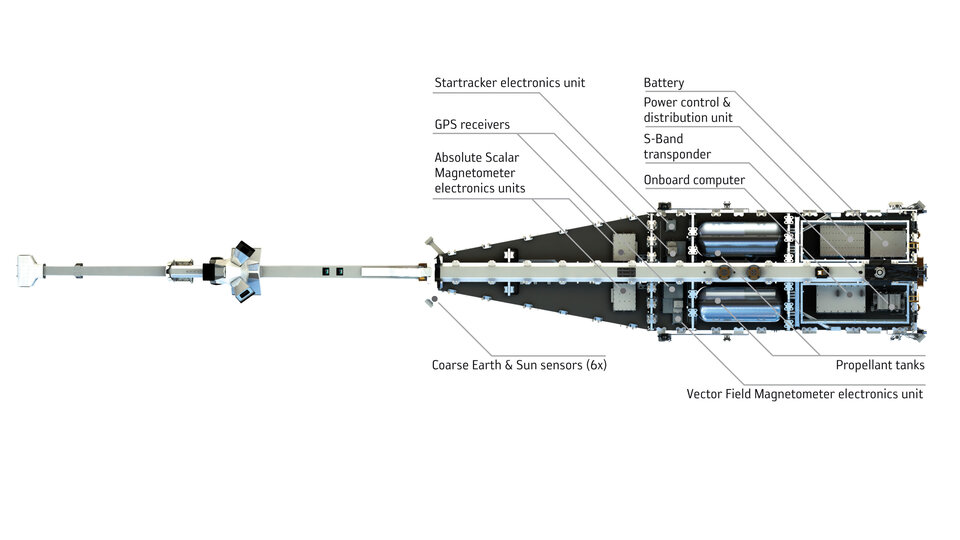
The requirements for gathering the mission's magnetic data are very stringent, and this imposes the need to optimise and control the magnetic properties of the spacecraft's physical structure. An important design measure is the accommodation of the magnetometer package at a distance from the main body/platform sufficient to minimise any magnetic disturbance.
A boom ensures a magnetically 'clean' environment and provides very stable accommodation for the magnetometer package. Due to envelope constraints of the launcher fairing, the boom must be deployable.
The payload
Each satellite will carry a science payload consisting of the following instruments:
- Absolute Scalar Magnetometer (ASM)
- Vector Field Magnetometer (VFM)
- Electrical Field Instrument (EFI)
- Accelerometer (ACC)
- Laser Retro Reflector (LRR)