

Compression stops space missions from drowning in data
The very first satellite, Sputnik, communicated nothing but a humble ‘beep beep’ back to its homeworld. More than five decades on, space missions face the risk of drowning in the vast amounts of data produced by next-generation satellite instruments.
Mission planners are increasingly coming up against the thorny problem of how to relay these extremely plentiful results down to the ground.
Finding a way to fit such torrents of information into the limited communications capabilities available for ground transmission can be likened trying to drink water from a fire-hose.
A mission’s available bandwidth is set by its combination of antenna size, transmitter power and allocated ground stations. As space gets busier bandwidth is becoming a very scarce resource, with traditional bands increasingly crowded. Frequency-sharing and other clever utilisation schemes are at their limits.
Increasing the overall number of ground stations is not an option, although relaying communications via satellites is one way of increasing ground station connectivity – ESA’s European Data Relay Satellite will investigate this solution.
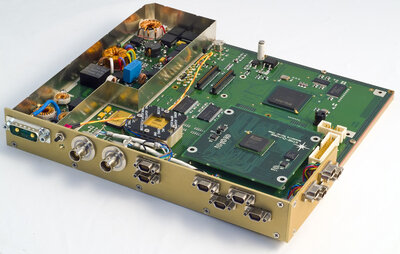
But there is another, more direct, solution to avoid data bottlenecks: shrink a mission’s results down to a manageable size before downlinking them to Earth.
“On-board data compression is accordingly gaining an increased importance in the frame of spacecraft design,” said Raffaele Vitulli of the On-board Payload Data Processing section within ESA’s Technical and Quality Management Directorate, overseeing Agency research in this field.
“It is proving crucial for a number of forthcoming missions, especially within Earth observation.
“Since the spatial, spectral and radiometric resolutions of optical and radar sensors are getting finer and finer, the amount of collected data which is already huge is set to grow even further. Powerful compression algorithms are required to match the available channel resources.
“Moreover, some Earth observation missions are required to transmit data to the ground in real-time, meaning that compression devices with very high throughput are needed.”
Missions in need

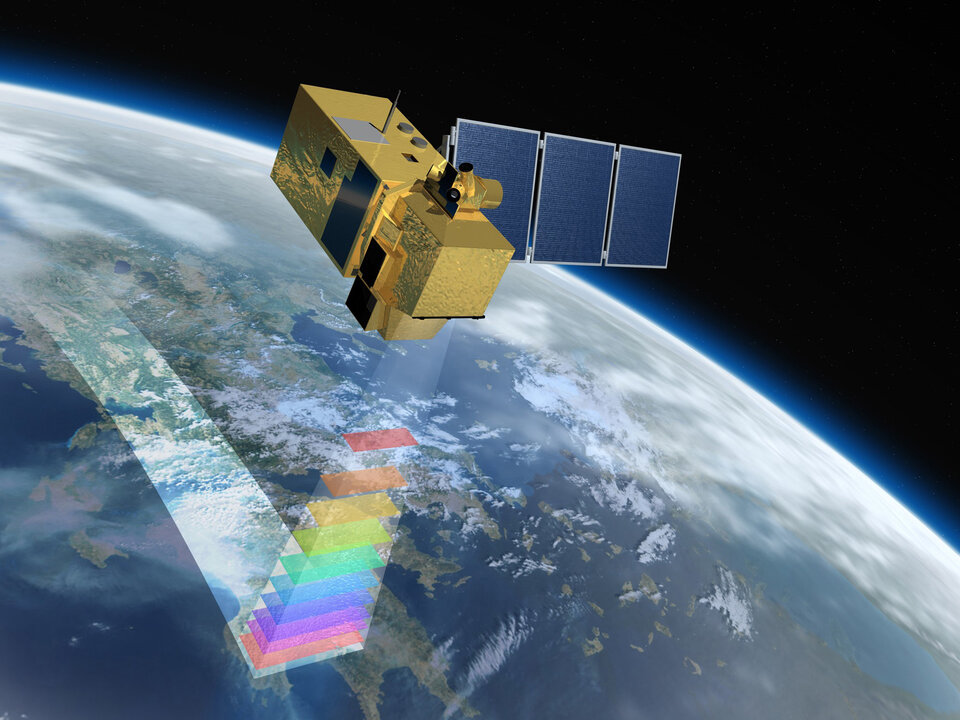
Future missions in Europe’s Global Monitoring for Environment and Security (GMES) initiative, such as the multispectral surface imager Sentinel-2 and the atmosphere-sampling Sentinel 5 Precursor, will therefore be relying on onboard data compression to a high degree.
The ambitious Proba-V micro-satellite will also employ data compression. Seeking to duplicate a task currently undertaken by the full-size Vegetation sensor on France's SPOT satellites, this 2012 mission will be smaller than a cubic metre, limiting its downlink capacity even though it performs daily multispectral vegetation monitoring across all of Earth’s land.
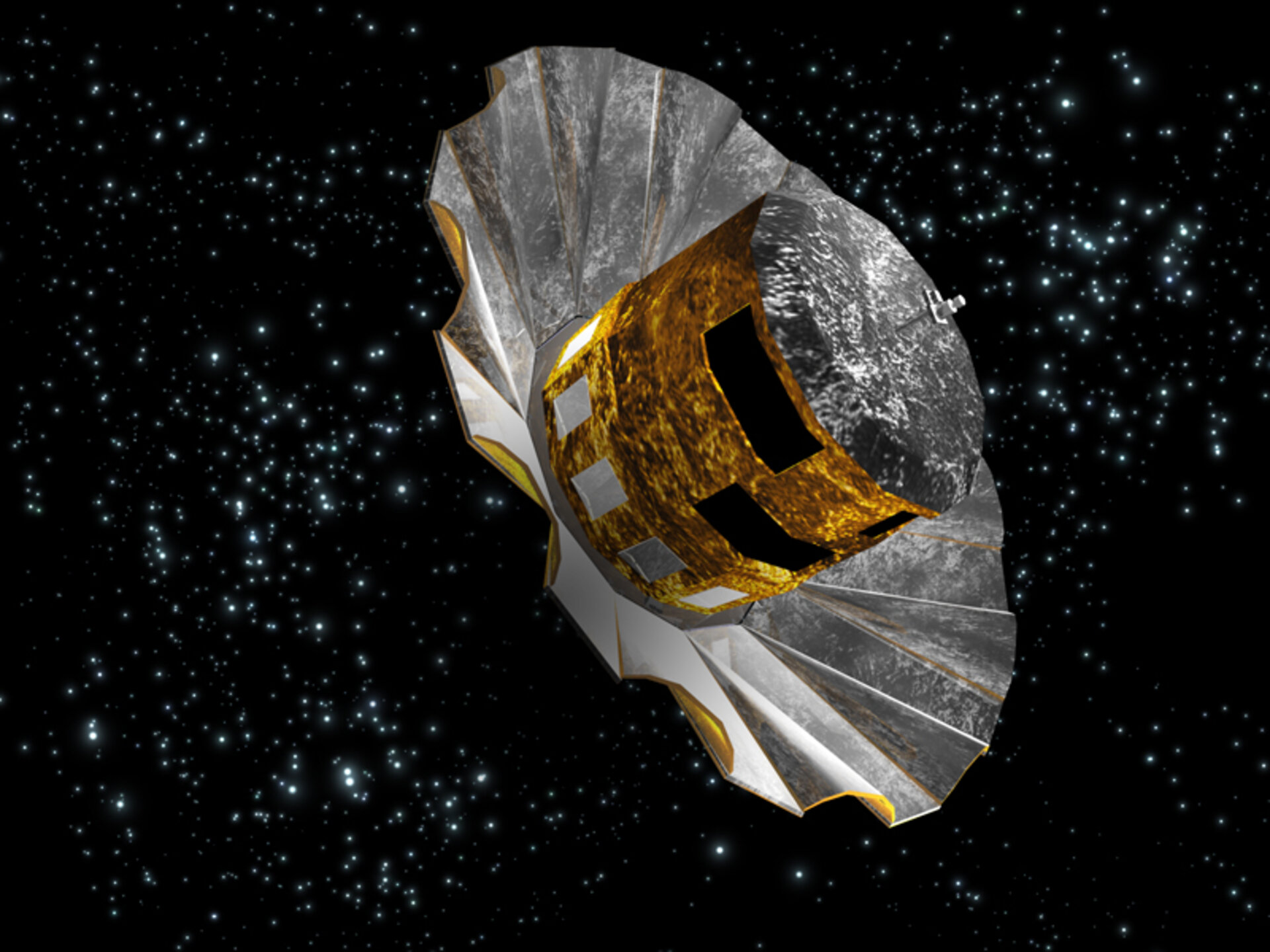
Science missions face comparable challenges. Take ESA’s Gaia mission, which during its five-year lifetime aims to observe the motions of more than a billion stars and other celestial objects with unprecedented accuracy.
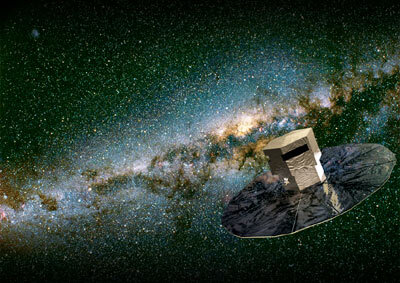
“To achieve this target, Gaia will have to detect, select and measure hundreds of stars per second, while sending their data back to Earth,” explained Raffaele.
“Thanks to on-board data compression, it will be possible to transmit all the data generated on board, without any restriction, delivering maximum science return.”
Targeting surplus data
Located at ESTEC, the On-board Payload Data Processing Section is ESA’s centre of expertise for data compression algorithms, techniques and devices.
The underlying concept of data compression is based on the fact that images in general contain some redundant information: for instance, the blue sky of a holiday snap can be depicted in a more efficient way, by removing the superfluous information contained in this uniform background.
“There are two main categories of data compression,” Raffaele explained. “‘Lossless’ is where the original information can be reconstructed without any loss of content and ‘lossy’ is where the reconstructed image is different from the original, but with negligible differences.

“In everyday terms, the familiar ZIP algorithm is lossless while the JPEG format is lossy.”
Lossless compression is normally performed by two main blocks: a predictor and an encoder. The predictor removes the redundant information from the data, while the encoder has the task of describing the information in an efficient way, with the least number of bits possible.
Lossy compression is based on the differing spatial frequencies – or level of detail – contained within a single image.
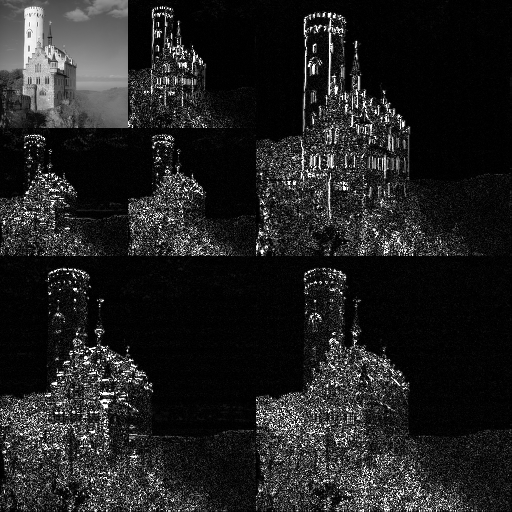
In the case of a JPEG compression, the image is first decomposed into low- and high-frequency components. The low-frequency components (derived from uniform areas such as sky or a wall) are then encoded with a larger number of bits, while the high-frequency components (derived from zones where rapid changes are seen, such as vegetation) are encoded with a lower number of bits.
“This is a way of getting rid of surplus high-frequency information that is not important to human perception of the image – the human eye being less sensitive to very high frequency changes in the colour domain in particular,” added Raffaele.
“The resulting compressed image has slight blurring of high-frequency areas, but this is scarcely perceptible to human vision.”
Global issue for space design
Data compression is a global issue for space design engineers, shown by the wide attendance at last year’s On-board Data Compression Workshop in Toulouse, France.
The second in a proposed biennial series, the 28-29 October workshop was co-organised by ESA and CNES. More than 20 papers were presented across the two days in a number of sessions. The participants included representatives from NASA’s Jet Propulsion Laboratory and Goddard Space Flight Center, the National Aerospace Laboratory of the Netherlands and Eumetsat, as well as delegates from industry and academia.
The subject’s importance also extends to global standardisation efforts. Mr Vitulli represents ESA on the Data Compression Group of the Consultative Committee for Space Data Systems (CCSDS), which is a multi-national forum for the development of common communications and data systems standards for spaceflight.
To learn more about ESA’s data compression activities, the On-board Data Processing section website (see right hand link) gives an outline of all activities in the field, with tools and compression software available on request.


