• → European Space Agency

      • Space for Europe
      • Space News
      • Space in Images
      • Space in Videos
    • About Us

      • Welcome to ESA
      • DG's News and Views
      • For Member State Delegations
      • Business with ESA
      • ESA Exhibitions
      • ESA Publications
      • Careers at ESA
    • Our Activities

      • Space News
      • Observing the Earth
      • Human Spaceflight
      • Launchers
      • Navigation
      • Space Science
      • Space Engineering
      • Operations
      • Technology
      • Telecommunications & Integrated Applications
    • For Public

    • For Media

      • Media
      • ESA TV
      • Videos for professionals
      • Photos
    • For Educators

    • For Kids

    • ESA

    • Space Engineering

    • What we do
    • Directorate of Technical and Quality Management (TEC)
    • Electrical
    • Electrical engineering
    • Control Systems
    • Data Systems
    • Radio Frequency Payload Systems
    • Electromagnetics and Space Environment
    • Power and Energy Conversion
    • Mechanical
    • Mechanical engineering
    • Thermal Control
    • Structures and Mechanisms
    • Mechatronics and Optics, incl. robotics and life support
    • Propulsion and Aerothermodynamics
    • Systems
    • Systems and software engineering
    • Software Systems
    • Systems Engineering, incl. cost engineering
    • Technology programmes
    • Product Assurance
    • Product Assurance
    • Flight Safety
    • Dependability
    • Quality Management and Assurance
    • Materials and Processes
    • Electronic Components
    • Software Product Assurance
    • Standards
    • Requirements and standards
    • European Cooperation for Space Standardization (ECSS)
    • European Space Components Coordination (ESCC)
    • Services
    • ESA calendar of events
    • Subscribe

    ESA > Our Activities > Space Engineering

    ESA tests self-steering rover in ‘Mars’ desert

    ESA rover in Atacama Desert
    18 June 2012

    ESA assembled a top engineering team, then challenged them to devise a way for rovers to navigate on alien planets. Six months later, a fully autonomous vehicle was charting its course through Chile’s Mars-like Atacama Desert.

    May’s full-scale rover field test marked the final stage of a StarTiger project code-named ‘Seeker’.

    Standing for ‘Space Technology Advancements by Resourceful, Targeted and Innovative Groups of Experts and Researchers’, StarTiger involves a multidisciplinary team gathered at a single site, working against the clock to achieve a technology breakthrough.
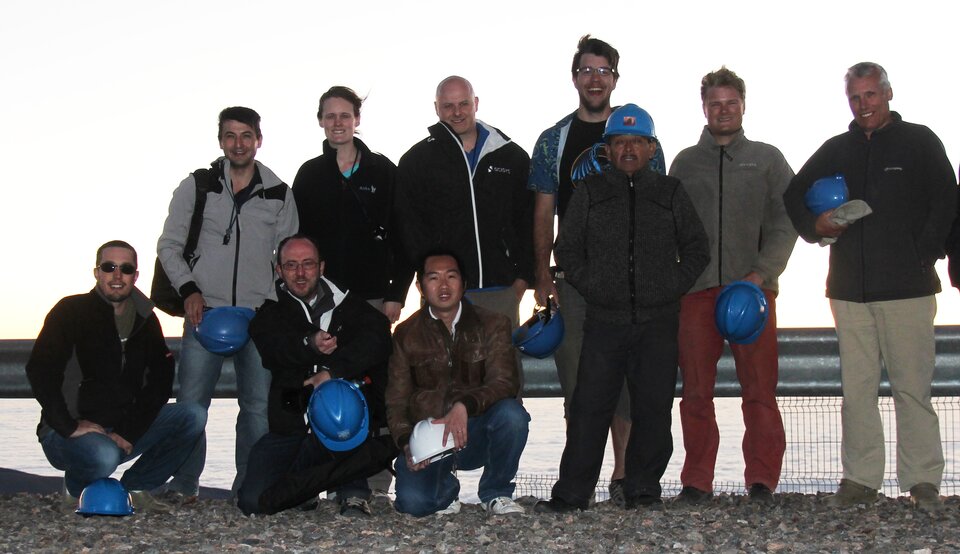
    StarTiger team in Atacama

    “Our expert team met at the Rutherford Appleton Laboratory in the UK,” explained Gianfranco Visentin, head of ESA’s Automation and Robotics section.

    “Their challenge was to demonstrate how a planetary rover – equipped with state-of-the-art autonomous navigation and decision-making software – could traverse 6 km of Mars-like environment and come back where it started.”


    Long-range rovers risk getting lost
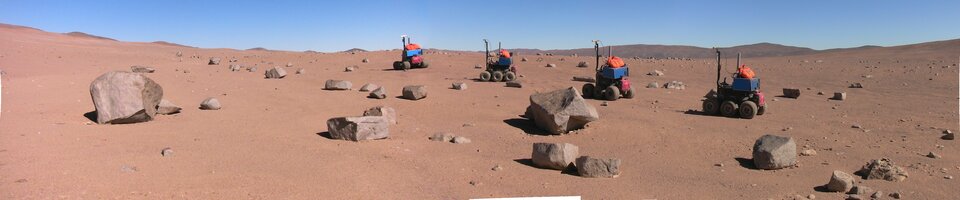
    Time-lapse image of Seeker in motion

    Mars rovers cannot be remotely ‘driven’. It takes radio signals up to 40 minutes to make a round trip between Mars and Earth. Instead, rovers are given instructions to carry out autonomously.

    “ESA’s ExoMars rover, due to land on Mars in 2018, will have state-of-the-art autonomy,” added Gianfranco.

    “However, it will not travel more than 150 m per individual ‘Sol’ – a martian day – or much more than 3 km throughout its mission.
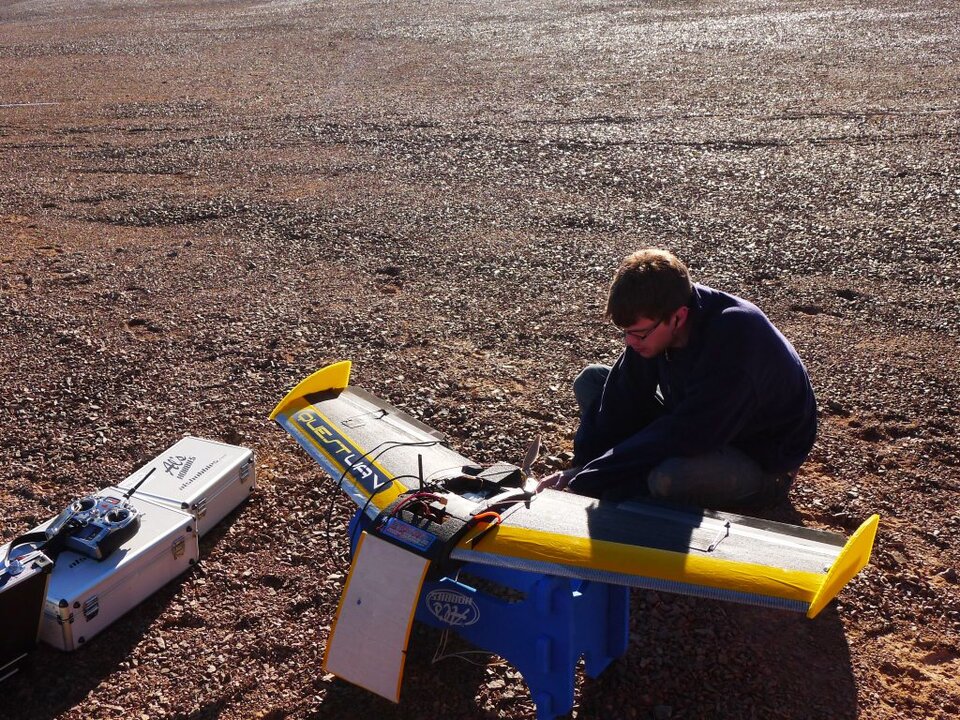
    UAV in Atacama Desert
    UAV for route mapping

    “The difficulty comes with follow-on missions, which will require daily traverses of five to ten times longer.

    “With longer traverses the rover progressively loses its absolute localisation – sensing where it is.

    “Lacking martian GPS, the rover can only determine how far it has moved relative to its starting point, but this ‘dead reckoning’ is still subject to errors, which build up into risky uncertainties.”

    The Seeker team aimed at a less than 1% distance error, and being able to fix their position on a terrain map to 1 m accuracy.

    The rover acquired visual odometry systems to assess its distance moved, stereo-vision reconstruction to map its surroundings and advanced path-planning and obstacle avoidance systems.

    Desert testing
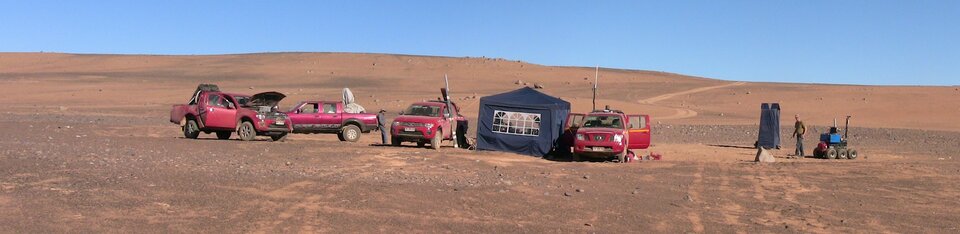
    Desert base camp

    Prototypes underwent indoor and outdoor testing. Then, in May, the Seeker team - including experts from SciSys UK, BAE Systems UK, Roke Manor UK, MDA-UK, the University of Oxford and Laboratoire d’Analyse et d’Architecture des Systémes in France - took their rover to the Atacama Desert, one of the driest places in the world, which was selected for its similarities to martian conditions.

    “The European Southern Observatory’s nearby Very Large Telescope was an additional advantage,” Gianfranco added. “The observatory kindly provided refuge for the cold and windy desert nights.”
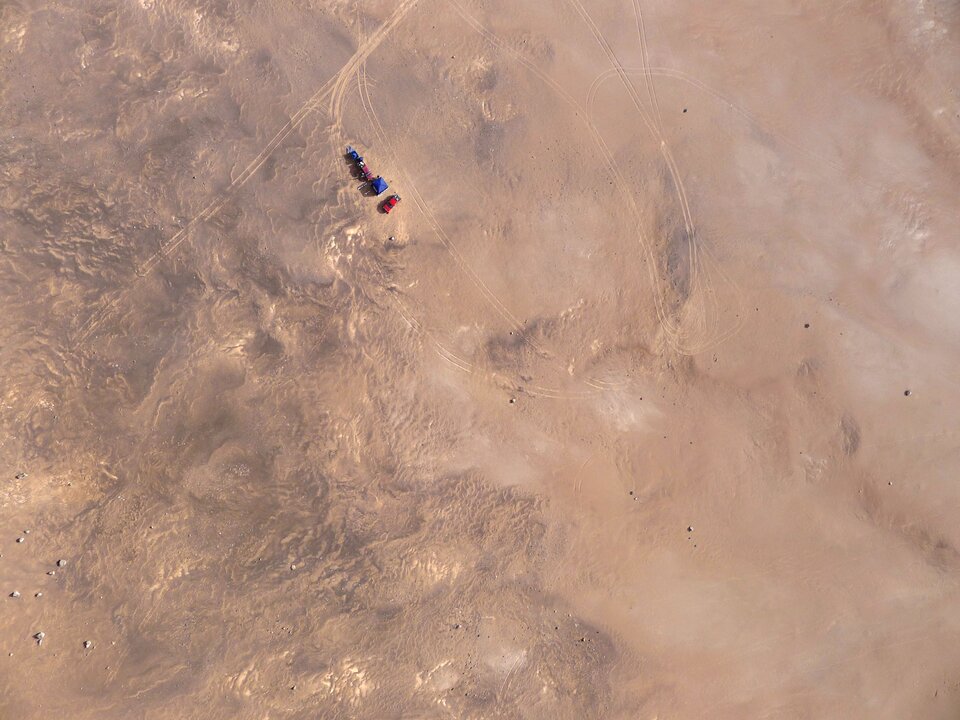
    Base camp from the air
    Aerial view

    For two weeks the team put the rover into action within a particularly Mars-like zone. Like anxious parents, the team watched the rover go out of sight, maintaining only radio surveillance.

    Their daily efforts culminated in the official trial, when the Seeker rover was programmed to perform a single 6 km loop.

    “The whole day was needed as the rover moves at a maximum 0.9 km/h,” Gianfranco recalled.

    “But this was an unusual day. The usual desert winds counteracting the fierce heat of the Sun died away.

    “The rover grew dangerously warm, and had to be stopped around midday. Then, when the wind finally picked up there wasn’t enough time to complete the loop before sundown.

    Time-lapse image of rover navigating hill

    “We managed 5.1 km, somewhat short of our 6 km goal, but an excellent result considering the variety of terrain crossed, changes in lighting conditions experienced and most of all this was ESA’s first large scale rover test – though definitely not our last.”

    Rate this

    Views

    Share

    • Currently 0 out of 5 Stars.
    • 1
    • 2
    • 3
    • 4
    • 5
    Rating: 0/5 (0 votes cast)

    Thank you for rating!

    You have already rated this page, you can only rate it once!

    Your rating has been changed, thanks for rating!

    342
    Tweet
    • Full version of article
    • Shortened version of article
    • Technology
      • About StarTiger
        • About the Basic Technology Research Programme (TRP)
          • Automation and Robotics Laboratory
          • Related articles
            • StarTiger secures way to eclipse Sun in space
              • ESA’s Tigers on prowl for solar corona’s secrets
                • The Atacama Desert, Chile
                • Related Links
                • Rutherford Appleton Laboratory
                • SciSys
                • BAe Systems
                • Roke Manor Research
                • MDA
                • University of Oxford
                • Laboratoire d'Analyse et d'Architecture des Systémes (LAAS)

    Connect with us

    • RSS
    • Youtube
    • Twitter
    • Flickr
    • G+
    • Facebook
    • Livestream
    • Subscribe
    • App Store
    • LATEST ARTICLES
    • · Rare merger reveals secrets of gal…
    • · Watching for hazards: ESA opens as…
    • · ESA astronaut Timothy Peake set fo…
    • · Space drives e-mobility
    • · Proba-V opens its eyes
    • FAQ

    • Jobs at ESA

    • Site Map

    • Contacts

    • Terms and conditions