Materials testing key to space successes
Converting space missions from blueprints into solid reality raises a fundamental issue: what should they be made from? Answering that misleadingly simple question has spawned an entire technical domain, whose key figures gathered recently at ESA’s engineering heart.
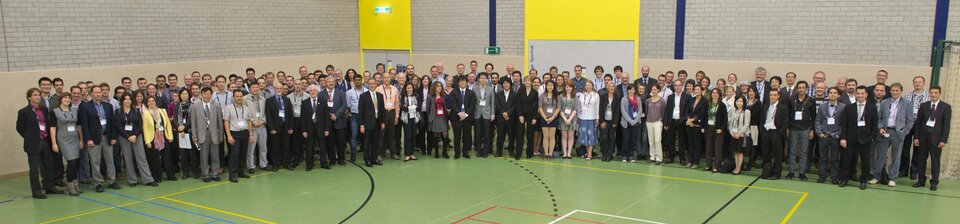
The 12th International Symposium on Materials in the Space Environment took place at ESTEC, ESA’s technical centre in Noordwijk, the Netherlands, on 24–28 September, co-organised by ESA, French space agency CNES and French aerospace lab ONERA.
The event attracted 216 participants from space agencies, industry, academia and research institutions across Europe, US, Japan, Canada, China and South Korea.
“This record attendance shows that, despite the economic climate, this subject is seen increasingly as a potential game changer,” remarked Mikko Nikulainen, head of ESA’s Materials and Component Technology Division.

Materials and processes experts play a crucial part in ensuring mission success, especially in the early planning stages.
“The earlier we get involved, the better,” explained Christopher Semprimoschnig, head of ESA’s Materials Space Evaluation and Radiation Effects Section.
“Being certain that materials will perform as planned helps ensure projects do not end up facing any nasty surprises. Having to fix problems later on can cost a lot of time and money.”
Each Symposium is a milestone in the space materials and processes field – the last ISMSE took place three years ago.
The event gave an overview of current issues as well as encouraging the next generation of specialists: students took part in a special poster session and attended an introductory course in materials selection.
Material challenges

Space is a tough place to build for. Satellites must endure the violence of a launch, unfiltered sunlight in the airlessness of orbit, extreme temperature shifts with each pass between light and shadow, build-ups of static electricity and intense radiation exposure.
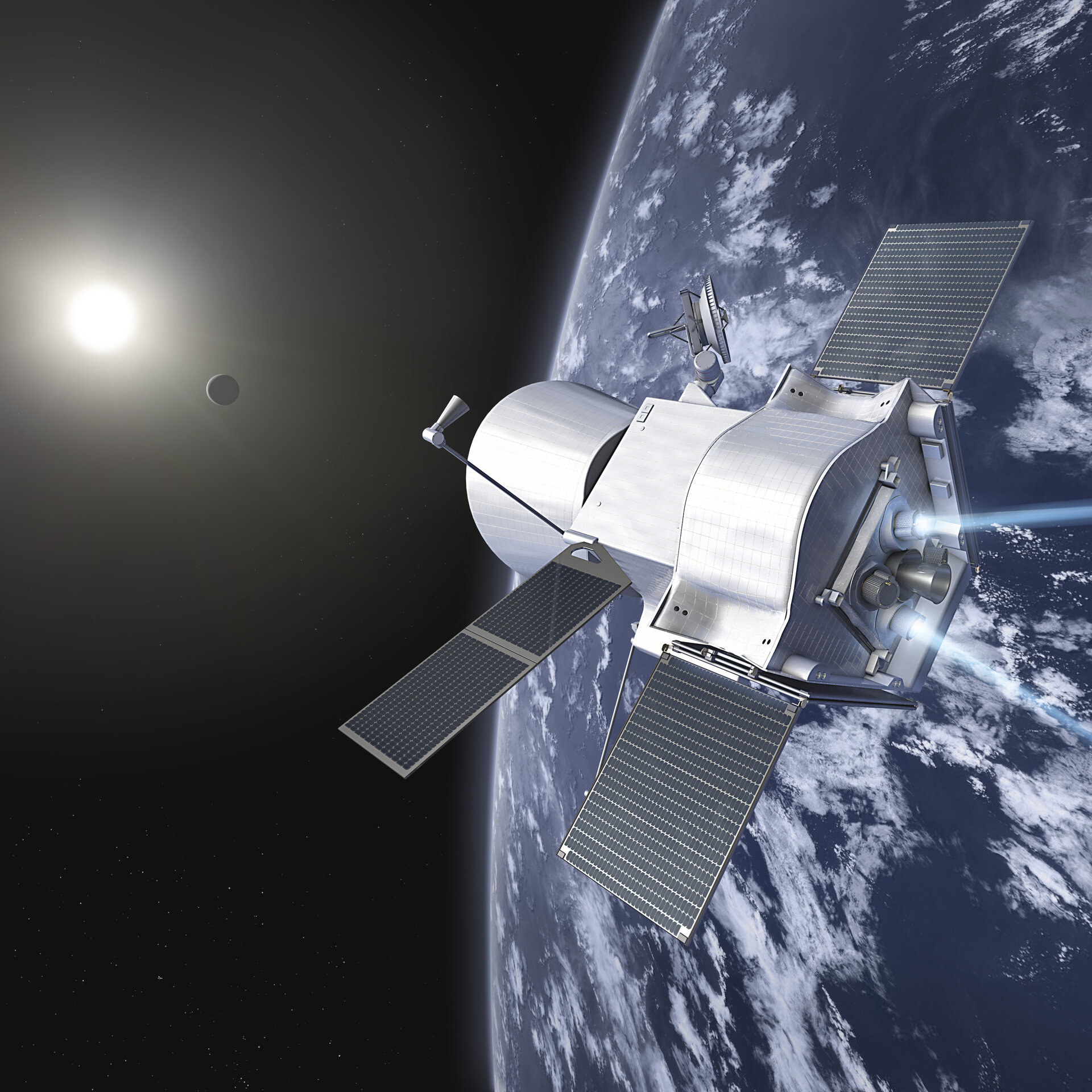
New materials challenges come from extreme space environments: ESA’s 2015 BepiColombo mission to Mercury requires protection from solar radiation more than 10 times stronger than at Earth. And the 2017 Solar Orbiter mission will venture even closer to the Sun.

Heading in the opposite direction, ESA’s Juice mission to Jupiter faces chilling cold coupled with the blistering radiation confined within the gas giant’s magnetic field.
ESA’s ExoMars and other rovers need to withstand conditions on Mars –‘the Moon with weather’ – and other target worlds, while ‘planetary protection’ solutions keep them free of bacterial contamination.
Cleaning up space
Not all the challenges come from off the planet, however. New environmental regulations mean that less harmful alternatives to current materials need to be found, while decreasing manufacturing processes’ environmental impact – for example, by using less materials or energy.
ESA is tackling the issue head-on through its new Clean Space initiative. Clean Space will make the space industry more sustainable, both on Earth and in space. Up in orbit, that means tackling space debris, which is already a serious problem.
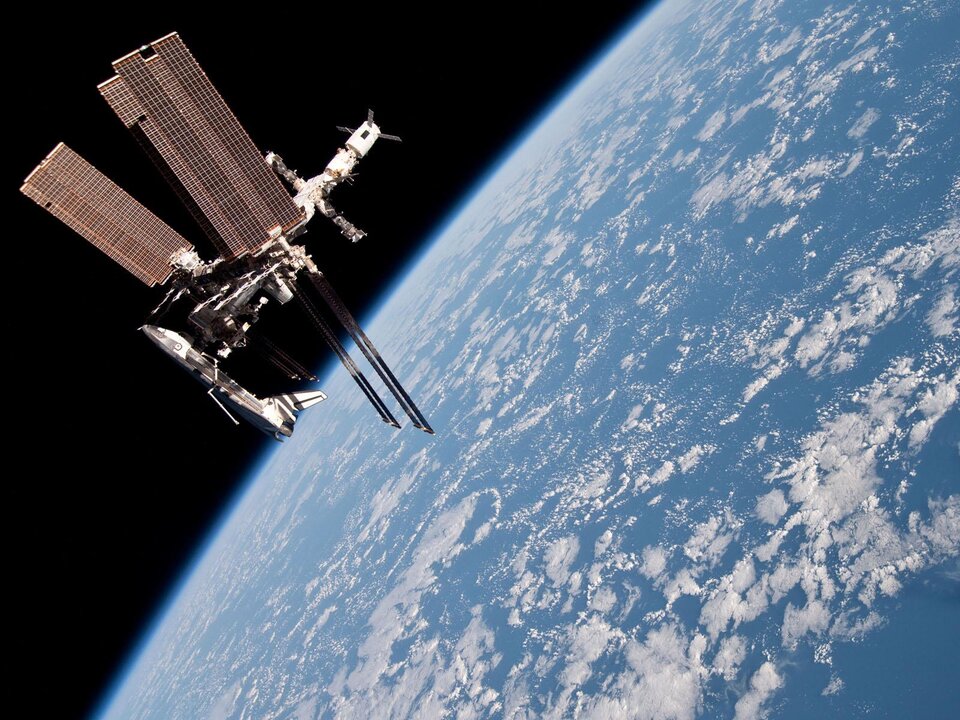
Carlos Soares of Boeing presented details of damage sustained to the International Space Station during 14 years in space. Impacts on handholds can leave them razor sharp, risking damage to spacesuit gloves.
At orbital velocities, even paint flecks can strike with bullet force, making it all the more important to avoid such flecking in the first place.
New ideas
Proposed debris solutions included self-healing microcapsule materials, developed by a team from MPB Communications and Concordia and McGill Universities in Canada.
Another promising concept could have broad applications. Smart ‘shape-memory’ metals whose shapes vary with temperature or electrical currents have been around for years, but now the idea has been extended to plastic polymers for use in deployable systems such as solar arrays or antennas.