• → European Space Agency

      • Space for Europe
      • Space News
      • Space in Images
      • Space in Videos
    • About Us

      • Welcome to ESA
      • DG's News and Views
      • For Member State Delegations
      • Business with ESA
      • ESA Exhibitions
      • ESA Publications
      • Careers at ESA
    • Our Activities

      • Space News
      • Observing the Earth
      • Human Spaceflight
      • Launchers
      • Navigation
      • Space Science
      • Space Engineering
      • Operations
      • Technology
      • Telecommunications & Integrated Applications
    • For Public

    • For Media

    • For Educators

    • For Kids

    • ESA

    • Space Engineering

    • What we do
    • Directorate of Technical and Quality Management (TEC)
    • Electrical
    • Electrical engineering
    • Control Systems
    • Data Systems
    • Radio Frequency Payload Systems
    • Electromagnetics and Space Environment
    • Power and Energy Conversion
    • Mechanical
    • Mechanical engineering
    • Thermal Control
    • Structures and Mechanisms
    • Mechatronics and Optics, incl. robotics and life support
    • Propulsion and Aerothermodynamics
    • Systems
    • Systems and software engineering
    • Software Systems
    • Systems Engineering, incl. cost engineering
    • Technology programmes
    • Product Assurance
    • Product Assurance
    • Flight Safety
    • Dependability
    • Quality Management and Assurance
    • Materials and Processes
    • Electronic Components
    • Software Product Assurance
    • Standards
    • Requirements and standards
    • European Cooperation for Space Standardization (ECSS)
    • European Space Components Coordination (ESCC)
    • Services
    • ESA calendar of events
    • Subscribe

    ESA > Our Activities > Space Engineering

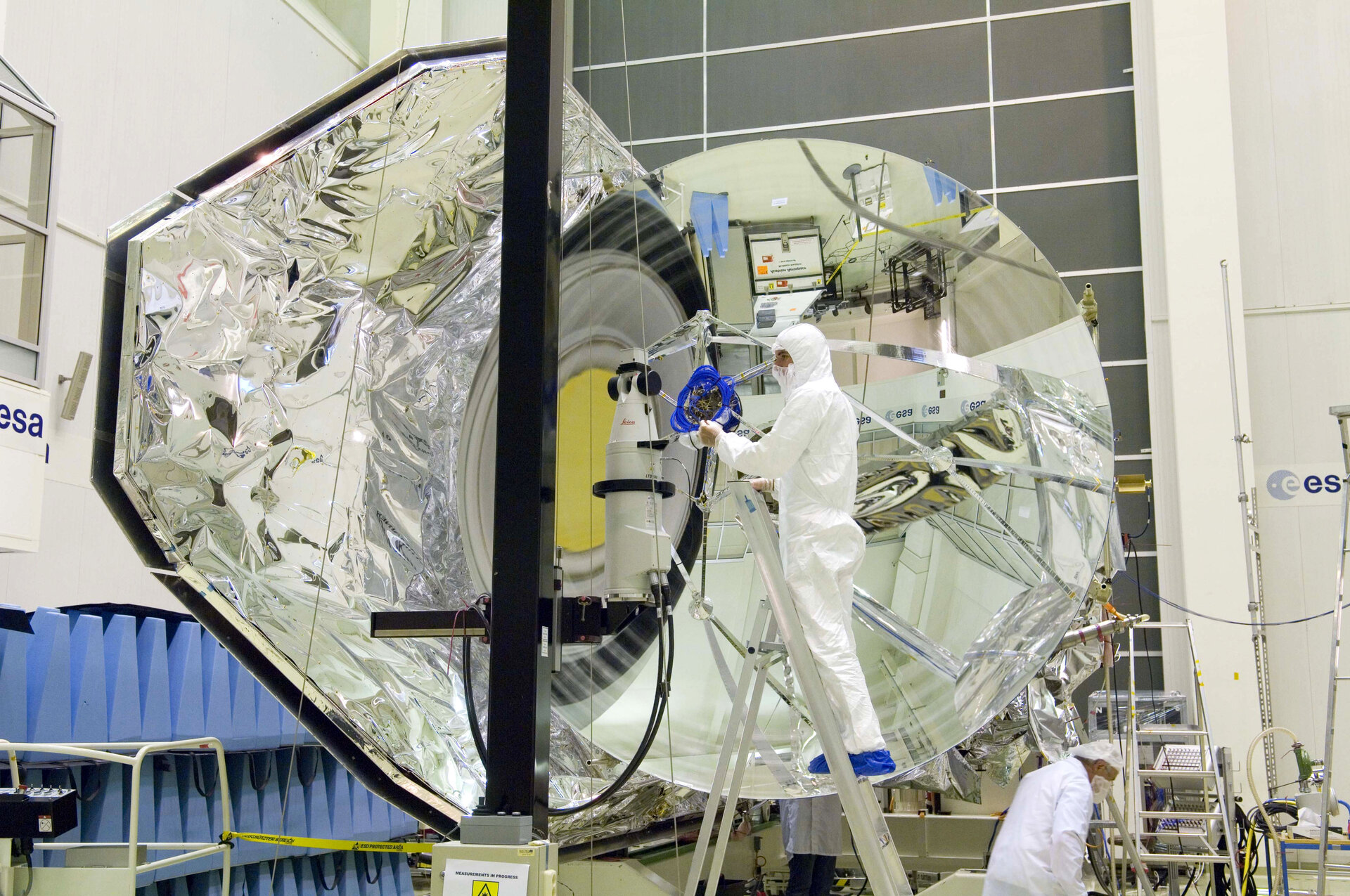
    Herschel spacecraft during distance measurements between the primary and secondary mirrors

    Mechanical engineering

    Mechanical Engineering takes in all built structures and moving parts flown in space, which includes automation and robotics, instruments for scientific missions as well as assessing the effects of the space environment on materials.

    So while Electrical Engineering is centred on the motion of electrons this set of disciplines focuses on the movement of everything else: how satellite structures react to the extreme accelerations, vibrations and temperature shifts experienced during launch and orbit, the performance of moving devices in vacuum conditions, the passage of light through optical systems and the inner workings of engines and other propulsion systems.

    It also includes the design and operation of physics and biology experiments destined for the International Space Station or other microgravity platforms, and the life support systems needed to keep people alive and comfortable in orbit.

    There is no easy way to repair space hardware once it breaks down, so it has to be designed to perform in a strudy and reliable manner. Satellite structures must remain stable in order to avoid distorting payload performance while moving mechanisms have to go on operating without failure for many years. If rocket engines or thrusters do not fire as planned the results could be catastrophic.

    The 180 people in the Mechanical Engineering group at ESTEC face the challenge of designing, analysing and manufacturing the broad range of space mechanical systems, advising ESA projects and implementing R&D studies to develop technologies for future missions.

    Last update: 26 September 2012

    Rate this

    Views

    Share

    • Currently 5 out of 5 Stars.
    • 1
    • 2
    • 3
    • 4
    • 5
    Rating: 5/5 (1 votes cast)

    Thank you for rating!

    You have already rated this page, you can only rate it once!

    Your rating has been changed, thanks for rating!

    349
    facebook
    twitter
    reddit
    google plus
    digg
    tumbler
    digg
    blogger
    myspace
    • Laboratory
    • Mechanical
    • EC funded projects
    • HEXAFLY
    • FAST20XX
    • LAPCAT I
      • LAPCAT II overview
      • FLACON
      • ATLLAS I
      • ATLLAS II
      • Learn more about...
      • Telerobotics & Haptics Laboratory
      • ECLS
      • Expert
      • Mechanisms
      • MELiSSA
      • Structures
      • Telerobotics & Haptics minisite
      • Thermal Control
      • Work with light
      • Related articles
        • ESA simulates scorching sunlight for BepiColombo mission to Mercury

    Connect with us

    • RSS
    • Youtube
    • Twitter
    • Flickr
    • Google Buzz
    • Subscribe
    • App Store
    • LATEST ARTICLES
    • · CryoSat hits land
    • · Ariane 5 completes seven launches …
    • · Measuring skull pressure without t…
    • · Malargüe station inauguration
    • · The solar wind is swirly
    • FAQ

    • Jobs at ESA

    • Site Map

    • Contacts

    • Terms and conditions