• → European Space Agency

      • Space for Europe
      • Space News
      • Space in Images
      • Space in Videos
    • About Us

      • Welcome to ESA
      • DG's News and Views
      • For Member State Delegations
      • Business with ESA
      • ESA Exhibitions
      • ESA Publications
      • Careers at ESA
    • Our Activities

      • Space News
      • Observing the Earth
      • Human Spaceflight
      • Launchers
      • Navigation
      • Space Science
      • Space Engineering
      • Operations
      • Technology
      • Telecommunications & Integrated Applications
    • For Public

    • For Media

      • Media
      • ESA TV
      • Videos for professionals
      • Photos
    • For Educators

    • For Kids

    • ESA

    • Space Science

    • Our Universe
    • About Space Science
    • ESA's 'Cosmic Vision'
    • Science missions
    • Mission navigator
    • Target groups
    • For Media
    • For Scientists
    • For Kids
    • Multimedia
    • Science images
    • Science videos
    • Animations
    • Downloads
    • Sounds from space
    • Resources
    • Reference section
    • Services
    • FAQs
    • Glossary
    • Help
    • Portal terms of use
    • Comments
    • Follow us
    • RSS feeds
    • ESA Sci on Twitter
    • ESA Space Science Images on Flickr
    • ESA 3D on Flickr

    ESA > Our Activities > Space Science > Extreme space

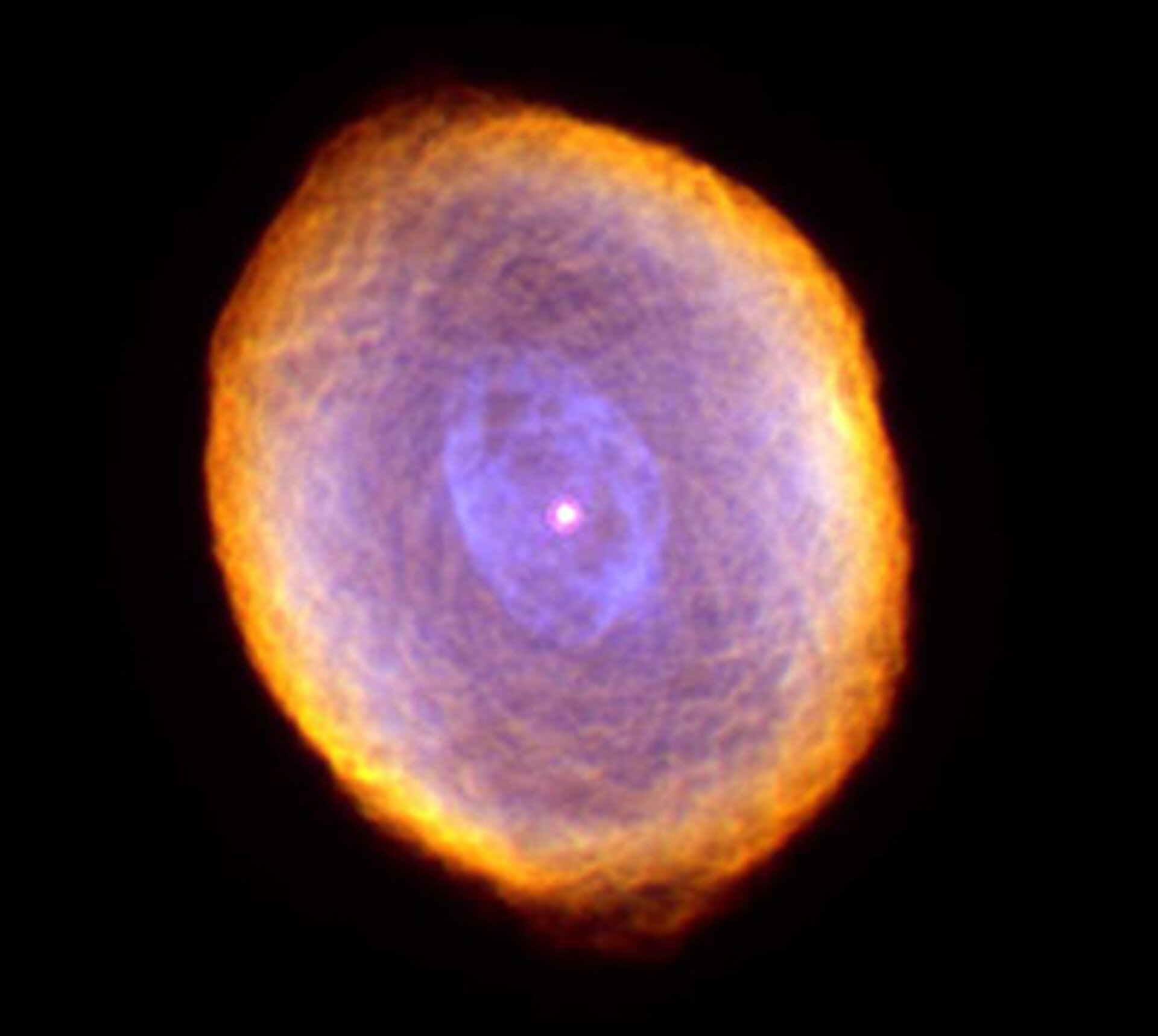
    Spirograph Nebula (IC 418)

    Spirograph Nebula (IC 418)

    Glowing like a multi-faceted jewel, the planetary nebula IC 418 lies about 2000 light-years from Earth in the direction of the constellation Lepus.

    This photograph is from the NASA/ESA Hubble Space Telescope, obtained with the Wide Field Planetary Camera 2.

    A planetary nebula represents the final stage in the evolution of a star similar to our Sun. The star at the centre of IC 418 was a red giant a few thousand years ago, but then ejected its outer layers into space to form the nebula, which has now expanded to a diameter of about 0.2 light-years.

    The stellar remnant at the centre is the hot core of the red giant, from which ultraviolet radiation floods out into the surrounding gas, causing it to fluoresce. Over the next several thousand years, the nebula will gradually disperse into space, and then the star will cool and fade away for millions of years as a white dwarf.

    Only a few million years ago, IC 418 was probably a well-understood star like our own Sun. Our Sun is expected to undergo a similar fate, but fortunately this will not occur until some 5000 million years from now.

    The origin of the remarkable textures revealed by Hubble is still uncertain. Perhaps they are related to chaotic 'winds' from the variable central star, which changes brightness unpredictably in just a few hours.

    Last update: 25 March 2004

    Rate this

    Views

    Share

    • Currently 0 out of 5 Stars.
    • 1
    • 2
    • 3
    • 4
    • 5
    Rating: 0/5 (0 votes cast)

    Thank you for rating!

    You have already rated this page, you can only rate it once!

    Your rating has been changed, thanks for rating!

    95
    Tweet
    • Related links
      • Hubble overview
      • More about...
        • Edwin Hubble: The man who discovered the Cosmos
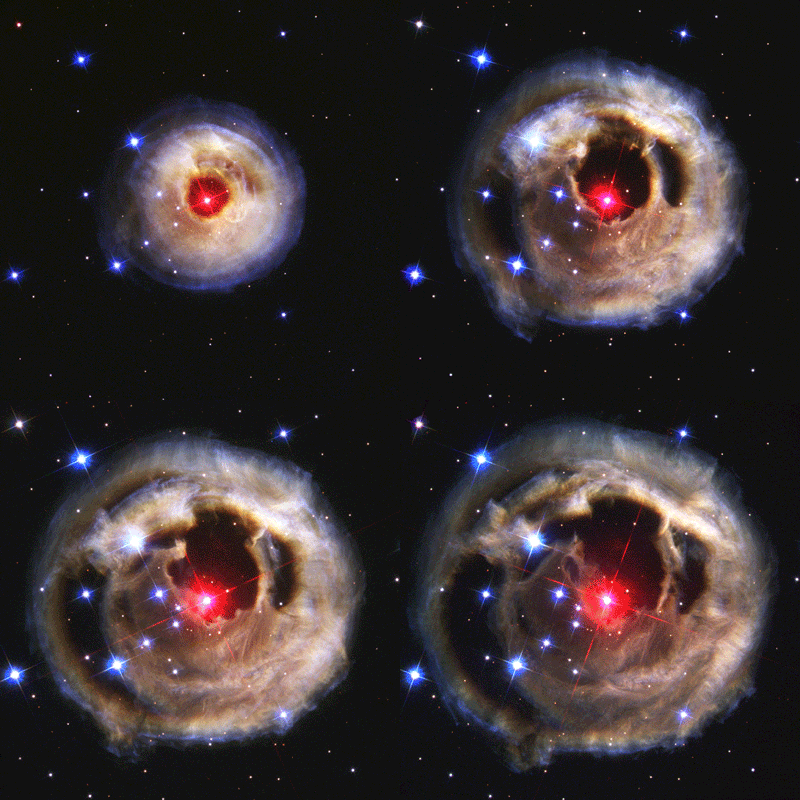
          • Hubble watches light echo from mysterious erupting star
            • A perfect storm of turbulent gases
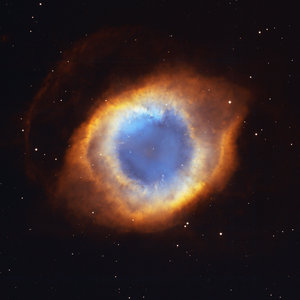
              • Eye-catching celestial helix
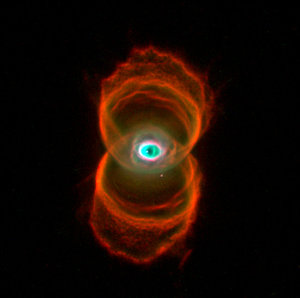
                • The Hourglass Nebula (MyCn-18)
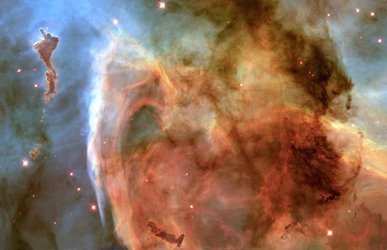
                  • Carina Nebula (NGC 3372)

    Connect with us

    • RSS
    • Youtube
    • Twitter
    • Flickr
    • G+
    • Facebook
    • Livestream
    • Subscribe
    • App Store
    • LATEST ARTICLES
    • · Rare merger reveals secrets of gal…
    • · Watching for hazards: ESA opens as…
    • · ESA astronaut Timothy Peake set fo…
    • · Space drives e-mobility
    • · Proba-V opens its eyes
    • FAQ

    • Jobs at ESA

    • Site Map

    • Contacts

    • Terms and conditions