• → European Space Agency

      • Space for Europe
      • Space News
      • Space in Images
      • Space in Videos
    • About Us

      • Welcome to ESA
      • DG's News and Views
      • For Member State Delegations
      • Business with ESA
      • ESA Exhibitions
      • ESA Publications
      • Careers at ESA
    • Our Activities

      • Space News
      • Observing the Earth
      • Human Spaceflight
      • Launchers
      • Navigation
      • Space Science
      • Space Engineering
      • Operations
      • Technology
      • Telecommunications & Integrated Applications
    • For Public

    • For Media

    • For Educators

    • For Kids

    • ESA

    • Space Science

    • Our Universe
    • About Space Science
    • ESA's 'Cosmic Vision'
    • Science missions
    • Mission navigator
    • Target groups
    • For Media
    • For Scientists
    • For Kids
    • Multimedia
    • Science images
    • Science videos
    • Animations
    • Downloads
    • Sounds from space
    • Resources
    • Reference section
    • Services
    • FAQs
    • Glossary
    • Help
    • Portal terms of use
    • Comments
    • Follow us
    • RSS feeds
    • ESA Sci on Twitter
    • ESA Space Science Images on Flickr
    • ESA 3D on Flickr

    ESA > Our Activities > Space Science

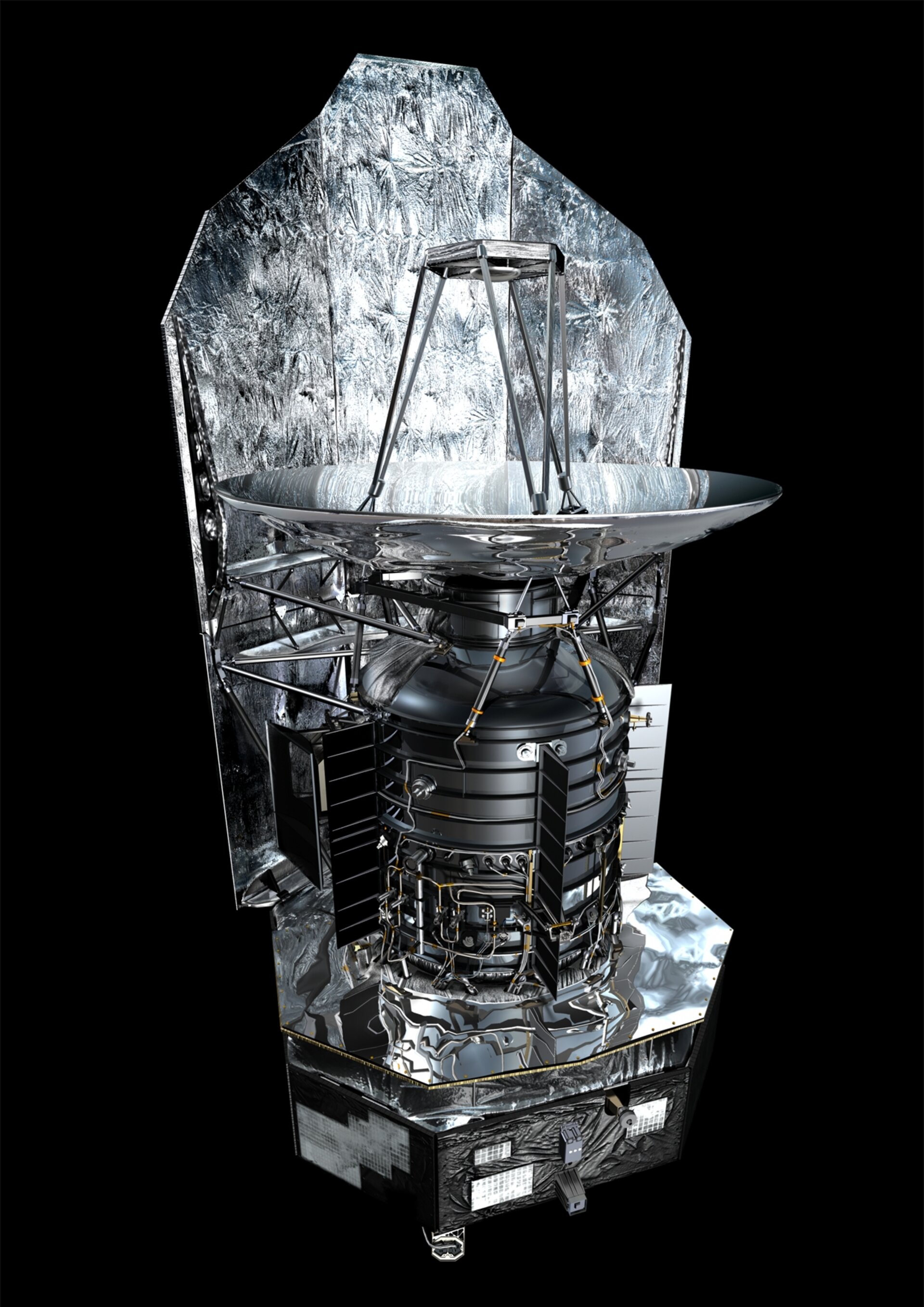
    Herschel 'service module' ready for final integration

    Herschel spacecraft artist's concept
    6 December 2006

    ESA’s Herschel spacecraft is proceeding towards its industrial completion. The satellite’s service module has passed its assembly and verification tests, and is now ready to move towards its final integration and test phases.

    The service module is the satellite platform on top of which the ‘payload module’ - containing the cryostat with the science instruments and the telescope - will be mounted.

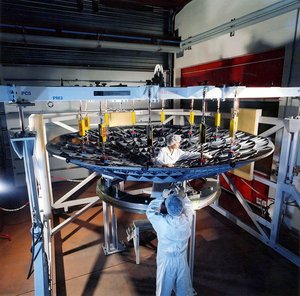
    The Herschel satellite will carry the largest telescope mirror ever flown in space. It will operate in the infra-red and sub-millimetre wavelengths, to study the formation of stars and galaxies.

    After its assembly by the Alcatel Alenia Space teams in Turin, Italy, the service module successfully passed the verification phase, and is now ready to be delivered to Astrium Satellites for final satellite assembly. The complete satellite will then be submitted to environmental acceptance tests in the ESA facilities located at ESA's European Space Research and Technology Centre (ESTEC), The Netherlands.

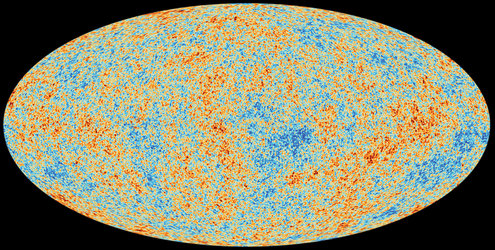
    The Herschel satellite is planned for launch in mid 2008, on board an Ariane-5 rocket, together with the Planck satellite, the ESA astronomy mission designed to accurately measure the Cosmic Microwave Background Radiation that carries information about the early Universe.

    Note to editors

    The development of the Herschel and Planck satellites, and all support activities prior to their launch, are provided by Alcatel Alenia Space, the industrial Prime Contractor selected by ESA, leading a consortium of more than 30 companies. Both spacecraft's service modules are equipped with state of the art avionics, power distribution, communication, attitude control and propulsion subsystems, and they have been developed over a time span of 5 years.


    For more information:

    Thomas Passvogel, ESA Herschel/Planck Project Manager
    Email: thomas.passvogel @ esa.int

    Göran Pilbratt, ESA Herschel Project Scientist<<BR> Email: gpilbratt @ rssd.esa.int

    Rate this

    Views

    Share

    • Currently 0 out of 5 Stars.
    • 1
    • 2
    • 3
    • 4
    • 5
    Rating: 0/5 (0 votes cast)

    Thank you for rating!

    You have already rated this page, you can only rate it once!

    Your rating has been changed, thanks for rating!

    25
    Tweet
    • More about...
      • Herschel overview
        • Planck overview
        • Related articles
          • ESA’s Herschel and Planck launcher contract signed
            • ESA’s Herschel and Planck launcher contract signed
              • Cosmic Microwave Background (CMB) radiation
                • The largest telescope mirror ever put into space
                  • Why infrared astronomy is a hot topic
                    • Caroline and William Herschel: Revealing the invisible
                      • How many stars are there in the Universe?
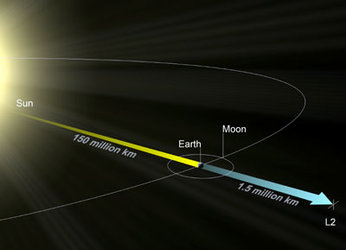
                        • L2, the second Lagrangian Point
                        • Related links
                        • Arianespace
                        • About Ariane 5 ECA
                        • Ariane 5 ECA

    Connect with us

    • RSS
    • Youtube
    • Twitter
    • Flickr
    • G+
    • Facebook
    • Livestream
    • Subscribe
    • App Store
    • ESA Science Twitter

    Follow ESA science

    • LATEST ARTICLES
    • · ESA astronaut Timothy Peake set fo…
    • · Space drives e-mobility
    • · Proba-V opens its eyes
    • · First new Galileo satellite arrive…
    • · Next destination: space
    • FAQ

    • Jobs at ESA

    • Site Map

    • Contacts

    • Terms and conditions