• → European Space Agency

      • Space for Europe
      • Space News
      • Space in Images
      • Space in Videos
    • About Us

      • Welcome to ESA
      • DG's News and Views
      • For Member State Delegations
      • Business with ESA
      • ESA Exhibitions
      • ESA Publications
      • Careers at ESA
    • Our Activities

      • Space News
      • Observing the Earth
      • Human Spaceflight
      • Launchers
      • Navigation
      • Space Science
      • Space Engineering
      • Operations
      • Technology
      • Telecommunications & Integrated Applications
    • For Public

    • For Media

      • Media
      • ESA TV
      • Videos for professionals
      • Photos
    • For Educators

    • For Kids

    • ESA

    • Integral

    • ESA Science

    • Integral in brief
    • Integral overview
    • Integral factsheet
    • A truly international mission
    • About Integral
    • The spacecraft
    • The launcher
    • The launch site - Baikonur
    • The journey
    • Integral's mission

      • What's special?
      • Why do we observe gamma rays?
      • Observations: Seeing in the gamma-ray wavelengths
      • The atoms that make us
      • The densest objects in the Universe
      • Giant black holes
      • Gamma-ray bursts (GRBs)
    • Multimedia
    • Image gallery
    • Pre-launch images, Sept 2002
    • Pre-launch images, October 2002
    • Video gallery
    • 3D Flash 'model'
    • Make a model

    ESA > Our Activities > Space Science > Integral

    Be an Integral astronomer - competition

    20 April 2009

    To mark the International Year of Astronomy, ESA is launching a special competition for secondary school students and undergraduates. Participants will use data obtained by the Integral space observatory to investigate objects in one of the most active regions of our Galaxy.

    The Integral space observatory keeps a close watch on high-energy emission from the Milky Way’s Galactic bulge. This ever-changing area contains a wealth of astronomical sources that release high-energy gamma and X-rays. By participating in this competition, students can explore the fascinating Galactic bulge and join a community of astronomers studying the violent and exotic processes that define this region of our Galaxy.

    The competition was launched during ‘Around the World in 80 Telescopes’, a live 24-hour webcast that took place as part of ‘100 Hours of Astronomy’, a cornerstone project for the International Year of Astronomy 2009.

    About the competition

    Visit the competition pages using the link in the menu on the right to find out more. Here you will find details of what the competition entails, prizes and how to participate. Individual entries will be accepted and judged by a panel of ESA experts in two categories: secondary school students and undergraduates. Participants have until 14 August 2009 to submit their entry.
    Rate this

    Views

    Share

    • Currently 0 out of 5 Stars.
    • 1
    • 2
    • 3
    • 4
    • 5
    Rating: 0/5 (0 votes cast)

    Thank you for rating!

    You have already rated this page, you can only rate it once!

    Your rating has been changed, thanks for rating!

    60
    Tweet
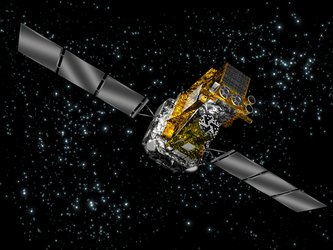
    • Artist's view of Integral
      Artist's view of Integral
      ESA's gamma-ray astronomy mission
    • IYA 2009 Icon
      IYA 2009 Icon
      IYA 2009
    • Related articles
    • Competition details
    • Poster: Be an Integral astronomer competition
      • Around the world in 80 telescopes at ESA
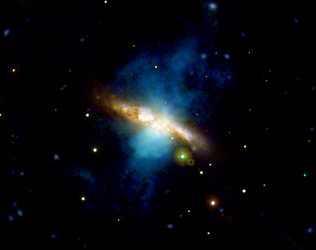
        • XMM-Newton exclusive photo: Messier 82
        • Join ESA in the ‘Around the World in 80 Telescopes’ webcast
        • Related links
        • 100 Hours of Astronomy
        • Around the world in 80 Telescopes

    Connect with us

    • RSS
    • Youtube
    • Twitter
    • Flickr
    • G+
    • Facebook
    • Livestream
    • Subscribe
    • App Store
    • LATEST ARTICLES
    • · Earth Explorers take centre stage …
    • · The fast winds of Venus are gettin…
    • · ExoMars 2016 set to complete const…
    • · Herschel ends operations as orbiti…
    • · Europe’s largest spaceship reache…
    • FAQ

    • Jobs at ESA

    • Site Map

    • Contacts

    • Terms and conditions