
LISA Pathfinder overview

Name: LISA Pathfinder ('LISA' stands for Laser Interferometer Space Antenna)
Launched: 3 December 2015
Status: Completed (2017)
Mission
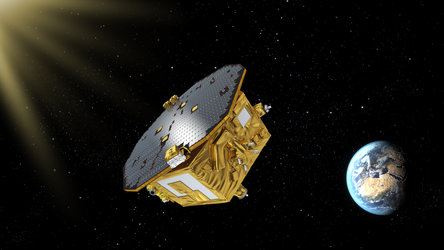
LISA Pathfinder tested in flight the concept of low-frequency gravitational wave detection: it placed two test masses in a near-perfect gravitational free-fall, and controlled and measured their motion with unprecedented accuracy in a technique known as ‘precision metrology’. To do this, it made use of inertial sensors, a laser metrology system, a drag-free control system and an ultra-precise micro-propulsion system.
The mission finished on 30 June 2017, having successfully demonstrated the technology to build ESA's future gravitational wave observatory in space: LISA.
Objectives
The aim of the LISA Pathfinder mission was to demonstrate, in a space environment, that free-falling bodies follow geodesics – the equivalent of straight lines in a curved space – in spacetime, by more than two orders of magnitude better than any past, present or planned mission. Specifically, it aimed to:
- Demonstrate drag-free and attitude control in a spacecraft with two free proof masses
- Test feasibility of laser interferometry with picometre resolution at low frequency, approaching 10-12 m Hz-1/2 in the frequency band 1–30 mHz
- Test the endurance of the different instruments and hardware in the space environment
What's special?

Completely different method of observing the Universe
Virtually all our knowledge about the Universe is based on the observation of electromagnetic waves, such as visible light, infrared, ultraviolet, radio, X-rays and gamma rays. LISA Pathfinder paved the way to a completely different method of observing the Universe: detecting gravitational waves. This allows astrophysicists to address some of the most fundamental questions about the Universe and possibly raise new ones, such as the nature of binary black holes and their mergers, which are among the most powerful events in the Universe
Very first detection of gravitational waves in space
With LISA Pathfinder, the technology needed to detect gravitational waves was tested in space for the first time. Gravitational waves are ripples in spacetime predicted by Albert Einstein’s theory of general relativity. They were directly detected for the first time by the advanced Laser Interferometer Gravitational-Wave Observatory in 2015. Studying gravitational waves will greatly enhance our knowledge of general relativity and allow scientists to detect the impact of astronomical events which are thought to cause a minuscule distortion in the fabric of space itself.
Only feasible in space
LISA Pathfinder was a pioneering mission. Not only were the technologies that it tested new, they cannot be properly verified on the ground. This is because Earth’s gravity and environment would overwhelm the test results. Only in space can the subtle effects of the low-frequency gravitational waves be detected with exquisitely precise instruments.
Greater accuracy than ever achieved before
LISA Pathfinder built an almost exact inertial frame of reference in which scientists could measure the warping of spacetime many times more precisely than achieved before. This lays the foundation for future spaceborne tests of general relativity.
First use of micro-newton electric propulsion
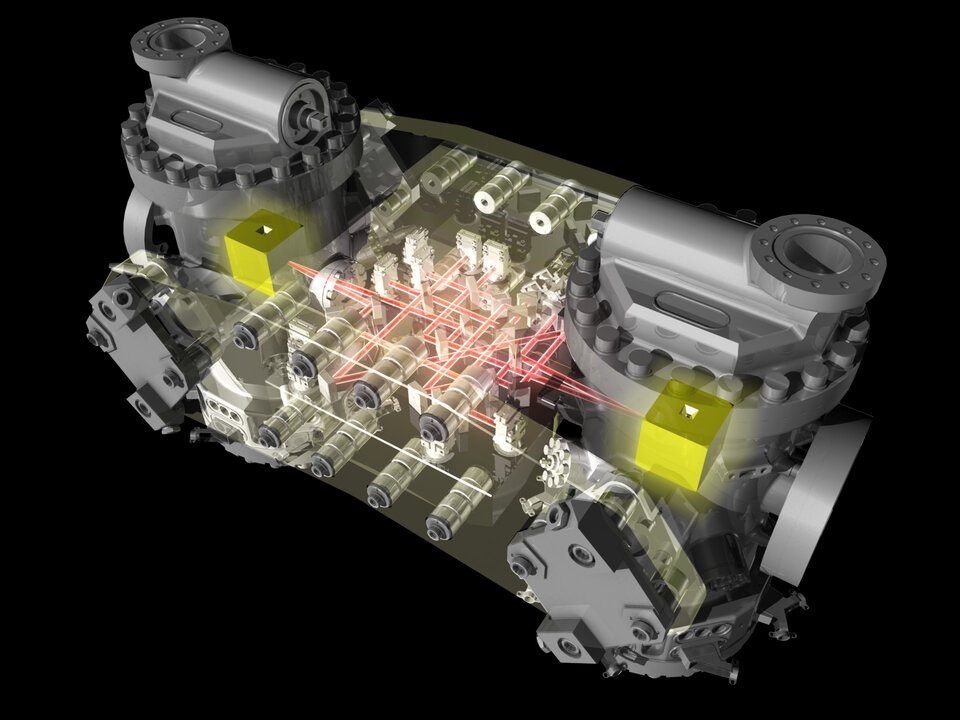
The LISA Pathfinder drag-free control system consisted of an inertial sensor, a set of micro-newton thrusters and a control system. The inertial sensor’s role was to monitor the tiny movements of a 46 mm gold-platinum cube. When this test mass moved from its null position, a signal was sent to the control system which was used to command the microthrusters, which in turn enabled the spacecraft to remain centred on the test mass. It was the very first time that ESA operated a spacecraft with such micro-newton thrusters as the only propulsion.
LTP motion sensor – the best ever flown in space
The sensor within the LISA Technology Package (LTP) was sensitive to micro-motions of the test mass with respect to the spacecraft, as small as one millionth of a millimetre (one nanometre, or 10-9m). However, the relative motion of the two test masses within the LTP could be measured, using ultra-precise laser interferometry, to a staggering one thousandth of one millionth of a millimetre (one picometre, or 10-12m).
Spacecraft
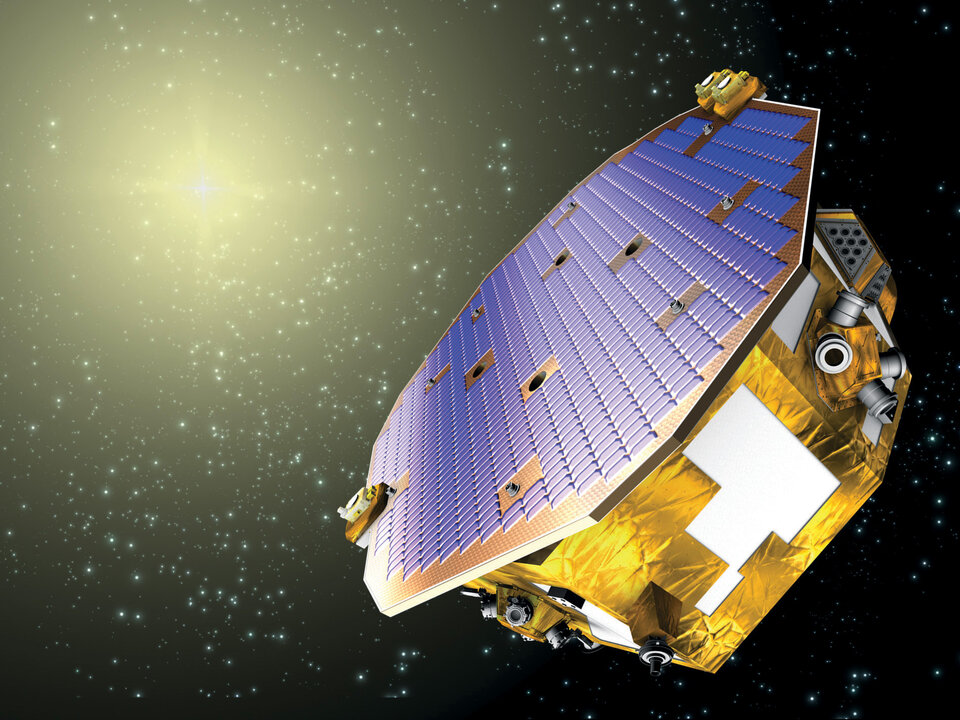
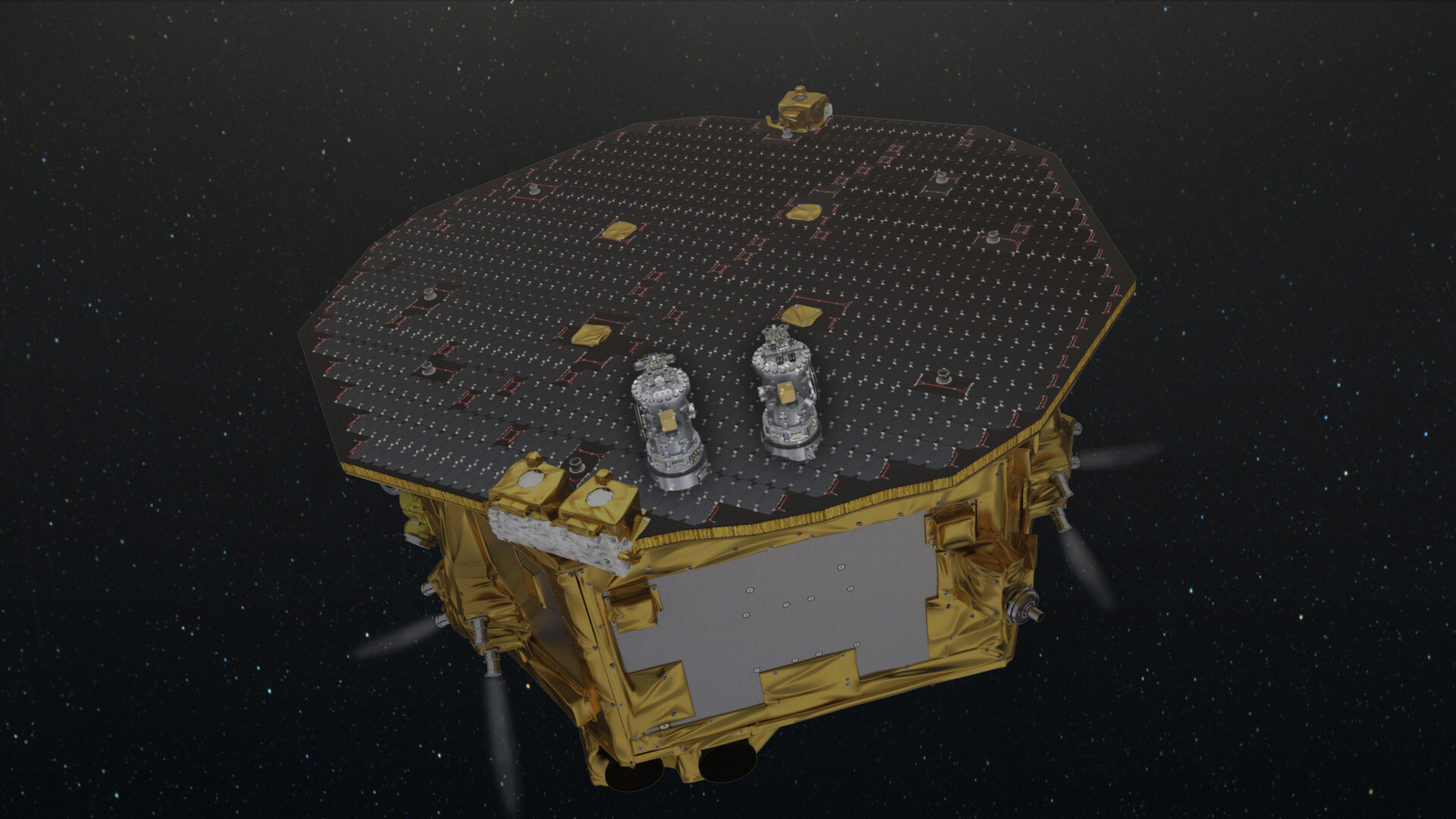
LISA Pathfinder carried two advanced instruments. The LTP was developed by European institutes and industry using national funding from seven Member States (Italy, France, Germany, Spain, United Kingdom, the Netherlands and Switzerland) and from ESA. It contained two identical proof masses in the form of 46 mm cubes made of gold-platinum, each suspended in its own vacuum enclosure. They simulated the observational arrangement for the LISA mission, with the difference that the distance between the proof masses was reduced from five million kilometres to 38 cm.
The Disturbance Reduction System (DRS) was provided by NASA’s Jet Propulsion Laboratory in California. It included a set of microthrusters to control the spacecraft’s position to within a millionth of a millimetre.
Journey
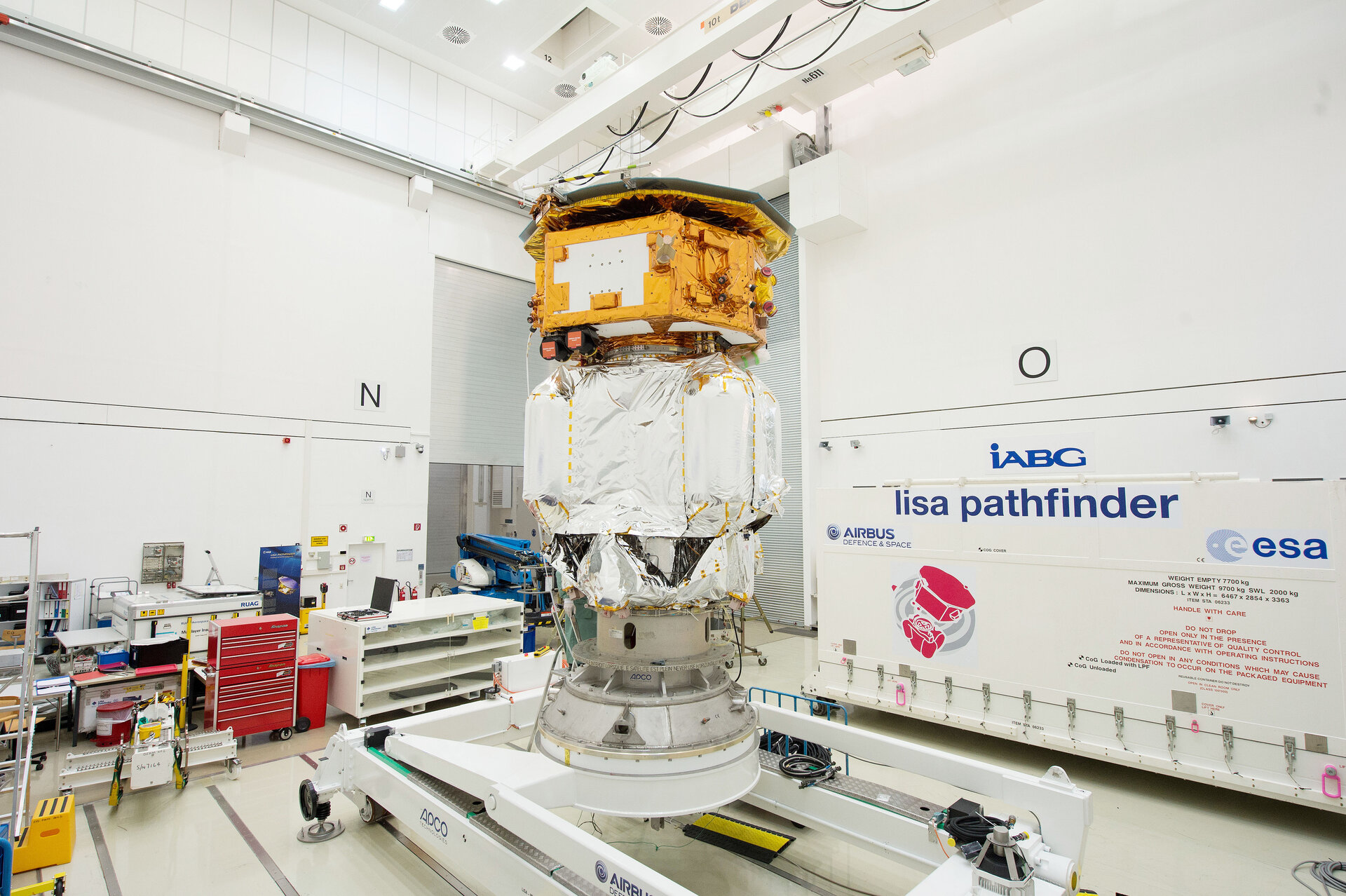
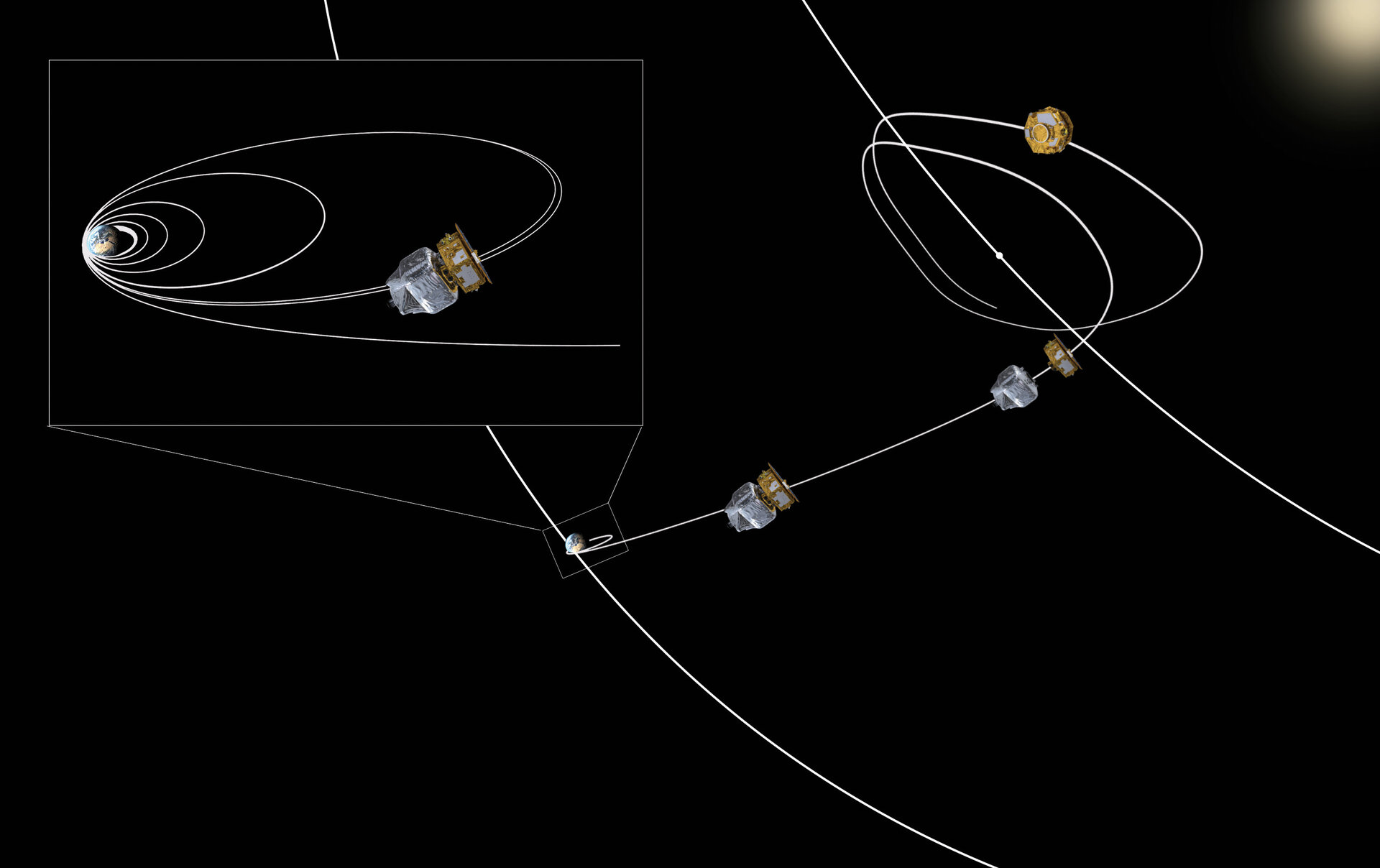
LISA Pathfinder was launched on 3 December 2015 by a Vega rocket from Kourou, French Guiana, and placed into a slightly elliptical parking orbit. From there, it used its own propulsion module to reach its final operational orbit, a 500 000 km by 800 000 km halo orbit 1.5 million kilometres from Earth, around the first Sun–Earth Lagrange point.
After the last transfer burn had been performed, and the health of the spacecraft was ascertained, the propulsion module was jettisoned on 22 January 2016.
LISA Pathfinder’s operational phase started on 1 March 2016 and was planned to last six months, shared between 90 days LTP and 60 days DRS, and 30 days joint operations. The DRS experiment used the European LTP sensor for its measurements. The mission was extended and ended on 30 June 2017.
History

LISA Pathfinder was approved by the ESA Science Programme Committee in November 2000. It was reconfirmed by the same body and by the ESA Council in May 2002, as part of ESA’s new ‘Cosmic Vision’ Scientific Programme.