

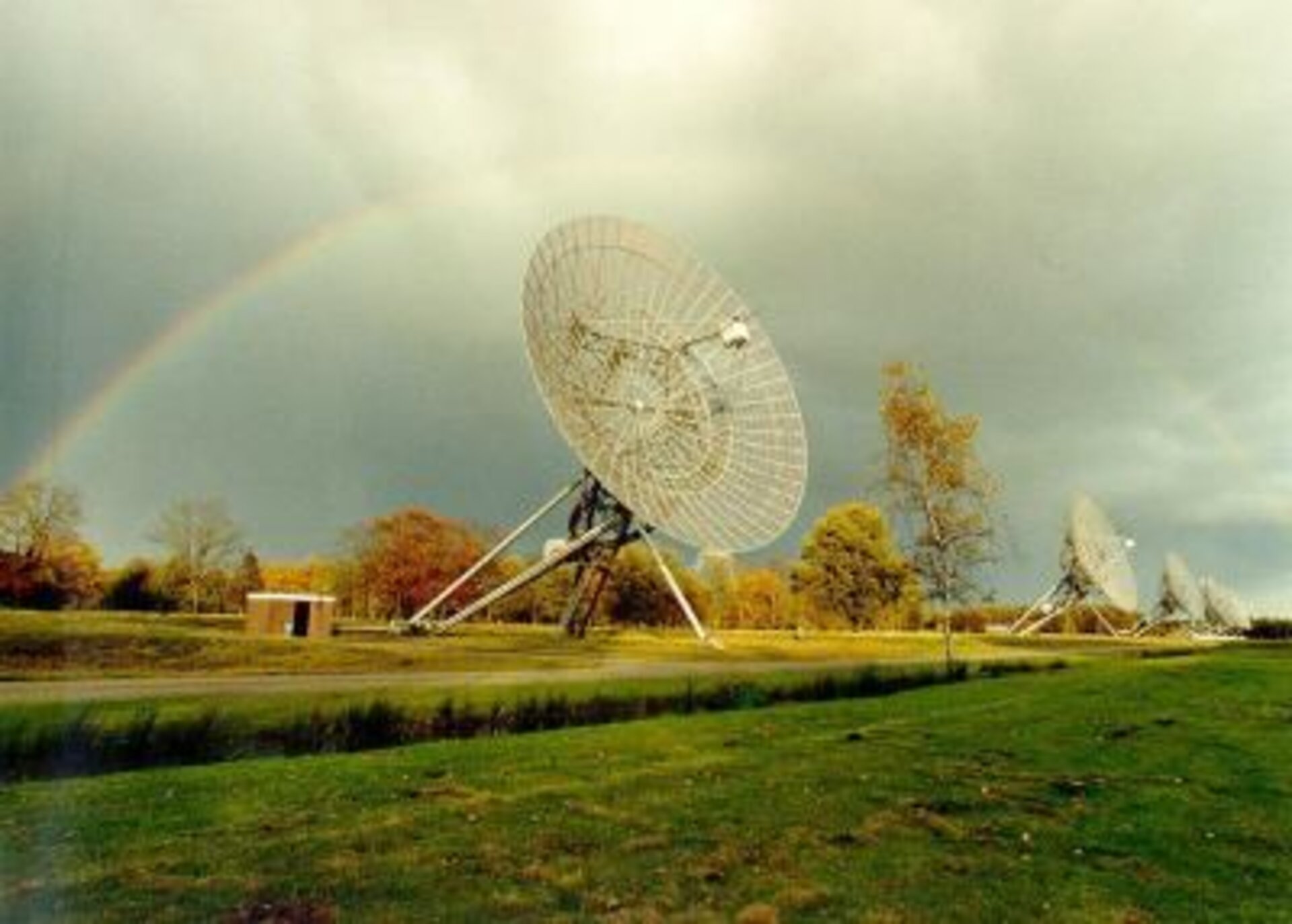
Observations: Very Long Baseline Interferometry (VLBI)
The angular resolution of a particular telescope depends on two main parameters: its diameter and the wavelength of the signal it is receiving.
The larger the telescope and the shorter the wavelength, the better the angular resolution. However, there are physical limitations to the size of a telescope, while the wavelength of interest in many cases cannot be chosen arbitrarily.
To get around this limitation, radio astronomers use the technique known as interferometry to match and surpass the highest resolutions obtained in other regions of electromagnetic spectrum (for example, visible light).
This involves linking antennas together to act like as a single large radio telescope. The angular resolution of the resulting image is as good as that obtained from a single antenna with a diameter equal to the largest separation (or ‘baseline’) between the individual antennas.
The Very Long Baseline Interferometry (VLBI) technique – the ultimate case of interferometry – was originally developed in the 1960s by astronomers who were seeking ways to push the angular resolution of radio telescopes to the limits for studies of distant celestial objects. Its record high angular resolution exceeding by far the ‘sharpness’ of any other available to date measurement technology.
In addition, by using telescopes at various locations, radio astronomers effectively increase collecting area of the receiving antenna thus increasing the sensitivity. Combined, these two properties make the VLBI technique the sharpest and the most sensitive tool for receiving radio signals from space, whether of natural or manmade origin.
Because this technique uses an array of radio telescopes located thousands of kilometres apart, they must be carefully co-ordinated. The signals received at each telescope are recorded and sent for processing at a special correlation facility. In the case of Huygens VLBI tracking, data from about twenty radio telescopes located in Asia, Australia and the United States will be processed at the European VLBI Network Data Processor at JIVE.
VLBI tracking of Huygens during its parachute descent in the atmosphere of Titan will allow observers to reach an unprecedented accuracy of about one kilometre in determination of the probe’s position - at the distance between Earth and Titan of 1200 million kilometres! Such the angular resolution would allow sport fans to watch a trajectory of a table-tennis ball if the game was played on the Moon!